


 Online Reporter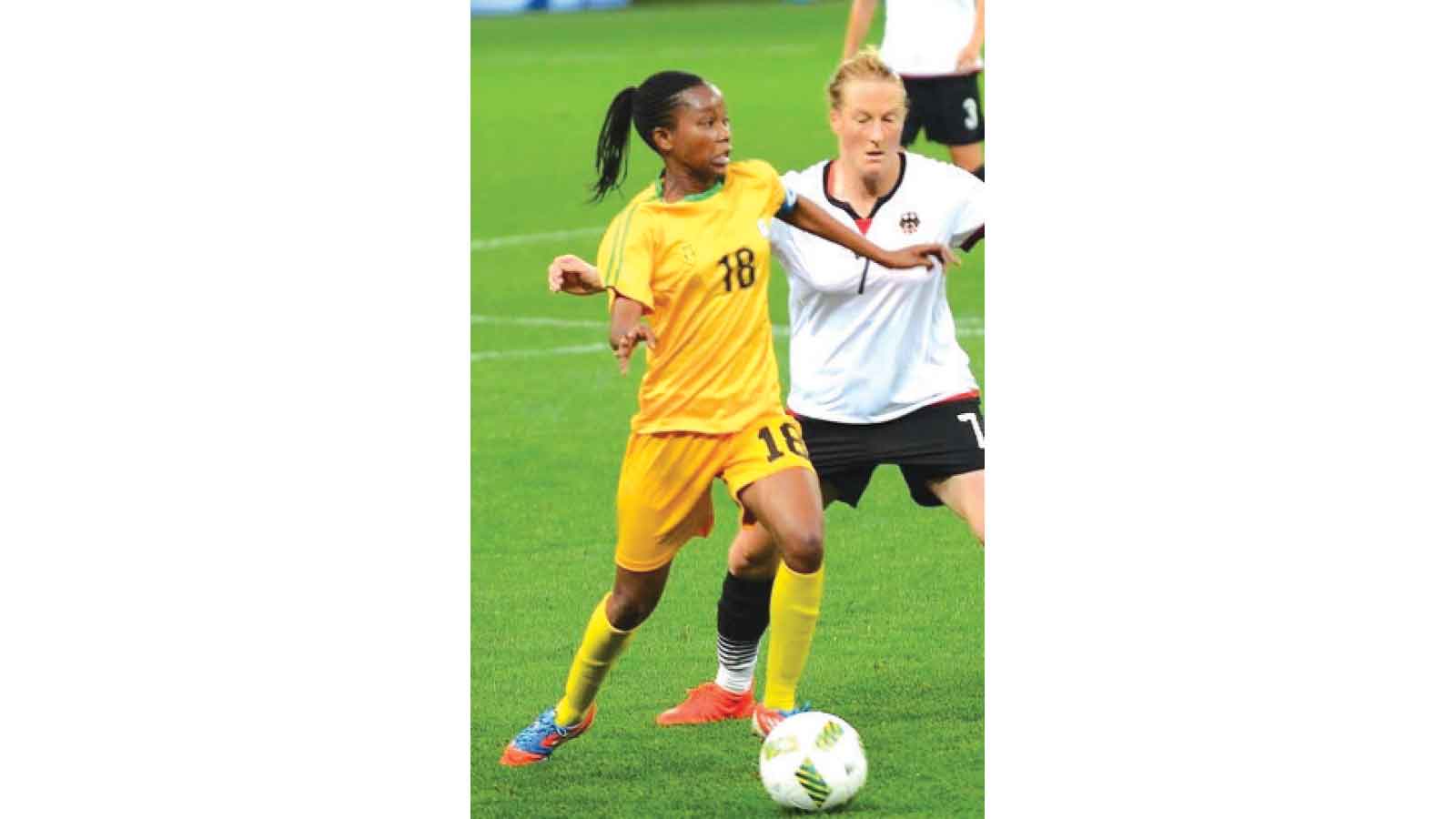
Tadious Manyepo
Zimpapers Sports Hub
FELISTAS MUZONGONDI still says “Rio” the way some people say a childhood home, softly, with a smile that carries a little disbelief.
Nine years later, the Olympics are no longer a tournament on her CV. They are a feeling that returns when she is alone with her thoughts, when she watches a match and sees a moment that reminds her of what it means to walk into a stadium knowing the whole world is watching.
She remembers the heat in Brazil. The noise. The rush of walking out in Zimbabwe colours and realising that, for once, women’s football from home wasn’t a small story tucked away at the back.
It was the story. The Mighty Warriors were at the biggest sporting showpiece on earth, and she was one of the leaders.
“Playing at the Olympics was a dream. That feeling of representing my country on that global stage. The vibe was electric, the crowd, competing against the best. It was all just incredible,” Muzongondi said.
Zimbabwe had arrived in Rio de Janeiro in 2016 carrying more than boots and kit bags.
They carried history. They carried the pride of being the first Zimbabwean team sport to qualify for the Olympics, a landmark that placed them in a rare corner of national sport, with only the hockey side’s 1980 gold medal offering a comparable moment in terms of global attention.
And because Zimbabweans love a breakthrough story, expectations rose quickly. Shadreck Mlauzi and his girls were no longer just a national team, they were a symbol. They were supposed to show the world something.
What followed on the pitch was harsh, a lesson delivered at full speed. Zimbabwe lost 6-1 to Germany, 3-1 to Canada, then another 6-1 to Australia.
Three matches, three defeats, and a goal difference that could have crushed a smaller spirit.
But Muzongondi has never spoken about Rio like a wound. She speaks about it like a classroom.
“We didn’t bring any medal, but the experience itself was a huge win for me. Unforgettable for sure,” she said.
Then she laughs, because even now, the memory still has a punchline.
“Then the funny part; looking at the Germany players, we thought we would match them. Some were older than us and we were so sure that we would go pound for pound with them,” she said.
“As a leader, I told the girls that we would even overrun the Germans. And when the game started, yooh, it was very different not just difficult.”
That “yooh” tells you everything. It’s the sound of someone who has lived long enough in football to be humbled without being broken.
The Olympics did not end her career. If anything, it stamped her with a kind of authority you only get after you’ve stood close to the very top and survived the view.
Now, at 39, Muzongondi is stepping away from playing. Not from the game, not from the dressing room, not from the noise.
She is just closing one chapter, and she’s doing it the way she has always played, with purpose.
“I am not leaving football per se. But I am retiring from playing. I am going into coaching full time,” she said. “Look, I have been a player/coach for my team Black Rhinos Queens over the past two years and I am just moving into coaching on a fulltime basis.
“I am definitely eager to continue enjoying the same way as a coach that I was as a player.”
Retirement in football is rarely a neat goodbye.
It comes with aching knees, with mornings that take longer, with the quiet realisation that your body no longer recovers like it used to.
It also comes with a strange grief, because football is not just a job. It’s routine, it’s identity, it’s family, it’s the one place you can be fully understood without explaining yourself.
For Muzongondi, the shift into coaching feels less like a departure and more like a return to what she has always been. A captain. A voice. A player who thinks beyond her own performance and sees the shape of the whole team.
Over two decades, she has been one of the constant figures in Zimbabwe women’s football, moving through clubs and cities, collecting experience the hard way, season by season, pitch by pitch.
She speaks about her journey with the precision of someone who knows her story matters, not because it is perfect, but because it is real.
“I played for Kiyoto in Masvingo ( 2001 to 2002), Chipembere Queens in Gweru (2003-2007), Detroit Queens in South Africa (2008), Cyclone Queens from Mbare (2009-2014), Mwenezana Queens in Mwenezi and (2015-2016) Black Rhinos Queens in Harare 2016 up to date,” she said.
“I have won a lot of trophies, but captaining all the teams except Detroit Queens stands out for me. I participated in Youth Games, U20 National team and the Mighty Warriors. My first team call up came in 2006.”
There’s a whole map of Zimbabwe inside those club names.
Masvingo to Gweru, a stretch to South Africa, then back to Mbare, then Mwenezi, then Harare.
It’s the route of a player who didn’t wait for comfort or perfect structures. She went where the football was. She stayed long enough to leave a mark. She moved again.
Her years at Black Rhinos Queens carry a special weight, not just because of longevity, but because of success and leadership.
She won the league title with the club in 2016, the same year she lived the Olympics. It was a season where her football life seemed to run on two tracks at once, club dominance at home and global exposure abroad.
She also won the COSAFA Cup with the Mighty Warriors, another badge of honour in a career that has always been tied to national duty. The national team, with all its challenges and interruptions, still remains the highest stage for many players.
To lead it, even for a moment, is to carry a responsibility that never fully leaves you.
But if you want to understand the pride in Muzongondi’s voice, listen to the part where she talks about scoring.
Not because she is chasing personal glory, but because goals are a language every footballer understands.
“Winning the Golden Boot after scoring 34 goals in 2024 is also a standout achievement that I cherish as well,” she said.
Thirty four goals in a season at her age is not a farewell gift. It’s a statement. It’s a player refusing to fade quietly, refusing to become a ceremonial name on a team sheet. It’s proof that even as she prepared to step away, she was still sharp enough to punish defenders and still hungry enough to demand the ball.
Those numbers also tell a bigger story about women’s football in Zimbabwe.
Players often stay longer not because the game is easy, but because the game needs them. Experience is scarce. Mentorship is often informal. Leadership is usually carried by those who have been through the worst of it and still show up.
Weddington Chinyan’anya, who coached Muzongondi at Black Rhinos Queens, believes her next chapter is already written in her personality.
“Muzongondi had an outstanding playing career at all the teams she played for,” said Chinyan’anya.
“I coached her at Black Rhinos Queens. Her leadership qualities are top notch.
“I am pretty sure that she will become a very good coach.
“It’s always good to see these players transitioning to coaches upon retirement from playing.”
This is the part of her story that feels quietly important.
Zimbabwe women’s football has always had talent. What it has often lacked is continuity, the kind that builds systems and passes knowledge down without starting from zero every few years. When a player like Muzongondi moves into coaching, it’s not just a personal career move. It’s a transfer of memory. It’s someone who knows the pressures of wearing the national shirt, the discipline of a league campaign, the small details that separate a good team from a fragile one.
At Black Rhinos Queens, she won’t be alone. She joins former teammate Talent Mandaza on the technical bench, Mandaza having retired three years ago.
That pairing feels like a quiet statement in itself, two former Warriors turning experience into structure, trying to build something that lasts longer than their playing days.
Muzongondi still holds Rio close, not because it was perfect, but because it was proof. Proof that Zimbabwe women can step onto the biggest stage and belong in the same sentence as the giants of the game. Proof that even heavy defeats can carry meaning, if you refuse to be defined by them. Now she is retiring with her head up, her goals still fresh in the record books, and her next role already underway. Some players leave football and disappear into ordinary life. Muzongondi is staying right there, on the touchline, still carrying the game, just in a different way.
And somewhere in the middle of it all, Rio remains.
Not as a memory that fades, but as a place she visits in her mind, a reminder of how far she travelled, and how much she still has to give.



