Online Reporter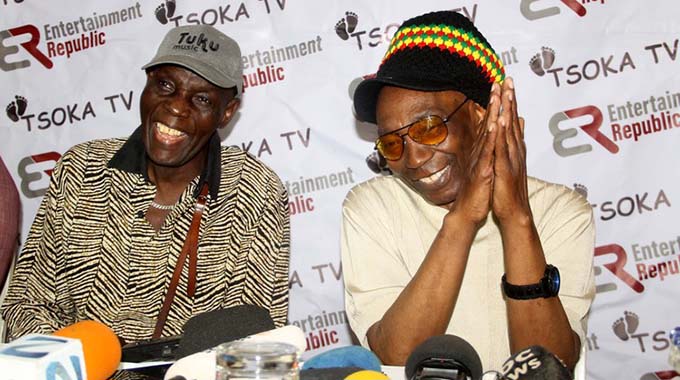
Trust Khosa
Zimpapers Arts and Entertainment Hub
SINCE 1980, the Zimbabwean music industry has been marked by intense rivalries that have divided opinion and sparked passionate debate among fans.
These “beefs” (in street lexicon) often led to the formation of distinct camps, with loyal supporters rallying behind their favourite artistes as tensions mounted.
As Zimbabwe approaches its 45th Uhuru celebrations on April 18, we reflect on some of the most notable rivalries that have made headlines over the decades.
In this issue, we will explore 10 rivalries that have not only divided opinion but have also played a significant role in shaping the country’s musical landscape.
Thomas “Mukanya” Mapfumo/Oliver “Tuku” Mtukudzi
One of the most memorable duels was between Mukanya and the late Tuku.
While Mukanya thrived on Chimurenga music, Tuku left an indelible mark internationally with his unique Katekwe flair, which was deeply rooted in Korekore traditions and rhythms. Together, their contributions have not only shaped Zimbabwean music but also resonated with audiences nationwide, bridging cultural divides and inspiring generations of artistes.
Despite past tensions, Mukanya showed respect by attending Tuku’s funeral in 2019.
It is strongly believed that the rivalry between the two accomplished musicians was largely fuelled by fans.
Thomas Mapfumo/Pio Macheka
Besides Tuku, Mukanya is reported to have later on clashed with the late Farai Macheka, who he perceived as a copycat.
Macheka imitated Mukanya’s hairstyle, beats and even melodies.
Their feud escalated, resulting in an assault on Macheka by unknown assailants.
The incident left a lasting impact on the music community. Tragically, Macheka took his own life in 2008, prompting discussions about the dangers of unchecked rivalry.
John Chibadura/Leonard Dembo
Chibadura and Dembo, two legendary musicians who have since passed away, were notably at odds, with their rivalry intensified by stark superstitious beliefs.
Past music promoters, disc jockeys and fellow band members have recounted how Dembo was unwilling to share the stage with Chibadura. Dembo, a superstitious man, was said to have had his own perceptions about Chibadura. Conversely, Chibadura, who believed in the Nyau cult, had no problem sharing the stage.
Landmine Madongonda, a notable music promoter, shared how Dembo reacted when included in the same line-up with Chibadura for a 1992 Mutare show.
Dembo refused to share the stage, leading to notable incidents, including a cancelled performance when he learnt that Chibadura was on the bill. Their rivalry, while contentious, ultimately influenced their musical journeys and left a mark on the industry.
Job Mashanda/Cephas Mashakada
Another dispute involved Job Mashanda and the late Cephas “Motomuzhinji” Mashakada. Their conflict began while they were together at the Sounds of the Muddy Face, before Mashanda left to start his own venture.
Even after their “divorce” and a harsh exchange of words, the pair is believed to have remained at odds until Mashakada’s death on August 23, 2011.
Alick Macheso/Nicholas Zakaria
Alick “Baba Sharo” Macheso and his teacher, Nicholas “Madzibaba” Zakaria, grabbed headlines in the late 90s and into the new millennium after their nasty fallout.
The conflict began when Madzibaba briefly quit music and locked the instruments in his house, leaving Khiama Boys in limbo.
As a result, Macheso struggled to make ends meet, alongside other members of the Khiama Boys, who relied solely on musical shows for a livelihood.
Macheso had no choice but to assemble Orchestra Mberikwazvo.
This gamble paid off and many loyal fans of the then-mighty Khiama Boys began following Macheso from 1998 onwards.
He gained sympathy and went on to compose albums recounting his experiences with Madzibaba. Macheso penned touching songs, like “Pakutema Munda”, “Mwana Wamai Vangu” and “Kushungurudzwa”, which won him sympathy from fans.
This was especially so with the track “Pakutema Munda”. Fans later fuelled the rift, leaving Madzibaba in a vulnerable position.
Despite both claiming to be on good terms now, insiders suggest unresolved tensions remain. The reported poor treatment of Macheso by Madzibaba is said to have enhanced his creativity. Alick Macheso/Tongai “Dhewa” Moyo
The contention between Macheso and the late Tongai “Dhewa” Moyo can easily be called the “mother of all rivalries” in sungura since the turn of the century.
Dubbed the “Sungura War”, this rivalry was driven by both Macheso and Dhewa, who traded lyrical barbs for much of the decade.
Additionally, top chanters — Jonas Kasamba of Orchestra Mberikwazvo and Gift “Shiga Shiga” Katulika of Utakataka Express — were the main cheerleaders of this sour relationship.
Some of the diss tracks came through chants. Despite their public rivalry, the musicians provided fans with great value and their shows were consistently top-notch.
Fans and some promoters also showed their allegiance, which further intensified the conflict.
The rivalry ended when Dhewa passed away on October 15, 2011.
Observers believe Macheso no longer has competition and continues to rule the roost, even when he is not at his best.
Macheso vs Murondatsimba crew
Around 2005, Macheso publicly expressed his misgivings with artistes he perceived to be copycats.
He released an album titled Vapupuri Pupurai, which included the song “Murondatsimba”. The emotionally charged track was said to be targeted at Paradzai Mesi, Joseph Garakara, Norman Tapambwa, Gift Amuli and partly Somandla “Mafia” Ndebele.
This quintet was among the group of sungura musicians believed to be copying Macheso’s bass lines and melodies.
The tension was exacerbated by producers who wanted the sungura artistes to sound like Macheso. Despite the rivalry, fans were the overall winners, as Macheso continued to shine while some of the copycats faded away.
Knowledge Kunenyati/Marko Sibanda
This account would not be complete without mentioning the discord that once rocked Kasongo Band, leading to several splits and many rivalries. Once a formidable force, Kasongo was a star-studded group.
We only learnt how it ended in tears through Kunenyati’s confessions about juju use, bed-hopping and power struggles.
The most alarming confession was on the use of juju. Kunenyati formed Muzokomba Movers, while Sibanda moved on with Insiza Brothers.
Their tiff continued and only the old generation can probably still recount this one.
Sibanda has since passed away, but Kunenyati still appears a bitter man.
Music lovers emerged ultimate winners as the feud made the two musicians creative.
However, it is argued that Sibanda was the winner, as most of his songs, like “Jambanja Pahotera”, “Pane Nyaya”, “Jah Haana Mhosva” and “Mugeri”, were runaway hits.
Somanje brothers: Daiton/Josphat
The epic split of Pengaudzoke, which was fronted by brothers Josphat and his late brother Daiton Somanje, is also worth mentioning. Their enmity stemmed from power struggles, allegations of witchcraft and a dispute over royalties.
It all started after their fallout in 2002.
At one point, Daiton accused his younger brother of bewitching him, leading to a public spat. Daiton’s death in 2015 left Josphat to navigate the music scene alone, highlighting the personal toll of their conflict.
The rivalry cost them corporate appeal.
Patrick Mkwamba/Marshal Munhumumwe
Patrick Mkwamba, now residing in Rusape, consistently accuses the late Marshall Munhumumwe of mistreating him when he was once their lead vocalist.
In every interview, he makes sure to criticise Munhumumwe and even publicly announced that he has not forgiven him, even in death.