Online Reporter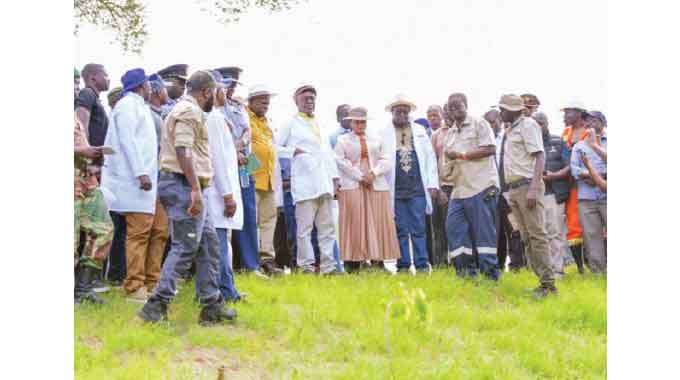
Trust Freddy
Zimpapers Correspondent
RIVERBED damage is being contained with a blanket ban on alluvial and riverbed management while reclaiming the damage has started with a pilot scheme on Murowodzi River.
This week a high-level Government delegation led by Engineer Amos Marawa, Deputy Chief Secretary in the Office of the President and Cabinet, toured the pilot project.
The delegation included Mr Pfungwa Kunaka, Permanent Secretary for Mines and Mining Development, Mr Aaron Nhepera, Permanent Secretary for Defence and War Veterans Affairs; Secretaries for Provincial Affairs and Devolution as well as officials from the Environmental Management Agency (EMA) and the Joint Command.
The initiative follows the enactment of Statutory Instrument 188 of 2024, which imposed a blanket ban on alluvial and riverbed mining across Zimbabwe to curb severe environmental degradation.
Engineer Marawa, who also chairs the inter-ministerial committee on river rehabilitation, said the pilot is a “prototype” designed to inform a nationwide rollout.
The 5km project site, between Mazowe and Glendale, is being spearheaded by Prevail International. Eng Marawa said: “All provinces are now identifying degraded sites to quantify the work needed.
“We are here to assess the quality of work and technical output by Prevail International to see if this is a model we can adopt nationwide.”
Addressing recent public concerns regarding potential mining activity at the site, Prevail International Project Manager Mr Simbarashe Makonese said specific equipment on-site is dedicated solely to soil conservation.
“We have installed soil erosion control sheets,” Mr Makonese said.
“These sheets reduce the impact of rainfall, stop runoff from creating gullies, and allow for the growth of grass seeds. They are not used for any other purpose.”
The project has already addressed approximately 3km of the most devastated areas.
According to the contractor, the initiative has also integrated local communities into the restoration process.
“We have employed 40 locals as general hands,” Mr Makonese said. “Working with local communities ensures ownership of the project, which is essential for its long-term success.”
Environmental Management Agency education and publicity Manager Ms Amkela Sidanke said: “As EMA, we applaud any effort towards rehabilitation in line with both global and national aspirations, such as the UN decade of ecosystem restoration(2021-30), land degradation neutrality targets, as well as the NDS2 thrust on land rehabilitation.
“However, the agency is imploring for continuous rehabilitation, which is less costly, especially in the extractive industry, through prompt backfilling and restoration of land to its productive state.”
The findings from this assessment will inform the Government’s strategy as it prepares to roll out site-specific rehabilitation plans for other rivers across the country affected by illegal and alluvial mining.