admin
admin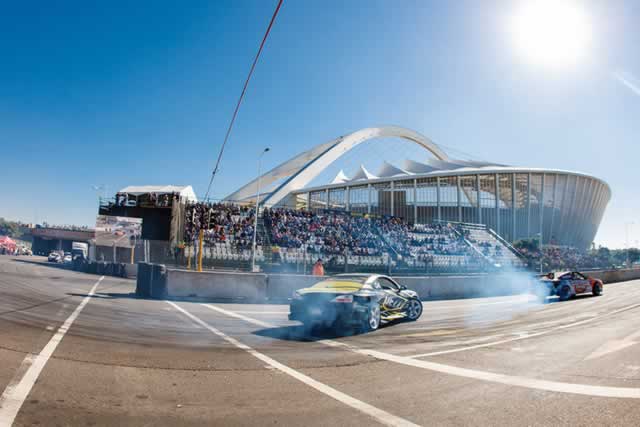

MY recent visit to Durban, South Africa, was an eye-opener: tourism there is not a seven-to-five but a 24-hour business.
Zimbabwe boasts of quality tourism attractions, but failure to develop a supporting leisure industry has hindered the sector’s growth.
It is no secret that many tourists want to party and want to capitalise on every hour and minute. They do not travel so that they can sleep in a hotel room.
When done with safaris, boat cruises and flight tours, as well as wining and dining, what is left is to paint the night red.
Barbadians say, when the sun goes down in Barbados, the party is just beginning.
When travel enthusiasts visit our mighty Victoria Falls, the Eastern Highlands, Kariba Dam or Great Zimbabwe, they are kept entertained during the day but as soon as dusk falls, they have nowhere to go but to their beds.
There are little or no leisure activities to look forward to at night.
It would be prudent for tourism authorities to adopt and implement some concepts that are used by our neighbouring countries, which have to a great extent helped create comprehensive tourism packages.
The concept of fun after “normal” hours, particularly in Durban, is organised in such a way that daytime activities systematically lead you into night activities.
In short, the two segments of the day complement each other.
Speaking on the sidelines of the third edition of the Durban Top Gear Festival, premised on the highly-subscribed British motoring television series, Durban Tourism head Phillip Sithole said tourism in that part of Mzansi was booming because the city managed to come up with attractive day and night packages for both international and domestic visitors.
This has been done through the Durban Fun Season campaign, which runs from April through to July.
It offers packages, specials, events and information on all the city has to offer.
The fun season is supported by Durban Tourism.
Sithole said countries like Zimbabwe and others in the region had great potential to improve their overall tourism products through forging alliances and coming up with entertaining tourism programmes throughout the day.
He said, for example, that the Top Gear Festival attracts thousands of car and speed enthusiasts.
“There is no reason why a tourist coming from Europe or elsewhere should come and end his visit in Durban. We should package our products in such a way that a tourist that comes this side will also enjoy an experience in Zimbabwe and also fly to Zambia,” he said.
“Apart from these attractive tourism sites that we have, it should be noted that other forms of entertainment like clubbing and music from groups like Ladysmith Black Mambazo play an important role in promoting tourism through selling our culture,” added Sithole.
Tourism activities
As I followed proceedings at the iconic Moses Mabhida Stadium at the Top Gear festival that attracted more than 20 000 people from outside Durban, I could not help but think why Zimbabwe cannot come up with an event of a similar nature.
Zimbabwe plays host to such events like Tour de Tuli, Donnybrook Car Rally and the Castle Tankard horse race, which can – with proper marketing and structuring – be easily shaped into mega international shindigs like the Top Gear Festival or the Durban July Festival, which is mainly centred on horse racing.
It was interesting to note how people from across the globe converged in Durban for the Top Gear Festival.
The festival – presented by Jeremy Clarkson, Richard Hammond and James May – has become one of Durban’s main attractions in the last three years luring more visitors to each edition.
Night life
This has for longer than necessary been the major letdown on our overall tourism package.
Being a night life devotee, I was left rather satisfied with what the biggest city on the Indian Ocean coast of the African continent has to offer.
For a country that needs to generate as much money as possible from visitors, it would make sense for us to address this area as a matter of urgency.
After spending the day visiting all sorts of attractive sites, the setting of the sun presented us with an opportunity to unwind and let loose some more: activities were in abundance!
Before visiting the night joints, we had a dinner, and not an ordinary one, at uShaka Marine World.
The place, as people are wont to say, brought us closer to nature by giving us a front-row seat to ocean life (picture sharks placidly swimming not more than 10 metres from your plate!) as we enjoyed a sumptuous meal.
From there, I moved on to the clubs and my mission was a simple one: to see what Durban had to offer in comparison to Harare.
Sad to say, the gap is huge.
The clubs provide revellers with all sorts of entertainment and are open until one drops.
Where a club closes early, another one is open near enough for you to carry on as before.
Never mind your music preference; it is all catered for, be it in the same club or a different one.
For gamblers, casinos are open 24/7.
Township tourism
The concept is centred on the historical significance of various townships, with liberation war heroes being the backbone of this model.
Zimbabwe adopted township tourism two years ago. However, I feel the local tourism authority needs to take a leaf from Mzansi, where statuettes have been used to promote township tourism.
Add to this, tourism offices are placed in strategic townships like Inanda, where the late ANC founding father John Langalibalele Dube’s statue and grave (together with that of his close family relatives) are housed at the first “Zulu Christian Industrial School”, which he founded and is now called Ohlange High School.
Tour guides help visitors understand the historical significance of the townships in an interactive and entertaining manner.
Township tourism need not be a seasonal affair, like only during Sanganai/Hlanganani, but an ongoing thing.
Max’s Lifestyle in Umlazi, a hugely popular venue frequented by all cultures and races from all over the world, is testimony to this.
Hotels/Tourism facilities
While a number of local hotels battle to obtain the star grading that they do not deserve, it is actually a different case in South Africa.
There is serious competition down South.
What I really found interesting though was that hotel owners often negotiate with regulating authorities to get lower star grades than they deserve.
This, they argue, allows them to offer quality service at the cheapest possible rates and thus attract more guests.
“We have just finished construction work at this hotel. It is supposed to be a four-star hotel, but we have asked that it be given a three-star rating so that our service charges are priced lower while we offer five-star service.
“Getting a higher star rating means we will not be able to offer cheap services since the grading system comes with minimum recommended prices for services,” explained Three Cities hotels international sales executive, Margaret Janssen.


 Online Reporter