malvernmugadzikwa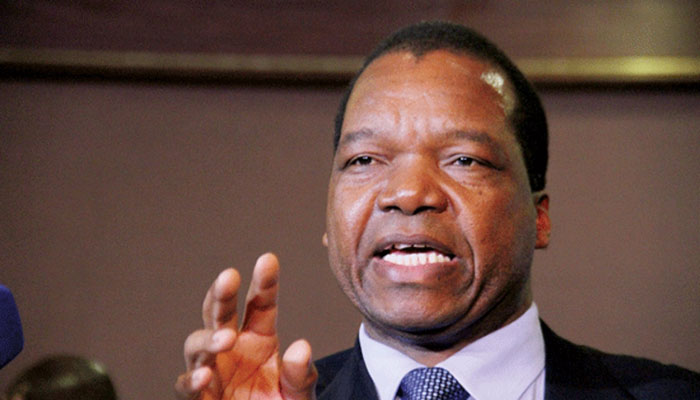
Debra Matabvu
THE Reserve Bank of Zimbabwe (RBZ) has stockpiled over 300 000 carats of diamonds collected under the new mining royalties system that requires mining companies to pay 50 percent of their royalties in refined minerals.
The legislative measures were indicated in amendments to the Finance Act (Chapter 23:04) and Reserve Bank of Zimbabwe Act (Chapter 22:15).
Under the law, mining companies extracting precious and high-value minerals are required to cede refined mineral products, as part payment of royalties to Government, in an initiative introduced to build the country’s mineral reserves.
The policy came into effect last October with gold, diamonds, lithium and platinum group metals (PGMs) producers depositing the minerals at the RBZ.
In an interview with The Sunday Mail, RBZ governor Dr John Mangudya said: “Since the introduction of the policy, we have collected about 300 000 carats of diamonds, while our gold reserves are around 350kg. This translates to US$20 million worth of gold in our reserves,” he said.
“The equivalent cash of diamonds in the reserves is difficult to get because there is no universal body that sets prices for diamonds.
“The other companies are also submitting their royalties in cash since the minerals are bulky.”
As at August 10, 2023, a kg of gold was selling for US$61 957 on the London Bullion Market, while one carat of diamond costs between US$1 200 and US$11 000 depending on the size, colour and grade.
A carat measures the weight of a diamond, and is equal to 200 milligrammes.
Companies extracting bulky minerals such as lithium are surrendering the cash equivalent of 50 percent of their royalty obligations, which is used by the central bank to purchase gold for the reserves.
The initiative to collect royalties in the form of minerals comes as the RBZ introduced the Mosi-oa-Tunya gold coins last year, and the gold-backed digital tokens earlier this year.
Both assets are backed by physical gold reserves at the central bank.
In the Mid-Term Monetary Policy Statement released last week, Dr Mangudya said the central bank’s digitalisation of gold is meant to create another investment instrument.
“Given the above, the bank has accelerated efforts towards the digitisation of gold through gold-backed digital tokens (GBDTs).
“The GBDT will primarily serve as an alternative investment instrument, which shall be scaled up to be used for transactional purposes by the public. The GBDT allows investors to preserve their value, but above all, allows for divisibility, as the milligramme is one thousandth of a gramme.
“Similar to the physical gold coins introduced by the bank in 2022, the GBDTs were introduced in response to continued strong domestic investor demand for convenient and reliable market-based instruments for value preservation.
“The GBDTs are, therefore, an added convenient instrument that allows investors to enjoy the same value preservation benefits of physical gold without the security risk and indivisibility of holding physical gold coins.”
Dr Mangudya said the gold-backed digital tokens and the Mosi-oa-Tunya gold coins have been effective in mopping up excess liquidity in the market.
According to the Mid-Term Monetary Policy Statement, as at July 14 2023, the Mosi-oa-Tunya had mopped up $35 billion from the market, while $50,5 billion of gold-backed digital tokens had been purchased as at July 21 2023.
“On account of their effectiveness in mopping up liquidity, the GBDTs have since proved to be an effective monetary policy instrument with strong potential to help restore normalcy in the domestic financial and capital markets within the short term,” Dr Mangudya added.
“In addition, the divisibility nature of the digital gold tokens conforms to the national objective of leaving no one and no place behind in national development initiatives.”
He said the issuance of lower denomination Mosi-oa-Tunya gold coins and digital gold-backed tokens is in line with the central bank’s long-standing commitment towards financial inclusion, as it “enhances access and affordability for a wide cross-section of economic agents across all income brackets”.
Dr Mangudya said the central bank is at an advanced stage in introducing the transactional phase of the gold-backed digital tokens.
“The bank is at an advanced stage in preparations for the rolling out of GBDTs for transactional purposes in phase two of the project under the code or name ZiG, which stands for Zimbabwe Gold,” Dr Mangudya added.
“It is envisaged that the transactional phase will see GBDTs complementing the demand for the US dollar in domestic transactions as retailers will be offered a safer, more convenient and value-preserving medium of exchange.
The RBZ governor said awareness campaigns will be conducted in all provinces and districts of the country to educate the public on the use and benefits of the GBDTs.
He said consultations had already been done with various stakeholders, including the Confederation of Zimbabwe Industries and the Zimbabwe National Chamber of Commerce and the Retailers Association of Zimbabwe.
Banks are in the process of configuring their systems to allow for the issuance of cards to be used for transactions.



 Online Reporter