Andrew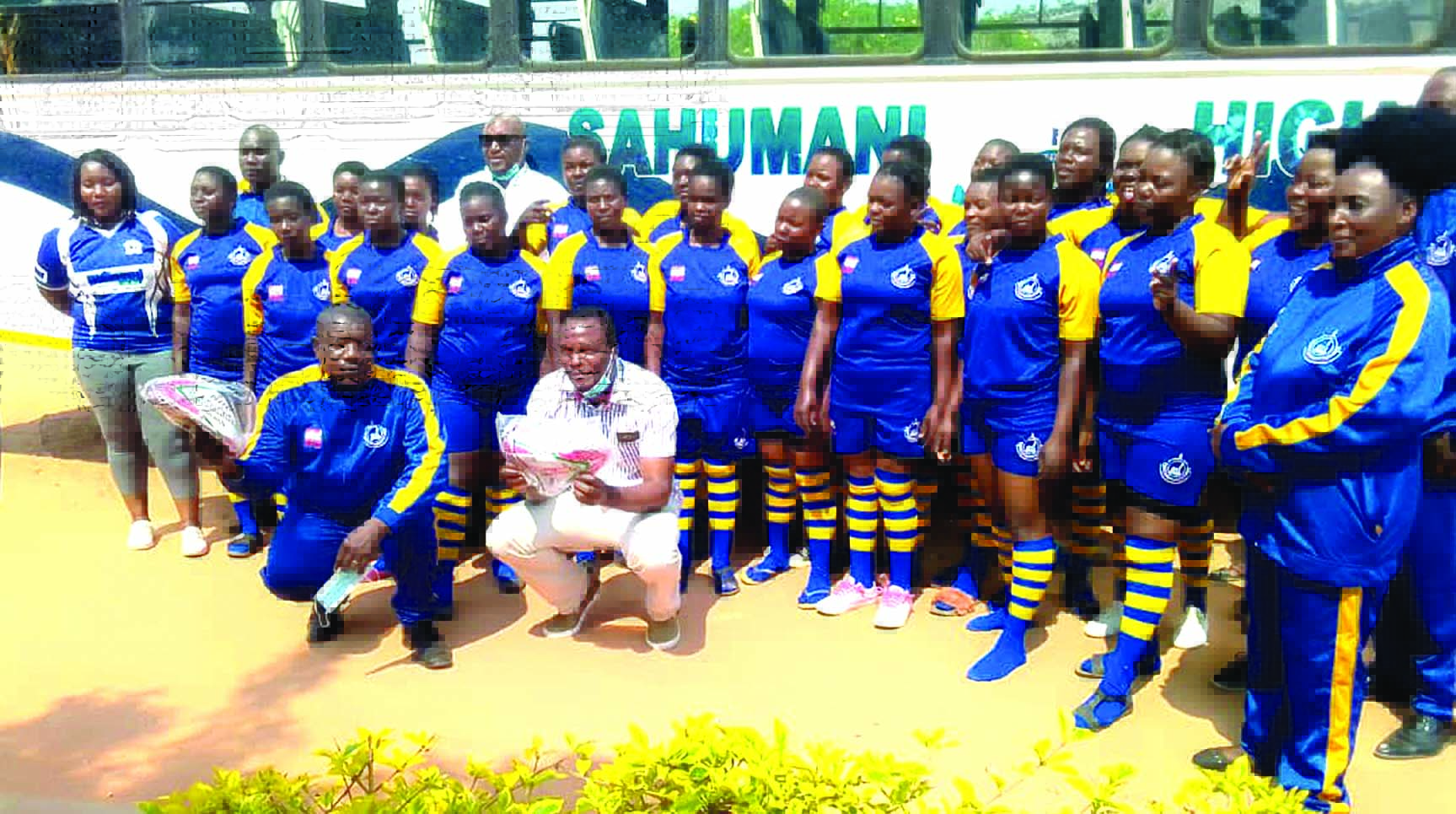
Don Makanyanga recently in Honde Valley
IN a country that is largely fed a strict diet of football, Honde Valley in Manicaland is the last place one would expect rugby to drive people crazy, particularly women.
But, apparently, this is the case in this rural area, where what started as a small project at Secondary School has gone on to produce players good enough to play for the national team.
While rugby is still considered an elite sport, which is relatively unpopular compared to football and athletics, it has been making waves in Honde Valley.
And this can be attributed to Sahumani school teacher Crispen Nyakatsapa, whose dream and commitment to transform lives in the area through the game has also found huge support from Zimbabwe Rugby Union (ZRU) president Aaron Jani.
Although some administrators cannot fathom rugby being suited for women because of its sheer physicality, that is not the case at the school.
After attaining a World Rugby Level One coaching certificate in 2015, Nyakatsapa decided to introduce the sport at the rural school, which is 100 kilometres from Mutare.
It got everyone excited.
“After I attained a level one rugby coaching certificate in 2015, I decided to introduce the sport as a way of demystifying the long-held notion that rugby is an elite sport that cannot be played by rural folk,” said Nyakatsapa.
Rugby also served another purpose in an area, where forced marriages, school drop-outs, teenage pregnancies were becoming common. Some families were even struggling to send their children to school.
Using a field meant for soccer, Nyakatsapa together with his fellow teachers began their journey in earnest.
In 2017, Sahumani Secondary School made their debut appearance at the Dairibord Annual Schools Rugby Festival in Harare.
Playing without a proper rugby uniform — with players using tennis shoes while others played bare-footed – one would have forgiven the team for feeling out of place.
However, they put up decent performances that charmed neutrals who watched the games at Prince Edward School.
“Our first appearance at the rugby festival was emotional,” recounted Nyakatsapa.
“We had to use the girls’ soccer team uniforms, while the bulk of our players who did not have tennis shoes had to play the games bare foot.
“But what caught the eye and hearts of many was how the team played.
“For the girls, what mattered was playing the sport they love, and they played their hearts out, something which caught the attention of many and opened up some sponsorship for the school and the girls.”
At their second appearance at the festival in 2019, their exploits did not go unnoticed, as five girls from the team — Catherine Muranganwa, Mavis Zunga, Mary Birwa, Privilege Mabhozhera and Fortunate Nyamavanga — were selected to be part of the national Under-18 team that took part at Craven Week in South Africa later that same year.
One of their players, Trish Kandemiri, went on to represent the senior national team.
Success in national colours was probably the tonic their peers in other schools and the community needed to get hooked on the sport.
Such has been the impact that even young women in the village have since formed their own team known as Sahumani Bullets.
Nyakatsapa’s burning desire to take rugby a step further and ensure the sport continues in the community pushed him to engage 50-year-old Rebecca Nzara — a community volunteer — to organise women to start a club.
“I was approached by Mr Nyakatsapa to see if I could organise women in the community to start our own team,” said Nzara.
It was not smooth sailing.
The recruitment exercise faced resistance from the women’s husbands who associated rugby with immorality.
“But, with time, the husbands started warming up to the idea, but on condition that I report to them regularly about our activities,” she added. The game began to change lives of women and the girl-child in the area.
“When rugby was introduced at this school, many girls benefited from the sport, as we saw an influx of corporates and individuals coming in and paying school fees for children.”
The formation of Sahumani Bullets, Nzara added, has also helped fight against gender-based violence (GBV).
“Before or after training, we congregate and discuss problems affecting our households, sharing ideas on how women can tackle some of the social problems like GBV . . . Sahumani Bullets is now more than just a rugby club.”
Currently, close to 30 women ranging from 18 to 40 years make up the team.
They train on Wednesdays, a day that is traditionally set aside for rest in the community.
The team is captained by 36-year-old Omega Paradzai, a mother of two.
“Through rugby, we have started a group savings club through which as young women we can financially contribute to our families. There has been less problems in families of our rugby players since the formation of the club.
“We are also hoping that through Sahumani Bullets, we can do projects that can empower women,” said Paradzai.
“Having watched the school girls representing Zimbabwe at different levels, we believe we can provide more players for the national team.
“There is a lot of talent in Honde Valley and I think there is need to spread the sport to other rural areas.”
Paradzai paid tribute to Jani, who has also facilitated games with other rugby clubs.
ZRU board member Abigail Mnikwa and Jani both sit on the Rugby Africa Women Advisory sub-committee.
Jani has also used his personal resources to provide some scholarships for some of the girls at Sahumani to enable them to focus on both rugby and school.
“The ZRU president gave us rugby uniforms and tracksuits, paid school fees for children at Sahumani Secondary School and also ensured that we travelled to Harare for tournaments.
“We are appealing to corporates and other individuals to follow what Mr Jani has been doing to uplift women through sport,” she said.
After capturing the imagination of women in Honde Valley, there are expectations that the rugbymania could spread to other rural areas across the country.
It is hoped that Zimbabwe could soon emulate Madagascar, which now has more than 400 clubs, turning their national team into a regional and continental force.



 Online Reporter