Nqobile Bhebhe, [email protected]
PRESIDENT Mnangagwa has urged local exporters to ensure their products carry the “Made in Zimbabwe” insignia in all markets as part of efforts to strengthen the country’s global brand visibility and consolidate its footprint in regional and international trade.
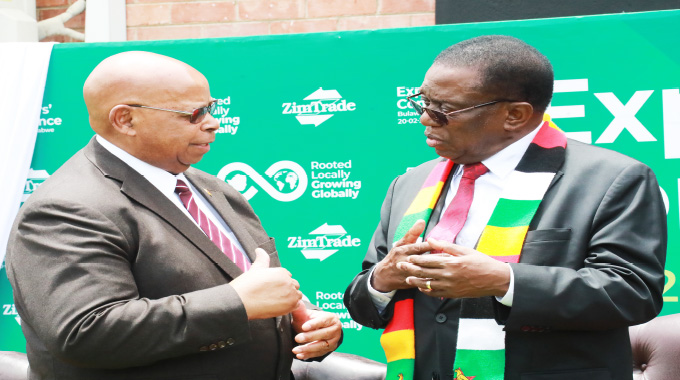
Addressing delegates at the ZimTrade Annual Exporters’ Conference in Bulawayo on Friday, President Mnangagwa underscored the strategic importance of building a strong national brand grounded in quality, value addition and competitive manufacturing as Zimbabwe accelerates its drive to grow exports and tap into new markets.
He said Zimbabwean goods — from processed foods to engineering outputs — must boldly display their country of origin as part of a deliberate strategy to position the nation as a reliable and competitive producer.
“The goal is clear; our country’s processed foods, beverages, engineering products, pharmaceuticals, steel and manufactured goods should carry the ‘Made in Zimbabwe’ insignia into all markets,” said President Mnangagwa.
The call comes as Government intensifies industrialisation, beneficiation and value addition efforts across key economic sectors in line with Vision 2030. The President said branding and labelling were not cosmetic exercises, but critical tools that communicate quality, standards compliance and national identity in an increasingly competitive global market.
Consistent use of the “Made in Zimbabwe” label, he said, would enhance product recognition, build trust with international buyers and strengthen the country’s trade diplomacy and economic influence.
President Mnangagwa urged exporters to remain agile and forward looking, particularly in light of shifting global dynamics and the rising influence of Africa and the Global South in international commerce. He challenged businesses to align their export strategies with emerging opportunities across the continent and beyond.
“Let us take advantage of the opening up of stronger economies to Africa and the rest of the global south. As Zimbabwe, our export product development, labelling and branding should incorporate aspects related to quality assurance and the intricate concerns of diverse markets.
“Export market strategies have to be alive to the languages of export destinations. The tourism sector and other critical stakeholders, such as the Ministry of Industry and Commerce and the Ministry of Lands, Agriculture, Water and Rural Development, should play their part in nurturing market linkages and synergies. All hands must be on deck for us to meet our targets.”
He emphasised that a coordinated national approach — involving ministries, agencies and private sector players — was essential to unlocking export growth and ensuring Zimbabwean products meet international standards and respond to the preferences of target markets. Increasingly, packaging, certification, language adaptation and cultural considerations are shaping purchasing decisions globally.
The emphasis on the “Made in Zimbabwe” insignia aligns with the Government’s broader push to promote local content, enhance domestic production, reduce reliance on imports and expand foreign currency earnings through diversified exports.
Economic analysts note that a strong and consistent country of origin label can significantly bolster competitiveness by differentiating products, reinforcing perceptions of quality and fostering national pride in locally manufactured goods.
As Zimbabwe deepens engagement under the African Continental Free Trade Area (AfCFTA) and strengthens ties with markets in Asia, the Middle East and Latin America, the President’s call signals a renewed drive to consolidate the country’s identity as a producer of high quality, value added goods.
With exports playing a central role in economic growth and job creation, the “Made in Zimbabwe” brand is expected to become a key pillar in the nation’s trade and industrial development agenda.