Online Reporter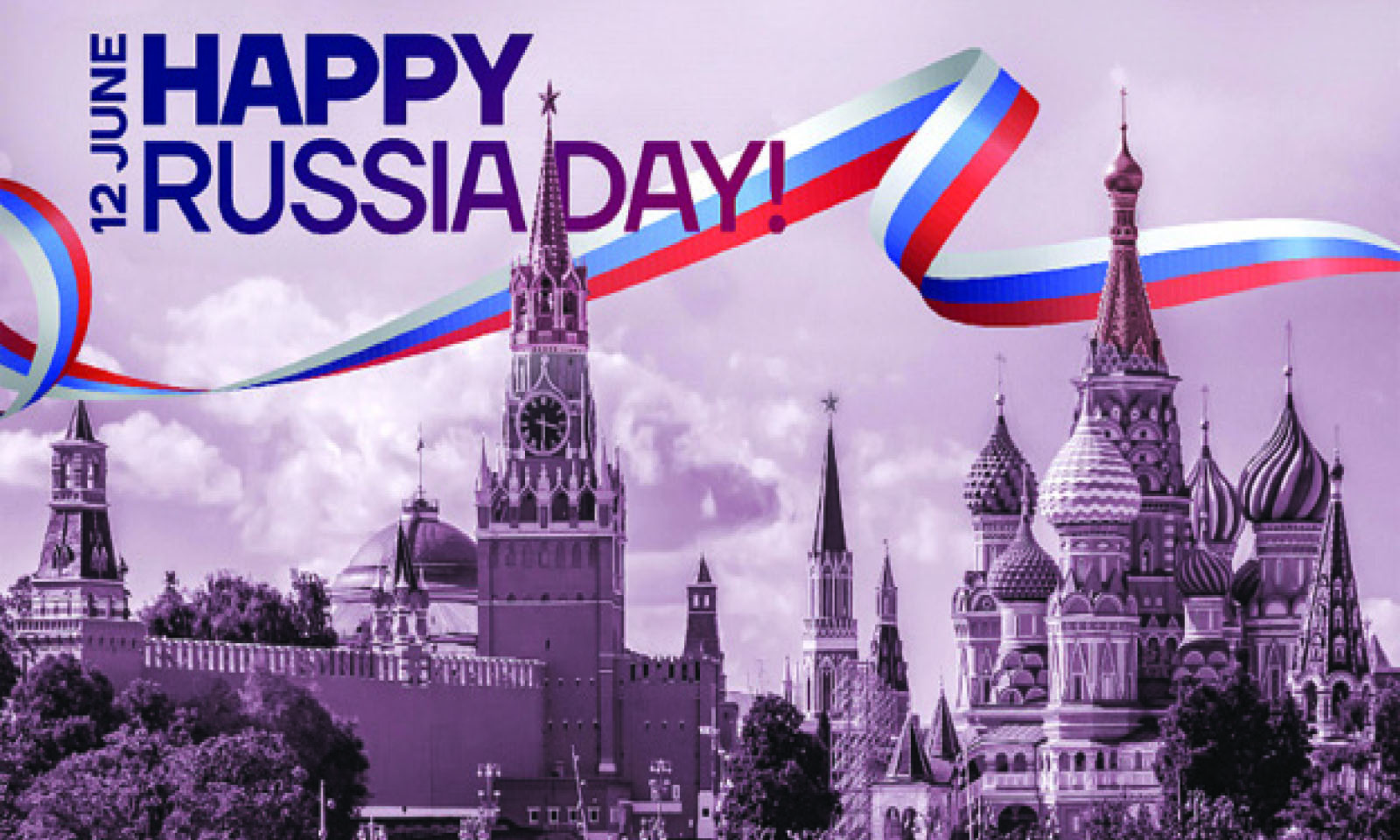
Special Correspondent
Russia Day is the National Day of the Russian Federation, which marks the anniversary of the First Congress of People’s Deputies adopting the Declaration of State Sovereignty of the Russian Soviet Federative Socialist Republic (RSFSR) in 1990.
It means the following: on June 12, 1990, when the Soviet Union was on the verge of disintegration, the RSFSR, the biggest Republic of the USSR, followed other Republics by declaring sovereignty and stating that its laws superseded the Soviet ones. It marked the beginning of the new history of our state.
The following year, on June 12, 1991, Russia (still the RSFSR at that time) held its first presidential election, which Boris Yeltsin won.
In 1994, he declared June 12 a national holiday; back then it was called ‘Day of Adoption of the Declaration of State Sovereignty of RSFSR’. In 2002, the official title was changed to simply ‘Russia Day’.
Russia Day is a big patriotic holiday, the symbol of national unity and civil peace.
There is an official program of celebrations: streets and buildings are decorated with the colours of the national flag, concerts and other events are held throughout the day at various locations (including a big show in the Red Square in Moscow), followed by fireworks at the end of the day.
The national award ceremony is also one of the major events of these celebrations.
Annually on June 12, the President of the Russian Federation hands out state awards to the outstanding Russian scientists, artists and social workers for their significant accomplishments in the previous year.
These official award presentations are broadly televised and attended by the most influential political figures.
The holiday in general is very important for shaping Russian national identity. Russian President Vladimir Putin said: “We treasure the millennium-long history, great culture and tremendous achievements, the unique natural wealth, the beauty of the huge expanses, the diversity and original identity of Russia’s regions.
“We take pride in the labour and military achievements of the predecessors. We see Russia in its full might, remember its millennium-long history. We are aware that this path has been full of landmark, pivotal and difficult stages.”
One difficult period included the drastic changes that took place during the 1990s.
We remember this hard period well, as everything changed: our economic structure and public and human relations.
These inevitable and overdue changes became, to a large extent, a challenge for people.
It was hard for them to start everything from scratch, but they succeeded and in a short period of time created the legal and economic basis of modern Russia, provided endurance and stability for its sovereignty and democratic structure, preserved peace and accord between the peoples of a multi-ethnic country, and saved and enriched the abundance and variety of its great culture.
This has always been our history. Our fatherland was revived and became stronger due to the solidarity and dedicated labour of millions of people.
And today, commitment to the traditions of unity, the high level of nationhood and patriotism is defining Russia’s strength and stamina.”
In the international arena, Russia is a consistent advocate of promoting international relations based on the principle of equality, indivisible security, as well as inadmissibility of double standards and supremacy of international law.
The events of the past few years have demonstrated the key role of Russia as mediator in solving many regional problems using political and diplomatic means.
The Russia-Africa Summit and Economic Forum in Sochi last year opened up a new page in the traditionally friendly Russia-Africa relations and contributed to strengthening mutually beneficial trade, cooperation in economic, investment, scientific, technological and humanitarian areas.
The mechanism of Russia-Africa partnership established at the Summit will promote coordination in such a specific area as the efforts to counter the coronavirus pandemic.