admin
admin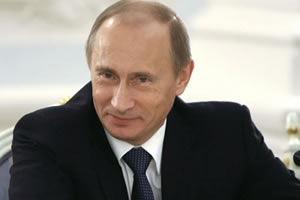

On February 14, 2013 the President of the Russian Federation Vladimir Putin signed a decree “On celebration of the 20th anniversary of the adoption of the constitution of the Russian Federation”.According to this document, a committee has been established to commemorate the anniversary of the adoption of the Constitution.
First Deputy Head of Presidential Administration of the Russian Federation VV Volodin was appointed Chairman of the organising committee and Plenipotentiary Representative of the President of the Constitutional Court MV Krotov its executive secretary.
An action plan to commemorate this significant date was adopted and it provides a solemn meeting on December 12 later this year in Kremlin as well as a number of lectures, seminars, round tables, receptions and other events both in Russia and abroad. The history of constitutional development in Russia has its roots in the first half of the 19th century.
“The Plan for State Transformation” by MM Speranskiy (1809) and “The State Charter of the Russian Empire” by NN Novosiltsev (1818) were among the first constitutional projects carried out in Russia.
Speranskiy’s plan raised the possibility of a constitutional monarchy, with its powers limited by Parliament. He interpreted the Constitution as a state law, “defining the initial rights and relations of all classes together”.
However, the idea of constitutional reforms in Russia at that time remained unimplemented since they it has not met any socio- economic or political conditions. At the time, the legal framework of the Russian Empire was based on the concept of autocratic rule and adopting a Constitution would place limits on royal power.
Nevertheless, Tsar Alexander II, who was referred to as The Reformer and had repealed serfdom, was in the process of drawing up a Constitution that had not been adopted because of assassination in 1861. The first domestic Constitution appeared only in 1918; further constitutional development can be characterised by demolishing of old imperial system and laying formation of the foundations of the new order.
Throughout the rest of the Soviet period four constitutions were adopted. The Constitution of 1918 provided solely the working class with political rights, the Constitution of 1924 did not contain provisions on the rights and responsibilities of citizens, the references of which first appeared only in the Constitution of 1937 (in particular the right to labour), and in the Constitution of 1977, the people finally become the holder of all powers.
The 1993 Constitution was adopted under complex historical conditions, in an atmosphere of severe political confrontation. The Draft Constitution was presented by the Supreme Council and limited the powers of the President Boris Yeltsin, the basic management functions were to be transferred to the Parliament.
The administration of the President in its turn produced an alternative draft, which was however rejected. A growing crisis forced the President to take a decision to dissolve the Congress of People’s Deputies and the Supreme Council.
Following the events of October 1993 the work on the final draft of the Constitution of the Russian Federation begun. The State and Public Chambers of the Constitutional Council were established for this purpose, and all the articles of the Basic Law were developed and agreed upon during their sessions.
The new Constitution was adopted by popular vote on December 12, 1993 and took effect on the day it was published – December 25 of the same year.
The Constitution of 1993 was one of the main achievements of the post-Soviet era. It consolidated the strength of state structures and at the same time provided enough space for freedom within these strong foundations, which had been omitted in previous Soviet versions of the Constitution.
The new document laid a legal foundation that provided the political, economic, and social integrity of the state. The Constitution became an expression of the basic legal system of values that defined the face of the new Russia and safeguarded its historical continuity.
These were the human rights and freedoms, the rule of law, justice and equality in a democratic, federal, legal and social state, the separation of powers, the Parliamentary system and the legal economy. The new realities made the Russian Federation face the task of building a market economy and an open and democratic society.
The Constitution and its precise, modern and flexible approach, including that of the Constitutional Court, was designed to ensure the integration of Russia into the open world system and at the same time to prevent erosion of Russian state sovereignty and national interests by foreign interests and legal chaos.
To ensure the fundamental democratic principle of the separation of powers, the Constitution defined the three branches of government: legislative, executive and judicial. The task of the President as Head of State and the defender of the Constitution is to ensure collaboration and consistency of the various authorities while the courts and legislatures are taking steps to perform this important task through their inherent powers.
It is obvious that the current Constitution is a necessary and sufficient basis for the development of law and the entire Russian legal system. Its norms contain everything for development of state, social, economic, ideological and political communities. They do not conflict with the principles of modern pluralism and provide all branches of public power with democratic organisation.
Relations between citizens on the one hand and the state on the other are being built in light of constitutional values. The first article of the Constitution declares that “the people’s rights and freedoms are of the supreme value” and Russia is a social state whose policy is aimed at creating the conditions for a life “of dignity and free development of the citizens”.
According to the Constitution of Russia they may be limited by federal law only to the extent that it is necessary for the protection of the constitutional system, morals, public health, rights and lawful interests of other persons, national defence and state security.
The current Constitution also laid the foundation for the full development of the Russian parliamentary system. As the Chairman of the State Duma of the Russian Federation, Mr Sergey Naryshkin, noted in his speech on December 12, 2012 during Constitutional Hour, “If it had not been for the Constitution of 1993, there would also have been no real democracy or parliamentary representation.
After all, neither the Soviet nor the previous historical transformations were able to establish a genuine separation of powers. “They did not allow for the establishment of a real parliament, capable of actually discussing and creating laws as well as representing the interests of various sectors of society.”
Since the adoption of the Constitution several amendments have been made. The most significant amendments to date were adopted in 2008 – the term of the Head of State has been increased from four to six years, and those of the deputies of the State Duma from four to five. Moreover, the Government of Russia is obliged to report annually to the Deputies on its work.
In response, the President of the Russian Federation, Vladimir Putin, has repeatedly stated publicly he will not allow unjustified change of the basic law. The stated purpose of the Constitution, values and mechanisms have proved their competence and have helped our society to overcome difficulties and get on the path to sustainable development.
– This article was provided by the Embassy of the Federation of Russia in Harare


 Online Reporter