Chronicle Editor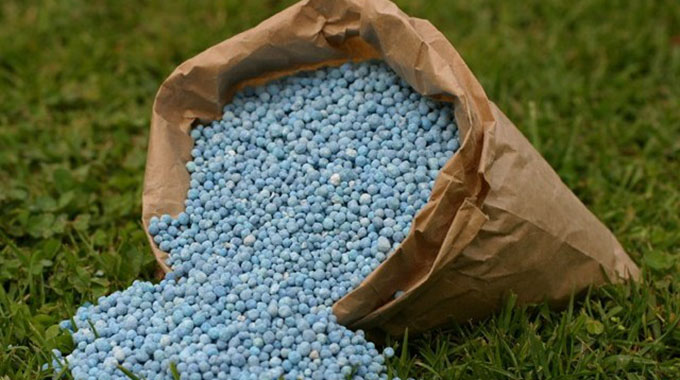
Nqobile Tshili, [email protected]
RUSSIA’s giant fertiliser manufacturing company, Uralchem Group, is in the process of shipping 23 000 tonnes of humanitarian fertiliser to Zimbabwe to complement the country’s efforts to boost food and nutrition security.
The consignment would provide relief to farmers at a time when the Government has liberalised fertiliser imports as local manufacturers were struggling to meet demand due to increased agricultural productivity.
Russia and Zimbabwe enjoy excellent bilateral and trade relations dating back to the pre-independence era.
Uralchem Group head of special public relations projects, Mr Emin Bayramov, yesterday said the fertiliser is now en route to Zimbabwe having been loaded in ports Riga, Latvia, and Ghent, Belgium. He said the fertilizer donation is part of the company’s commitment to addressing global hunger through a partnership with the United Nations World Food Programme (WFP).
“Uralchem Group announces that a humanitarian shipment of over 23 000 tonnes of fertiliser for Zimbabwe has been fully loaded onto a vessel in the ports of Riga, Latvia, and Ghent, Belgium, and has started its journey to the port of Beira in Mozambique,” said Mr Bayramov in a statement.
“From there the fertilisers will be transported to Zimbabwe by land. The shipment, comprising bulk loads of potash and NPKS fertiliser, is again facilitated by the United Nations World Food Programme (WFP), which has chartered a vessel to transport the consignment as part of UNCTAD-led efforts.”
He said Uralchem Group will cover the expenses of the shipment processes. Mr Bayramov said the country will be the fourth to receive the fertiliser consignment in Africa.
“The delivery for Zimbabwe is the group’s fourth donation in a series of humanitarian shipments of its fertiliser to Africa.
To date, Uralchem Group has dispatched over 100 000 tonnes of fertilisers to the world’s second most populous continent free of charge.
“Over 77 000 tonnes from this amount were shipped from ports and warehouses in the European Union in cooperation with WFP — to Malawi, Kenya and now to Zimbabwe,” said Mr Bayramov.
He said Uralchem Group is committed to donating approximately 300 000 tonnes of mineral fertilisers to developing nations to alleviate the unprecedented global food crisis and prevent crop losses in countries that face the risk of famine.
Mr Bayramov said the initiative also supports the UN Sustainable Development Goal Number 2 of ending hunger, achieving food security and improving nutrition and promoting sustainable agriculture.
Uralchem JSC chief executive officer, Mr Dmitry Konyaev, said fertiliser is critical in ensuring global food security and his company is determined to see that farmers realise improved agricultural output through its use.
“Fertilisers are an integral part of the global food security system, which relies on the stability of food production. As one of the key suppliers of mineral fertilisers to international markets including Africa, and a company with a proud mission to create a world without hunger, we see our exceptional role in doing whatever we can to ensure food security in those parts of the world where people may face food shortages,” said Mr Konyaev.
“We shall be looking forward to seeing Zimbabwean farmers getting our fertilisers, using it properly and eventually reaping a fruitful harvest.” —@nqotshili



 Online Reporter