

 Chronicle Editor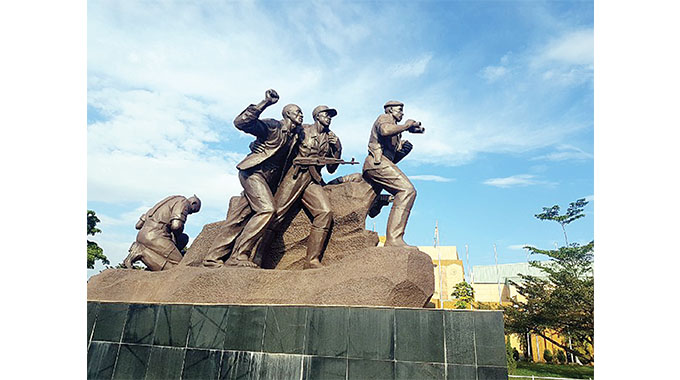
Own Correspondent
On 4 July Rwanda will mark its 27th Liberation Day (Kwibohora 27) to mark the day the Rwanda Patriotic Front liberated the country and stopped the genocide against the Tutsi in which one million people were killed in cold blood in massacres which were meticulously planned and executed by the hardline genocidal regime.
Rwanda descended into mayhem from the 7th of April 1994 when the genocidal government and its militias began the Genocide against the Tutsi which claimed one million lives in 100 days of bloodletting. The killings were halted after the Rwanda Patriotic Front led by the now president, Paul Kagame, defeated the hardline genocidal regime and drove them out of power.
From the devastation and hopelessness following the horrors of the Genocide against the Tutsi in 1994, Rwanda has defied all odds to become a model country touted as the Singapore of Africa.
So grand is the socio-economic progress that Rwanda refugees who fled the country to Zimbabwe during its dark moments in 1994 and came back under a United Nations High Commission for Refugees “go-and-see” visit could not recognise their own country.
Outlining the Liberation Day, Rwanda’s ambassador to Zimbabwe James Musoni, said after driving out the extremist government the Rwanda Patriotic Front set up a new governance system that promoted unity and reconciliation among the people of Rwanda and removed all forms of discriminatory norms and rules that were established by the genocidal regime.
But the new government faced a myriad of serious challenges after the liberation of Rwanda. Over one million of innocent Tutsis were left killed and their bodies scattered everywhere. Up to 3.7 million dominated by the genocide perpetrators and their families went to exile to the nearest border of the country, government coffers were emptied by regime that executed the genocide.
Rwanda was teeming with orphans, the internally displaced people, injured and handicapped people with fresh wounds and several houses belonging to Tutsis were destroyed.
All government offices were left dysfunctional including key social infrastructure such as schools and hospitals as teachers and doctors had fled the country.
However, despite these overwhelming challenges, the victorious and dedicated RPF- led by President Kagame made sacrifices without expecting help from anywhere and moved the country from total destruction to a model country revered across the African continent.
The RPF founded government successfully repatriated more than 3,4 million refugees that were camping close to Rwandan borders in the Democratic Republic of Congo, Tanzania, Burundi and Uganda. “The refugees were all let to re-occupy their properties” said Ambassador Musoni.
To ensure that victims of the Genocide against the Tutsi get justice against the perpetrators the RPF-led government introduced a homegrown solution and settled about two millions of cases in a short space of time. In addition, the government introduced memorial sites around Rwanda to honour the bodies of innocent Tutsis that were scattered everywhere.
A fund to support genocide victims and survivors was established to cater for their basic needs such as health, education and housing.
Enter year 2000, Kagame took over as the President and he immediately hit the ground running — introducing intellectual approaches that set the stage for Rwanda’s transformation.
“The policies quickly revamped different sectors of the country (political, economic and social development),” Ambassador Musoni said.
Rwanda staged as a peaceful, prosperous, sovereign and self-defined, that is getting politically and economically integrated in the region, the continent and the world.
Rwandan leaders have espoused values as — selflessness, result-oriented, self-reliance and self-determination, Rwandan identity, equity (including gender and youth), participation in the global community and good governance.
Affirmation and reinforcement of dignity in the conduct of Rwanda’s foreign relations.
It has engaged constructively with other nations around the world through regional and multilateral organizations for the promotion of mutual and collective interests.
Rwanda strengthened peace and security to protect its sovereignty and territorial integrity and committed to the UN charter principles.
The country has recorded and is playing a prominent role in preventive diplomacy, peace keeping, Peace-making, and peace building on African Continent and other parts of the world. (One of the Top Contributors to UN Peacekeeping Forces)
The visionary leadership has also vested efforts in development of cooperation and partnerships, promotion of equitable world trade, and positioning Rwanda as a host country for regional, and international organisations and an airport hub for major international flights.
Rwanda was due to host the Commonwealth Summit but it was postponed due to the Covid-19 pandemic. It is due to host the inaugural Rwanda — Zimbabwe Trade and Investment Conference end of July.
Upon taking over a shattered country, the RPF-led government took an active role in revamping economy from the depression it was in 1994 to the current phenomenal status in various sectors of development.
Rwanda is ranked the 2nd to ease doing business on the continent with potential investors requiring only six hours to register a business.
Tourism and hospitality was improved enormously from no five-star hotel in 1994 to about seven five star hotels currently.
Rwanda’s infrastructure development is transforming the country into a regional hub of service industry and ease transport network.
Rwanda is currently ranked 3rd in Africa with best and quality roads after South Africa and Namibia, by the World Bank’s Global competitive report index. Access to electricity has increased from less than 3 percent in 1994 to over 62 percent in 2021. Kigali currently is topping the electrified cities in Africa with all the key streets having public lights.
As President Kagame once said; “It is evident that such a struggle is not simple, the struggle to reclaim our dignity, the struggle for progress Rwandans to live in security, peace and tranquillity, to be in good health, to earn a good education to work and develop, such struggle is not and has never been easy.”
Though it has not been easy, Rwanda seems to have got it right and they are on the right path to attaining their set goals.



 Online Reporter