admin
admin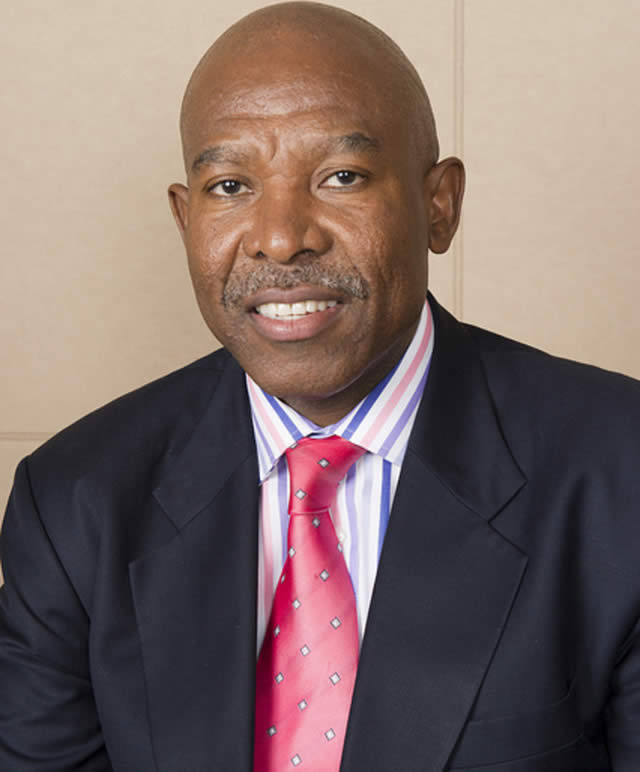

SOUTH African President Jacob Zuma picked Lesetja Kganyago, the former director-general of the National Treasury who joined the Reserve Bank as a deputy governor in 2011, as successor to governor Gill Marcus. Kganyago, 48, will take office on November 9, Zuma told reporters yesterday in the capital, Pretoria. Marcus, 65, said on September 18, she won’t renew her contract after her five-year term expires.
“I have no doubt that eyes will be on me,” said Kganyago, who was one of two favoured candidates to succeed Marcus, along with deputy governor Daniel Mminele.
“I will not disappoint.”
Kganyago joined the bank after serving more than seven years as head of the treasury, where he worked closely with the current finance minister, Nhlanhla Nene.
He helped to steer South Africa’s budget to a surplus between 2006 and 2008, managed the government’s borrowing and developed fiscal policy. At the central bank, his role has been to oversee banking supervision and financial surveillance.
The rand strengthened as much as 0.9 percent to 11.2589 against the dollar after the announcement and was trading at 11.2661 as of 10:33 AM in Johannesburg.
That pared the currency’s depreciation this year to seven percent. Yields on the benchmark government bond due December 2026 dropped seven basis points to 8.28 percent, the lowest on a closing basis since September 26.
Kganyago reiterated the bank’s mandate is to protect the value of the rand in the interest of balanced economic growth and price stability.
Educated at the University of London and London School of Economics, Kganyago spent time in his early career at the Congress of South African Trade Unions, the country’s largest labour federation, and the ruling African National Congress.
Marcus will leave the bank after a single term, during which time she kept interest rates near a three-decade low to support economic growth. Kganyago takes office with inflation above the bank’s 3 percent to 6 percent target, the economy poised to grow at its slowest pace since a 2009 recession and the rand weakening.
“Many people know him and he’s seen as prudently hawkish,” Gina Schoeman, an economist at Citigroup Inc in Johannesburg, said on September 18. “So he’s not willing to kill the economy with too many rate hikes, but he is willing to retain credibility by being tough on inflation.” — Bloomberg



 Online Reporter