admin
admin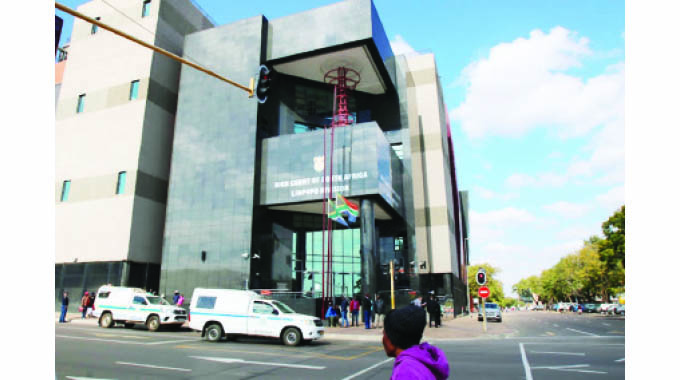
FOR decades Africans have bitterly experienced and weathered western imperialism and tasted its congenital disdain of the African race, creed and integrity. African history is replete with excruciating and dehumanising anecdotes of slave trade, scramble and partition of Africa, colonialism and now neo-colonialism. These are phases that lucidly chronicled the cruelty of western imperialism and its corrosive effect on African heritage.
However, never have we imagined that among African countries would rise a nation harbouring imperial thoughts, like of westerners, to force its way on others or looking down upon its once downtrodden compatriots. How can we imagine such an unpalatable and un-African thing? We know the spirit of being African (Ubuntu/hunhu) would never allow African states to ever exhibit such an un-brotherly conduct.
But could recent extra-territorial developments in South Africa be indications of growing imperialist traits in an African country? The South African Supreme Court of Appeal recently raffled the feathers of Zimbabweans by ordering the South African Police Services (Saps) to investigate high-level Zimbabwean security chiefs accused of committing human rights abuses in 2008.
Does not this smack of extra-territorial incursions reminiscent of unbridled western imperialism? How could South African Courts arrogate themselves the judicial right to order investigations on Zimbabwean officials? What is glaring and opprobrious is that the judgement arbitrarily and provocatively extends the jurisdiction of the South African courts and police into Zimbabwe. This blatantly offends Zimbabwe’s territorial integrity and scornfully raises questions about the competence of Zimbabwean courts and undermines the country’s security apparatus.
It is no surprise that Zimbabwe’s Prosecutor General, Johannes Tomana described the ruling as “absurd”. Mr Tomana rightly pointed out that; “Zimbabwe has its own law enforcement systems which have not failed by the way. It is important for nations to respect each other. It is like they are saying they are better than us and can supervise us”.
Surely, the conceited judgement appears to suggest that the South African justice system is better to Zimbabwe’s and thus have an inexorable right to make legal determinations on its behalf. It deliberately implied that Zimbabwe’s justice system is inept and antiquated. If this does not impugn Zimbabwe’s inviolable territorial integrity and sovereignty then what would?
Do South African courts believe that they are paragons of justice that deserve to imperially meddle in Zimbabwe’s internal matters? Could South Africa’s justice system be so robust that it had completely eradicated crime in its backyard to now point fingers at Zimbabwe?
Ironically, the same Zimbabweans they feign to be protecting are receiving a bad deal in South Africa. Zimbabwean migrants are reportedly subjected to inhumane treatment at the notorious Lindela Repatriation Centre in Krugersdorp, South Africa. Harrowing experiences of human rights abuses at the hands of police and government officials have been told by many Zimbabweans formerly detained at the hideous facility. People are detained longer than stipulated by the South African Immigration Act and Immigration regulations.
The same South African police services that the country’s courts have unleashed on Zimbabwean officials have been found many a time mistreating Zimbabweans in South Africa. The police are accused of taking advantage of Zimbabweans’ lack of immigration papers to demand bribes and use heavy handed measures against them. Worse still, on October 19 2013, plain clothes and trigger-happy South African police details gunned down, in cold blood, a Zimbabwean embassy security official in South Africa, Lucky Hakueri, on convenient pretences that he was an armed robber.
There are many documented cases of human rights abuses perpetrated against Zimbabweans by South African officials that could successfully be taken before Zimbabwean courts for litigation. What if Zimbabweans decide to take all these cases to Zimbabwean courts?
Would the South Africans acquiesce to damning rulings handed down on their senior Government officials by Zimbabwean courts? Would they bow to rulings that denounce and tarnish their justice and security systems?
Zimbabweans are not the only ones subjected to human rights abuses in South Africa. A case of a Mozambican taxi driver, Mido Marcia, is pertinent but is just a tip of the iceberg of endemic abuse of people. In March 2013, Marcia died after being dragged behind a police van.
Images of police officers handcuffing Marcia to the back of a van and dragging him for some distance were beamed to the world. Marcia was later found dead hours later in a police holding cell, lying half dressed in a pool of blood. So, with such an atrocious justice and security system on its backyard, which legal, ethical or political latitude do the South African courts or police have to investigate Zimbabwean officials? This is just a case of trying to behave like a ‘Big Brother’ to Zimbabwe? Yes, it seems South Africa is developing a Big Brother mentality. Could it be because it annually hosts the debauchery-filled Big Brother reality show?
The imperial or Big Brother traits did not only become noticeable in the judgement by the South African Supreme Court of Appeal.
Recently, South African President Jacob Zuma made statements that inadvertently uncovered the contemptuous psyche currently guiding the country’s relations with other African nations. Speaking at a forum about e-tolling at Wits University on October 23, 2013, President Zuma was quoted saying, “We can’t think like Africans in Africa generally. We’re in Johannesburg. It’s not some national road in Malawi. No.”
It is plain that South Africans consider other African nations as backward and outmoded.
Similar traits were exhibited by President Zuma’s International Relations Adviser, Lindiwe Zulu during South Africa’s facilitation of inter-party dialogue in Zimbabwe. Instead of confining herself to the facilitatory role, she exuded the Big Brother mentality and tried to dictate what Zimbabweans should do. She issued statements that irreverently challenged decisions made by Sadc and the Constitutional Court of Zimbabwe. Such imperial shenanigans ended when President Mugabe, peeved by her condescending imperial behaviour, dressed her down and demanded her principals to rein on her, which they did with alacrity!
Curiously, South Africa behaved like an imperialist when in 2011 it voted in favour of the United Nations Security Council Resolution 1973, which licensed the indiscriminate bombing of Libya by the ravenous western imperial armies fronted by NATO. No African state could vote for the shelling of a fellow African state. It is un-African and despicable.
With such imperial traits, it is now understandable why Zambian Vice-President, Guy Scott berated South Africa for its disdainful attitude towards other southern African states. In an interview with the British Guardian newspaper in May 2013, Vice-President Scott chided South Africa saying; “I dislike South Africa for the same reason that Latin Americans dislike the United States, I think. It’s just too big and too unsubtle… they really think they are the bee’s knees and actually they’ve been the cause of so much trouble in this part of the world.”
We are worried about developments suggesting that South Africa is morphing into an imperial state. An African imperial state. South Africa should immediately stop presenting itself as the Big Brother of other states.
It should also order its courts to leave Zimbabwe alone and instead concentrate on dealing with staggering cases of crime on their backyard. After what we gone through under western imperialism, Southern Africa cannot brook any imperialism and would be ready to ruthlessly dismantle any signs of African imperialism.


 Online Reporter