admin
admin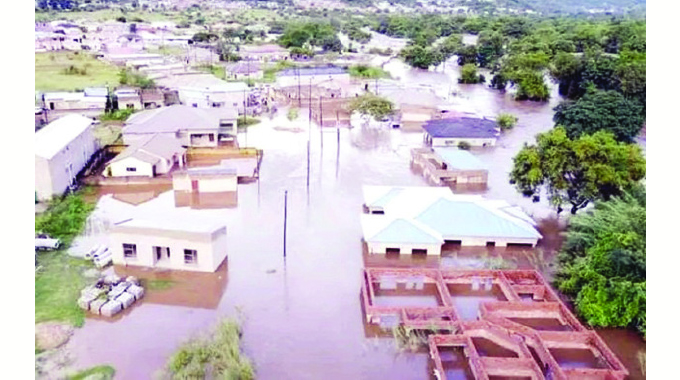
DURBAN. – South Africa hasdeclared a state of national disaster after floods caused by heavy rains in recent days have already left seven people dead and others missing, according to disaster management centres in several provinces.
“The government has declared a state of national disaster to enable a sustained and coordinated response to the impact of the floods,” the presidency said in a statement.
The bad weather threatens seven provinces out of nine that the country has, mainly on the east coast, open to the Indian Ocean.
Mpumalanga and the Eastern Cape have been most affected by the floods, which were brought on by heavy rainfall as a result of the La Nina weather phenomenon, according to a statement from the office of the presidency on Monday.
Gauteng, KwaZulu-Natal, Limpopo, the Northern Cape, and North West have also experienced flooding. Invoking the national disaster act gives the government additional powers, including in the procurement and delivery of goods and services and the ability to bypass restrictions under current law.
Farmers expect crop and livestock losses to continue as the government’s weather service forecasts that the weather pattern will remain “during the early part of 2023,” it said
The national police and defence force may be called on to help respond to the flooding, the statement said. The floods have resulted in wide-ranging impact, from flooded homes and vehicles to “the loss of basic infrastructure,” according to the statement.
“The National Disaster Management Centre has received reports ranging from flooded homes, vehicles swept away by floodwaters and overflowing dams and sewerage facilities, to the loss of basic infrastructure and damage to roads, bridges and a Limpopo hospital. In agriculture, farmers have suffered crop and livestock losses, and anticipate further losses as the South African Weather Service predicts that current heavy rains will persist.”
More rain is expected due to the effects of the global weather phenomenon La Niña. “Forecasts indicate this weather pattern will remain in this state during the early part of 2023. The presence of a La Niña event usually has its strongest impact on rainfall during the mid-summer months,”
The government said it would continue to monitor response to the floods through the National Disaster Management Centre.
“This further includes the dissemination of early warnings and advisories on weather forecasts by the South African Weather Service (SAWS).”
At least five people died in KwaZulu-Natal (KZN, south-east), according to Nonala Ndlovu, spokeswoman of the disaster management centre of the coastal province.
Among them is a newborn baby, who died in the flooding of a house, according to a statement. And several people are missing after trying to cross a flooded river.
Two other people were killed in the neighbouring northeastern province of Mpumalanga, according to local authorities.
In Limpopo (north), a province bordering Zimbabwe, damage was reported to a hospital.
Roads and bridges were damaged and cars were washed away.
The bad weather will require the provision of “temporary shelter, food and blankets to people who have lost their homes, as well as costly and large-scale rehabilitation of infrastructure.”
The National Weather Centre is predicting “persistent and heavy” rains ahead, with the risk of flooding due to “waterlogged soils and saturated rivers”.
Meanwhile, hospital services and schooling activities have been suspended in the Nkomazi Municipality in Mpumalanga, following reports of flooding.
The area has one road linking the rest of the villages, and this has been severely damaged by the floods, hence the suspension of these activities.
According to the Gift of the Givers foundation, they have since activated their teams to urgently assist with the situation in Mpumalanga.
“A 60-year-old man from kaMdladla who was fishing in the Mlumati River was allegedly swept away by a strong current and has not been found,” the municipality said. – Agencies



 Online Reporter