Online Reporter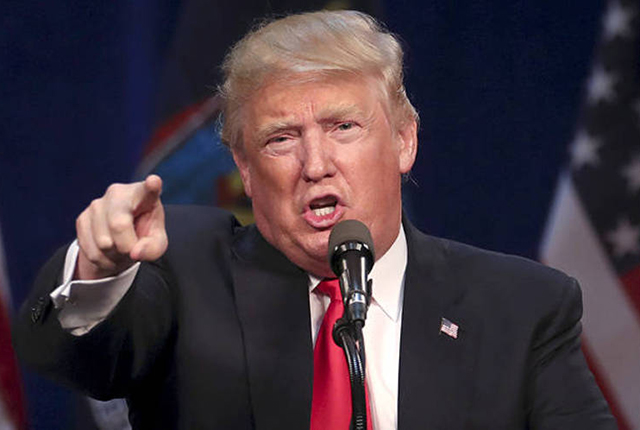
Marshall Rufura Mupazi Ndlela
THE South African rand (ZAR), a critical indicator of the nation’s economic and political health, has endured a volatile journey since 2010, reflecting domestic policy shifts and complex international relations.
A recent diplomatic mission by President Cyril Ramaphosa to mend ties with US President Donald Trump has sparked a significant rally in the rand, which had slumped to a historic low of R20 per US dollar in early 2025.
This resurgence offers hope for South Africans and the Zimbabwean diaspora, whose economic ties to South Africa — particularly through the vital Beitbridge trade corridor — are profound, even as affirmative action policies and disputes over Black Economic Empowerment (BEE) requirements, including Starlink’s regulatory hurdles, fuel tensions.
The rand’s turbulent path since 2010
Since 2010, the rand has weakened dramatically, falling from R7,30 per US dollar to R20 by early 2025. Initially buoyed by global commodity demand and relative stability under President Kgalema Motlanthe (2008-2009), the rand faltered during Jacob Zuma’s presidency (2009–2018).
South Africa’s entry into the BRICS bloc in 2010 promised economic diversification through ties with China, India, and others. However, allegations of state capture, particularly involving the Gupta family, eroded investor confidence. A pivotal moment came in December 2015 when Zuma sacked Finance Minister Nhlanhla Nene, replacing him with David van Rooyen. The rand plummeted over 10 percent in four days, hitting R17,91 on January 9, 2016, before recovering to R16,57 after Pravin Gordhan’s appointment.
Zuma’s era: Cabinet instability and populist policies
Zuma’s frequent Cabinet reshuffles, including four finance ministers between 2014 and 2017, fuelled rand volatility, with the currency hovering around R13,50 by 2017. The 2013 formation of Julius Malema’s Economic Freedom Fighters (EFF), advocating for land expropriation without compensation, mine nationalisation, and Marxist-inspired policies, unnerved investors. Malema’s rhetoric, including the controversial Kill the Boer song, raised fears of Zimbabwe-style land reform.
Zuma’s later adoption of populist policies, such as free higher education without clear funding — aligned with EFF rhetoric and echoed in his campaign for his former wife, Nkosazana Dlamini-Zuma — deepened market unease. By 2017, net foreign direct investment outflows reached R57 billion, exacerbating the rand’s decline.
Ramaphosa’s leadership and ongoing challenges
Cyril Ramaphosa’s election as ANC president in December 2017 at the Nasrec conference and his ascension to the presidency in February 2018 sparked a brief “Ramaphoria,” lifting the rand to R11,80. However, the Covid-19 pandemic in 2020 battered the economy, pushing the rand to R18,93 amid a 6,3 percent gross domestic product contraction.
The 2022 Phala Phala scandal, involving undeclared US dollars stolen from Ramaphosa’s farm, drove the rand to R19,93 in May 2023 as markets feared his resignation. Ramaphosa’s centrist policies, including a minimum wage increase and continued land reform, aimed to address inequality but frustrated Stellenbosch capital owners. Persistent unemployment and social challenges, including crime and infrastructure decay, kept the rand under pressure.
Affirmative action and BEE controversies
South Africa’s affirmative action policies, particularly Broad-Based Black Economic Empowerment (B-BBEE), have been contentious, with some white South Africans and businesses labelling them as racially discriminatory. B-BBEE, designed to address apartheid-era economic disparities by mandating 30 percent black ownership for certain licences, has faced criticism for deterring investment.
A prominent case is Elon Musk’s Starlink, which in 2023 refused to comply with B-BBEE requirements for telecom licences, leading to its inability to operate in South Africa. Musk’s claim that Starlink was barred “because I’m not black” drew sharp rebukes, with officials clarifying that compliance with local laws, not race, was the issue. The controversy amplified perceptions of South Africa as an unpredictable market, contributing to rand volatility.
In response, Communications Minister Solly Malatsi proposed a policy shift in May 2025, allowing “equity equivalent” programmes — such as investments in skills development or infrastructure — as alternatives to the 30 percent black ownership requirement. This move, gazetted on May 23, 2025, aimed to attract companies like Starlink while maintaining transformation goals, but faced criticism from ANC lawmakers like Khusela Diko, who argued it undermined empowerment legislation. Malatsi denied tailoring the policy for Starlink, emphasising broader market competition, but the timing — days after Ramaphosa’s US visit — fuelled speculation of external pressure.
The GNU and land expropriation tensions
The Government of National Unity (GNU), formed in June 2024 after the ANC lost its parliamentary majority, introduced market-friendly policies through its alliance with the Democratic Alliance (DA). However, the Expropriation Act of 2024, enabling land expropriation without compensation in certain cases, alarmed the DA and right-wing groups like AfriForum, Solidarity, and the Cape Forum. These groups, leveraging Musk’s influence, lobbied the US for sanctions, drawing parallels to Zimbabwe’s land reforms. A 2024 High Court ruling against Malema’s Kill the Boer song further emboldened these groups, who sought US intervention, citing racial persecution and economic discrimination.
Strained SA-US relations
South Africa’s foreign policy, particularly its support for Palestine and neutral stance on the Russia-Ukraine conflict, strained relations with the US. The 2023 genocide case against Israel at the International Court of Justice drew sharp criticism from the US, a key Israeli ally. President Trump, influenced by Musk’s claims of “white genocide” and land confiscation, imposed soft sanctions, including a 30 percent tariff on South African goods (later reduced to 10 percent, and the suspension of Usaid funding for HIV/Aids programmes, previously worth $400 million annually.
Musk’s vocal criticism on social media, including claims of 142 “anti-white” laws, intensified US pressure, driving the rand to R20 per US dollar in early 2025.
Ramaphosa’s diplomatic breakthrough
In May 2025, Ramaphosa led a delegation to Washington to rebuild SA-US relations. The talks, focused on trade, critical minerals, and energy co-operation, including potential liquefied natural gas (LNG) exports, faced a challenge when Trump presented a misleading video montage featuring Malema singing anti-apartheid songs, falsely alleging mass killings of white farmers.
Ramaphosa, leveraging his negotiation expertise, refuted these claims, emphasising South Africa’s democratic institutions and citing data showing farm murders (49 in 2023) as a fraction of total homicides (27 000). He secured a commitment to discuss trade, including LNG exports, potentially worth US$2 billion annually. The rand surged to R17,88 by May 27, 2025, a 10,6 percent gain, reflecting renewed market confidence.
Full article on www.chronicle.co.zw
Regarding LNG, South Africa is not a major exporter but has potential in offshore gas fields like Brulpadda and Luiperd, operated by TotalEnergies. Discussions with the US focused on LNG imports to South Africa to address energy shortages, not exports, as the country seeks to transition from coal. The US$2 billion figure likely reflects broader trade potential, including critical minerals like helium, where South Africa supplies nine of the US’s 12 key minerals.
Impact on the Zimbabwean diaspora and trade
The rand’s volatility has significantly impacted the Zimbabwean diaspora, with over one million Zimbabweans in South Africa relying on remittances. Zimbabwe’s progressive land reform programme in the early 2000s, aimed at redressing colonial-era land inequities, faced resistance from white settlers, leading to international sanctions, a currency crash, and economic stagnation. These challenges increased Zimbabwe’s dependence on the rand. The rand’s decline to R20 in early 2025 reduced remittance value, straining Zimbabwean households. The strengthening to R17,88 enhances remittance purchasing power, offering relief.
Zimbabwe, a key trading partner, relies on South African imports via the Beitbridge corridor, handling over US$3 billion in annual trade, including maize, fuel, and consumer goods. A stronger rand increases import costs, raising prices for Zimbabwean consumers. For example, a 10 percent-rand appreciation could raise the cost of South African maize by US$20 per ton, impacting food security. However, this could spur Zimbabwean businesses to diversify suppliers or invest in local production, fostering resilience.
A cautious path forward
The rand’s rally signals cautious optimism, but challenges persist. The GNU must balance economic redress with investor confidence, addressing unemployment, social ills, and controversies surrounding B-BBEE and affirmative action. The proposed B-BBEE policy shift for Starlink highlights the tension between transformation and investment, with Malatsi’s directive facing resistance from ANC lawmakers prioritising empowerment. Ramaphosa’s diplomatic success has restored faith in the rand, but sustained recovery depends on stable governance and strengthened ties. For the Zimbabwean diaspora, a stronger rand enhances remittance value, while higher import costs via Beitbridge underscore the need for regional cooperation to ensure mutual prosperity.