admin
admin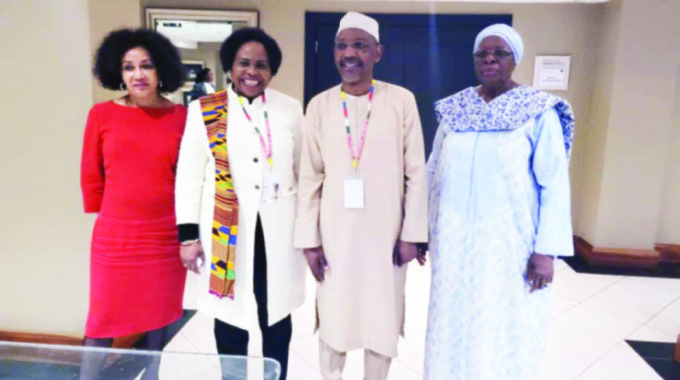
Herald Correspondent
The Minister of Information, Publicity and Broadcasting Services, Honourable Monica Mutsvangwa yesterday attended the official launch of the “HERstory: Heroines in the liberation struggles in Southern Africa” conference in Maputo Mozambique.
This watershed two day HERStory conference which ends today is being organised by UNESCO ROSA and SARDC.
Minister Mutsvangwa who is among the key speakers at the conference applauded the timing of the conference and noted that the conference comes at a time when liberation ethos and values that saw the peoples of the region join forces to fight different systems of colonialism are fading away as one by one of the veterans are getting to the end of their lives. The unique conference is a platform where female fighters who participated in the liberation struggles of the Southern Africa region are presenting their war experiences from their viewpoints.
The conference was officially opened by the Mozambique Minister of Combatants Honourable Josefina Beato Mateus Mpelo. During a panel discussion dubbed “the role and contribution of women: understanding our shared history and solidarity as a region and how it contributes to our future”,
Minister Mutsvangwa went down the memory and gave fiery recount of her participation in the fight against colonial oppression in Rhodesia. She recounted how she left school at the age of 15 together with her four friends. “I wanted to be trained on how to fight here in Mozambique and then go home to fight the oppressive system that dehumanised the black people in Rhodesia.” Among the panellists was Madaraka Nyerere, son of liberation icon, Julius Mwalimu Nyerere.
The Minister shared invaluable insights into her experiences during the liberation struggle and those of her fellow female cadres. She narrated how shared solidarities with neighbouring countries including Mozambique, Zambia and Tanzania were critical to the successful prosecution of the struggle.
The minister said as female combatants they, “shared knowledge on medicines, natural foods, edible herbs and roots because in some cases food was not readily available. We shared means and ways of replacing sanitary pads with available alternatives.”
Speaking on riding on the solidarities forged during the struggle as a basis for constructing a shared future, Hon. Mutsvangwa said, “as we are working on regional integration and the establishment of common markets and currencies and the like, we must feed on the commonalities that were forged during the struggle and build lasting bonds and alliances for a more stable region going forward.”
Minister Mutsvangwa also took time to engage in a mentorship programme with youth at the conference during an interactive session. The session sought to ignite intergenerational dialogue between the liberation heroines and the youths in order for their experiences to inspire the younger generations to come up with solutions to contemporary problems facing the region including racism, xenophobia, drug and substance abuse and economic upheavals. The minister implored the youths to stay away from harmful practices as they derail their usefulness to society.
Notable female liberation icons in attendance at the conference include the Deputy Prime Minister of Namibia, Her Excellency Netumbo Nandi-Ndaitwah, Lindiwe Sisulu along with SARDC founding Director and Special Projects lead Phyllis Johnson.
Professor Peter Katjavivi, Speaker of the National Assembly of Namibia, and patron of the Southern Africa Liberation History programme is also in attendance.
Honourable Mutsvangwa outlined that during Zimbabwe’s armed liberation struggle, females played a very significant role and made notable contributions. They were actively involved in various aspects of the struggle, including political mobilization, recruitment, logistics, and intelligence gathering, nursing, and combat. Women organized and participated in protests, demonstrations, and acts of civil disobedience.
In South Africa, women like Winnie Madikizela-Mandela, Lilian Ngoyi, Helen Joseph, and Albertina Sisulu played important roles in mobilizing communities, organizing protests, and advocating for the rights of black South Africans. They faced immense challenges, including arrests, imprisonment, and harassment, but remained resilient in their fight against apartheid.
Across the region, women also contributed to the liberation struggles through their involvement in underground movements, education, healthcare, propaganda, and offering logistical support. Their contributions proved invaluable in empowering communities and challenging oppressive systems.
It is important to recognize and celebrate the significant role that women played in the liberation struggles of Southern Africa. Their courage, resilience, and determination continue to inspire future generations and remind us of the importance of gender equality and social justice.



 Online Reporter