Online Reporter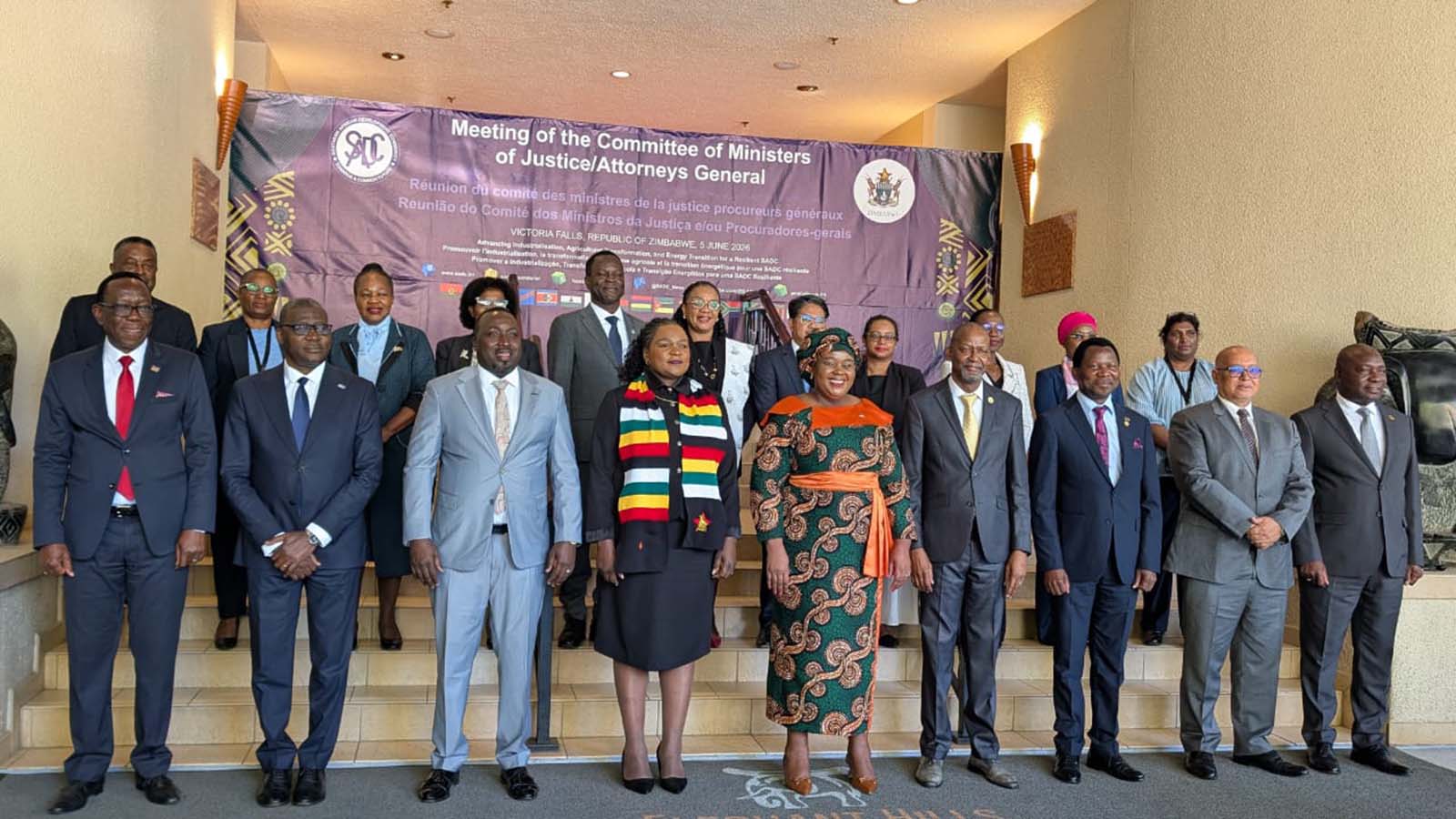
Rutendo Nyeve, [email protected]
THE Southern African Development Community (SADC) Committee of Ministers of Justice and Attorneys General has adopted a number of key legal instruments aimed at deepening regional cooperation, accelerating economic growth, strengthening public health systems, and easing the movement of people and services across the 16-member bloc.
The development was announced on Friday by the chairperson of the committee, who is also South Africa’s Minister of Justice and Constitutional Development, Ms Mmamoloko Kubayi, at the close of a week-long high-level meeting held in Victoria Falls.
Zimbabwe’s Attorney General, Mrs Virginia Mabhiza, led the country’s delegation at the meeting, which was also attended by the Deputy Minister of Justice, Legal and Parliamentary Affairs, Albert Mazungunye.
The gathering brought together senior legal officials from across the region to refine and strengthen the legal framework underpinning SADC’s integration agenda.
Addressing delegates after the deliberations, Minister Kubayi confirmed that the committee had successfully considered and adopted all items on the agenda, with particular attention given to three key instruments expected to transform regional cooperation.
“Among others, the committee considered the draft agreement amending Article 33 of the SADC Treaty, the draft agreement establishing the SADC Tourism UniVisa, and the draft charter establishing the SADC Pharmaceuticals
Pooled Procurement Services,” Minister Kubayi said.
She said the adoption of these instruments would have a direct and meaningful impact on the lives of citizens across the region.
“Our deliberations on these instruments will contribute significantly to strengthening regional cooperation, facilitating economic growth, enhancing public health systems and promoting the movement of people and services within our region,” she said.
The proposed amendment to Article 33 of the SADC Treaty is expected to improve institutional governance within the bloc. Meanwhile, the SADC Tourism UniVisa seeks to simplify border procedures for tourists travelling between member states, a move seen as critical in boosting tourism and the hospitality sector across the region.
The SADC Pharmaceuticals Pooled Procurement Services Charter is designed to enable the bulk purchasing of medicines, which is expected to reduce costs and improve access to essential drugs for member states.
Minister Kubayi also provided an update on ongoing efforts to revive the SADC Tribunal, which has been inactive for several years.
“We also took stock of progress regarding the re-operationalisation of the SADC Tribunal and reaffirmed our collective commitment to continue national consultations aimed at advancing this important process,” she said.
The committee further reviewed the status of the signing, ratification and implementation of existing SADC protocols, urging member states to speed up these processes to ensure that agreed programmes are put into effect.
“We reiterated the importance of accelerating these processes to ensure that our collective decisions are translated into tangible benefits for the people of our region,” said the official.
Minister Kubayi commended the spirit of cooperation that characterised the meeting and thanked senior legal officials for their preparatory work, as well as the SADC Secretariat for the smooth organisation of the event.
On behalf of all delegates, she also expressed appreciation to the Government and people of Zimbabwe for hosting the meeting.
“Your commitment to the work of SADC is greatly appreciated,” she said.
Minister Kubayi added that, as South Africa prepares to assume full chairmanship of SADC in August 2026, it looks forward to continuing efforts to strengthen regional integration and cooperation.
The next session of the Committee will be held in South Africa.


 Bongani Ndlovu