

 admin
admin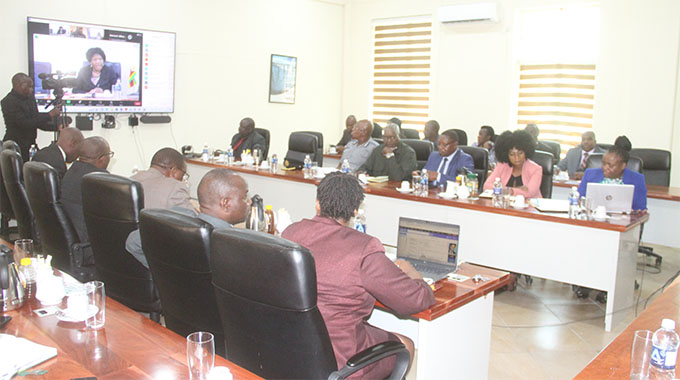
Precious Manomano Herald Reporter
SADC is intensifying efforts to harness the potential provided by solar energy technologies and taking steps to address challenges caused by shortages of electricity afflicting most countries in the region.
The solar thermal technology programme and implementation plan is a result of collaborative efforts between the Government of Zimbabwe, the Southern African Solar Thermal Training and Demonstration Initiative (SOLTRAIN) and all the private partners in the energy sector to promote use of solar heating and cooling in the country.
Members from various SADC countries have urged other nations to embrace solar thermal technologies in households and institutional buildings, saying it will assist in saving and reducing the current power import bill.
In an interview on the sidelines of the 5th SOLTRAIN Conference held in Harare, Acting Director of Namibian Energy Institute Ms Helvic Iieka said her country will soon be going to phase out electrical geysers since solar thermal technologies were contributing significantly in the country.
“Industries are growing well in our country, so very soon the uptake will increase, forcing us to stick to solar thermal power, so there is a need to continue raising awareness on the importance of these technologies to increase uptake,” she said.
Research engineer at the Centre for Renewable and Sustainable Studies at Stellenbosch University South Africa, Mr Richmore Kaseke, said adopting this type of technology will help to reduce chances of polluting the environment and to reduce operational costs and save the environment.
“We are moving towards the cleaner sources of energy, there was need to decarbonise the energy supply by adopting renewable sources of energy which include solar thermal energy,” he said.
Speaking at the same event, Minister of Energy and Power Development Soda Zhemu said his Ministry developed and launched the National Renewable Energy Policy and the Biofuels Policy.
He said the ministry came up with a number of incentives, as well as strategies towards meaningful development of the sector and addressed the barriers to the uptake of renewable energy in the country.
Minister Zhemu said the Renewable Energy Policy proposed that the country should install more than 250 000 solar geysers by replacing electric geysers in existing buildings and also by installing solar geysers in new housing units.
“My Ministry also promulgated Statutory Instrument (S.I.) 235 of 2019 commonly known as “Solar Water Heating regulations”. The regulation compels all new buildings to install solar geysers in place of electric geysers,” he said.
“In that regard, Solar Thermal installations are expected to grow steadily with envisaged stimulated demand in new housing, public sector and commercial installations as well as industrial systems. The growth rate is expected to reach 0.1 per square metre of collector area per capita by 2030.”
Soltrain project covers six countries in the SADC region including South Africa, Namibia, Botswana, Lesotho, Mozambique and Zimbabwe.



 Online Reporter