
Prosper Tsvanhu
He has gone as quietly as he arrived, leaving behind a dressing room taller in stature, steadier in belief and richer in achievement.
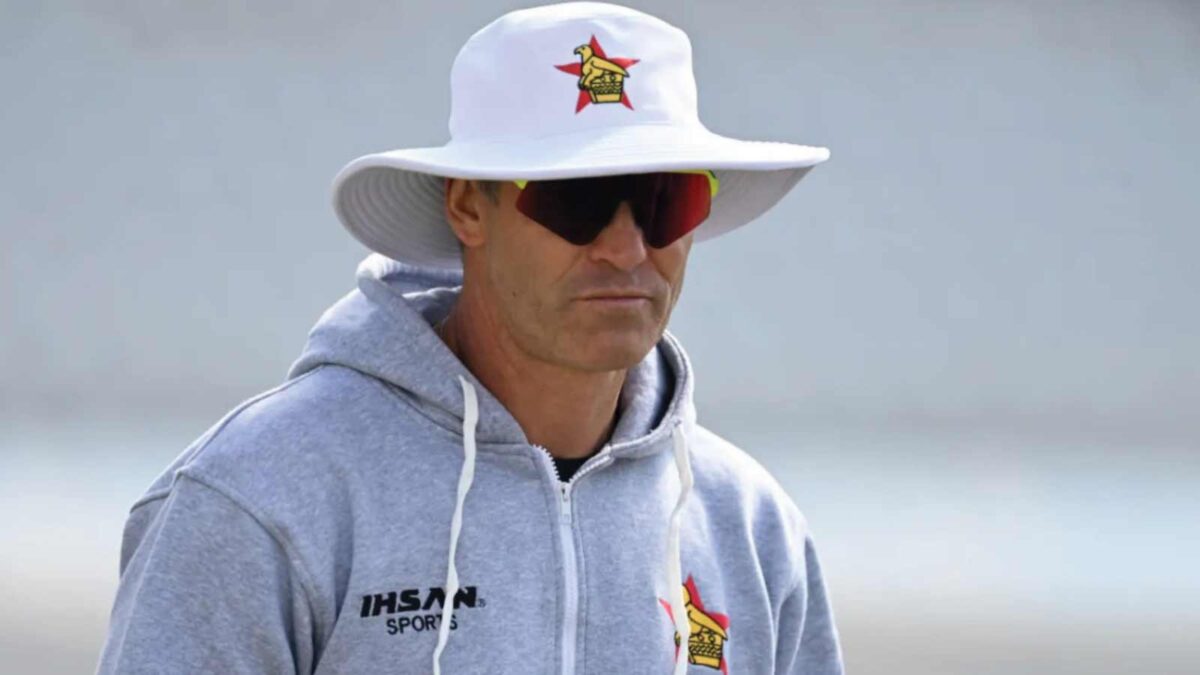
Justin Sammons, often mistaken by casual observers for another name yet unmistakable in his impact on Zimbabwe cricket, has stepped down as head coach of the Chevrons.
Appointed in June 2024 on a contract that was meant to run until 2028, the South African chose family and home over the long road to the next World Cup, accepting the role of South Africa Under-19 coach from January 2027.
Fittingly, his farewell came with a parting gift. In Sharjah, on the final day of his tenure, Zimbabwe sealed a dramatic 57-run victory over Afghanistan to secure their first Test series triumph in 22 years.
Zimbabwe cricket has rarely travelled a smooth road. It is a game that has long battled limited resources, a difficult history and the weight of expectation.
When Sammons arrived in mid-2024, the national team was struggling for direction. The disappointment of failing to qualify for that year’s T20 World Cup still lingered and confidence was fragile.
Sammons did not promise miracles. A former Proteas batting coach, he brought something less glamorous but ultimately more valuable: structure, accountability and belief.
Slowly, the brittleness that had haunted Zimbabwean cricket began to give way to resilience.
In April 2025, Zimbabwe recorded their first away Test victory since 2021 when they chased down a fourth-innings target in Sylhet to defeat Bangladesh by three wickets. Later that year they crushed Afghanistan by an innings and 73 runs at Harare Sports Club, before hammering Bangladesh by an innings and 85 runs in June 2026.
Then came Sharjah. After a high-scoring draw in the opening Test, Zimbabwe produced a memorable fifth-day performance to defend 295 and end a 22-year wait for a Test series victory.
Those four Test wins in little more than 18 months were more than statistics. They were evidence of a team learning how to occupy the crease, handle pressure and compete across five demanding days. Youngsters such as Brian Bennett and Ben Curran flourished alongside seasoned campaigners, giving Zimbabwe a blend of promise and experience rarely seen in recent years.
While Test cricket restored Zimbabwe’s respectability, the white-ball game restored its voice.
Under Sammons, the Chevrons swept through the 2025 Africa Regional Final unbeaten to reclaim their place on the global stage. Along the way they smashed world records, most notably posting 344 for four against Gambia.
Yet their greatest statement arrived at the 2026 ICC Men’s T20 World Cup in India and Sri Lanka.
Few predicted Zimbabwe would make a serious impact. Instead, they produced one of the stories of the tournament.
In Colombo they stunned Australia by 23 runs, defending 169 with remarkable discipline. They followed that up with an impressive chase against Sri Lanka and finished the group stage unbeaten before reaching the Super Eights, their best-ever performance at a men’s T20 World Cup.
There were setbacks too. Heavy defeats against South Africa, New Zealand and India underlined the distance still to travel.
But something important had changed.
Zimbabwe were no longer arriving merely to make up the numbers. They were stepping onto the field expecting to compete and believing they belonged.
Sammons’ departure nevertheless comes at a delicate moment.
With the 2027 ICC Men’s Cricket World Cup in Southern Africa less than a year away, Zimbabwe Cricket faces one of its most significant decisions in decades. The board cannot afford disruption, nor can it risk appointing someone who needs months to understand the structure and culture that have already been established.
No interim replacement has yet been named, leaving administrators with a difficult choice: maintain the high-performance environment built alongside Courtney Walsh, Dion Ebrahim and Stuart Matsikenyeri, or look outside for a specialist capable of sharpening Zimbabwe’s 50-over game.
Whoever takes charge will inherit strong foundations. Equally, they will have little time to make sweeping changes.
Continuity may lie within the current set-up. Dion Ebrahim understands the batting philosophy that has underpinned recent success, while Stuart Matsikenyeri commands respect and possesses extensive institutional knowledge. Courtney Walsh remains instrumental in the development of the pace attack, although promoting him could diminish his crucial hands-on influence with bowlers such as Blessing Muzarabani and Richard Ngarava.
Further down the pathway, Under-19 coach Elton Chigumbura offers familiarity with the next generation, though a home World Cup may arrive too soon for such a significant leap.
Looking beyond Zimbabwe, the list of realistic candidates narrows quickly.
Andy Flower would represent the dream appointment, but franchise commitments and historical administrative tensions make a full-time return unlikely.
Grant Flower remains an intriguing option because of his technical expertise and understanding of the local game. By contrast, a return to the past may not be the answer as Zimbabwe seeks to build on momentum rather than revisit old chapters. The challenge for Zimbabwe Cricket is not to start again.
It is to protect and strengthen what has already been built. Sammons leaves behind something more valuable than victories. He leaves behind belief. Coaches come and go. Contracts end. Circumstances change. But the true measure of a coach lies in what remains after the farewell speeches are delivered and the kit bags are packed away.
Justin Sammons inherited a team looking at its boots.
He leaves it looking at the horizon.
*Prosper Tsvanhu is a former cricketer.