Richard Muponde
Zimpapers Politics Hub
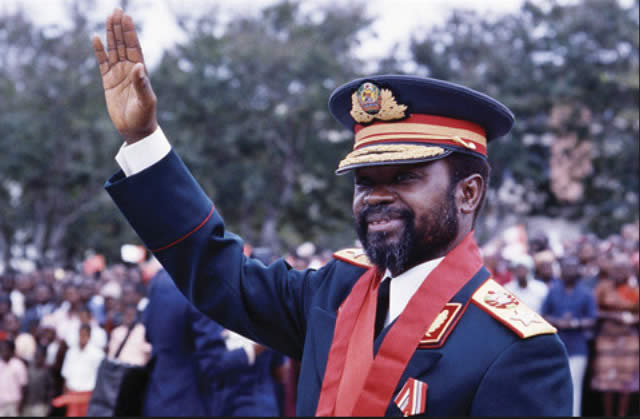
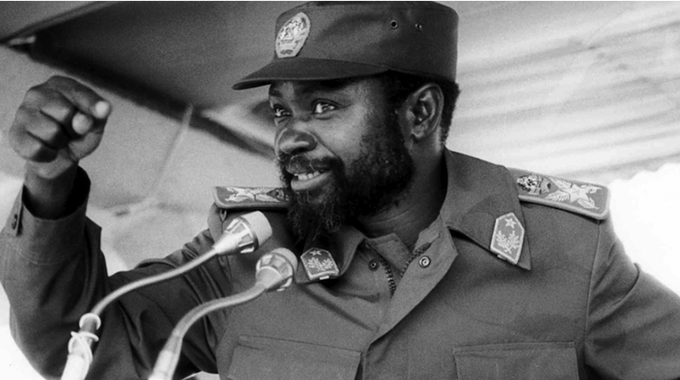
THE African union (AU) is commemorating pan-Africanist revolutionary Cde Samora Moises Machel, whose solidarity with liberation movements in Southern Africa was instrumental in the dismantling of colonialism and white-minority rule.
As the continental body marks the life and legacy of the late founding Mozambican President on the 40th anniversary of his death, Africa recognises him as one of the foremost figures in the continent’s armed liberation struggle. His contribution extended far beyond securing independence for Mozambique, establishing a revolutionary tradition of solidarity that helped transform the resistance against colonial regimes across the region.
President Machel maintained that African freedom could never be complete until the entire continent was liberated. His enduring significance lies in translating that conviction into practical military, political, and material support for liberation movements fighting entrenched colonial and racist systems.
On October 19, 1986, President Machel died when the presidential aircraft carrying him from a regional summit in Mbala, northern Zambia, crashed in the Lebombo Mountains near Mbuzini, South Africa, killing 34 other people aboard. He had been engaged in regional consultations amid escalating tensions over apartheid South Africa’s destabilising activities and its support for insurgencies in neighbouring countries. Forty years later, the circumstances surrounding his death remain an integral part of his historical legacy, while his contribution to African liberation demands renewed recognition.
Born on September 29, 1933, in Portuguese-ruled Mozambique, Machel experienced the racial discrimination, economic exploitation, and political exclusion imposed on the African majority. His early work as a nurse exposed him to the deep inequalities of colonial society and strengthened his determination to challenge the system.
He subsequently joined the liberation movement FRELIMO, established in 1962 under Eduardo Mondlane, and received military training before emerging as a key commander in the independence war launched in 1964. Following Mondlane’s assassination in 1969, Machel rose to become FRELIMO’s president and the central figure directing its revolutionary struggle. Under his leadership, guerrilla operations expanded into strategic areas, including Tete Province, stretching Portuguese military resources and challenging colonial authority.
His approach combined armed resistance, political mobilisation, and efforts to build popular support in liberated areas. Independence, however, was not achieved through military action alone; it also reflected Portugal’s weakening colonial position and the political transformation that followed the 1974 Carnation Revolution. Nevertheless, Machel’s leadership helped make the continuation of Portuguese rule increasingly untenable.
Mozambique’s independence on June 25, 1975, represented both a national triumph and a strategic turning point for Southern Africa. As the country’s first president, Machel refused to retreat into national isolation. Instead, he turned Mozambique into a vital base for regional liberation movements, providing political solidarity, sanctuary, training opportunities, and logistical assistance to fighters confronting colonial and racist regimes.
For Zimbabwean nationalists, this commitment carried extraordinary significance. Machel’s government supported the struggles waged by ZANU and ZAPU against Rhodesia’s white-minority government. Mozambique’s geographical position and revolutionary commitment helped sustain Zimbabwean liberation fighters, while its closure of the border to Rhodesia under the international sanctions regime imposed following the Unilateral Declaration of Independence (UDI) increased pressure on Ian Smith’s government.
Such solidarity carried immense economic and security costs for a newly independent state still struggling to overcome colonial underdevelopment. Machel’s contribution, therefore, cannot be measured solely through speeches or diplomatic declarations; he transformed Mozambique’s territory into an instrument of regional emancipation. For Zimbabwe, whose independence was achieved in 1980, the relationship remains a defining chapter in the shared history of African resistance.
Machel’s revolutionary internationalism extended to South Africa’s African National Congress (ANC) and Namibia’s South West Africa People’s Organisation (SWAPO). His government supported the ANC’s struggle against apartheid and SWAPO’s campaign to end South African occupation of Namibia. Mozambique became part of the frontline of African resistance, strengthening the strategic environment in which liberation movements organised and sustained their campaigns.
His political relationships connected him with generations of African leaders, including Julius Nyerere of Tanzania, Kenneth Kaunda of Zambia, Agostinho Neto of Angola, and Robert Mugabe of Zimbabwe. He also belonged to the wider political and revolutionary landscape shaped by Nelson Mandela, Oliver Tambo, Joshua Nkomo, and Sam Nujoma—leaders whose struggles converged around the defeat of colonialism and racial domination.
These relationships illustrated a central principle: liberation was a collective responsibility. Machel recognised that the survival of an independent Mozambique depended partly on the eventual defeat of the hostile regimes surrounding it. Conversely, neighbouring liberation movements needed independent African states willing to translate Pan-African solidarity into tangible assistance. His government helped give that principle strategic substance.
Machel’s uncompromising position provoked severe retaliation. Rhodesia and apartheid South Africa supported destabilisation efforts against Mozambique, including assistance to the RENAMO insurgency, which contributed to a devastating civil war. Infrastructure was destroyed, communities were displaced, and economic development was severely disrupted. The young republic paid a heavy price for refusing to abandon the liberation movements of neighbouring countries.
Yet Machel’s stance demonstrated that solidarity was not merely an ideological slogan; it required sacrifice, resources, and the willingness to confront powerful adversaries. His government understood that the liberation of Zimbabwe, Namibia, and South Africa would fundamentally alter the regional balance of power, weakening the systems that had sustained racial domination.
His legacy also demands historical honesty. Mozambique’s revolutionary government faced economic difficulties, political friction, and the immense challenges of constructing a new state amid conflict. Recognising these realities does not diminish Machel’s contribution to liberation. Rather, it places his achievements within the complex circumstances confronting newly independent African nations.
Machel’s celebrated revolutionary declaration, “A luta continua” (the struggle continues), captured his understanding that independence was a beginning rather than an ultimate destination. Political sovereignty would remain incomplete without confronting illiteracy, poverty, disease, economic exploitation, and corruption.
Following independence, his government pursued socialist policies, expanded public education and healthcare, and brought land and major economic assets under state control. These measures sought to redirect national resources towards ordinary Mozambicans, particularly communities historically excluded from economic opportunities under Portuguese colonial rule. He also challenged the emergence of privileged postcolonial elites, warning that political office must not become a route to personal enrichment, and insisting that revolutionary leadership required absolute humility and service to the people.