dyton mupawaenda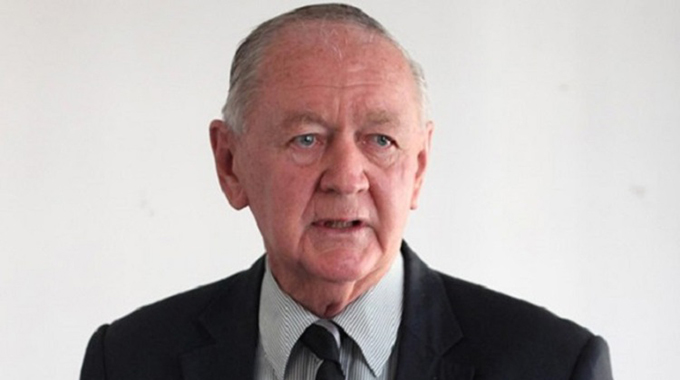
Africa Moyo Deputy News Editor
SANCTIONS imposed on Zimbabwe by the United States since December 2001, have cost the country “a lot of money” and affect every person without exception, former opposition legislator and veteran economist Mr Eddie Cross has said.
Mr Cross, who was MDC legislator for Bulawayo South constituency from 2008 to 2018, said the Zimbabwe Economic and Democracy Recovery Act (Zidera) had cut the country off from the international monetary system, making cross-border transactions difficult.
“I just take once more, a personal example: I bought a car a couple of years in Japan, and I had to pay some US$10 000 for it,” said Mr Cross. “I couldn’t transfer US dollars. I had to get my bank eventually after three months, and buy a million (Japanese) Yen because every time I tried to transfer US$10 000, the banks, international banks, they said no, because of Zidera.
“We don’t have any correspondent banks; how can it work like that. When Americans say that the sanctions are targeted; they are not. They affect every Zimbabwean without exception because they have isolated us completely from international monetary system.”
Mr Cross said Americans have been threatening banks and punishing those that process international payments from Zimbabwe.
“CBZ was fined US$385 million; that is three times its capital base,” said Mr Cross.
His confirmation that the sanctions are not targeted at any listed individuals and companies, is at variance with the view peddled by opposition leaders that the sanctions are not against the entire country, but individuals.
Zimbabwe and the SADC bloc will commemorate the Anti-Sanctions Day on Wednesday, a day that was declared by SADC in 2019.
On the day, SADC member States are required to embark on activities that denounce the sanctions imposed on Zimbabwe.
A number of local companies say the sanctions have prevented them from making direct international payments for raw materials and machinery spare parts, resulting in some of them downsizing operations and cutting the size of their pay roll.
Companies that have decided to remain open despite the sanctions impact, have now taken the expensive route of using middlemen, who charge a commission to facilitate cross-border payments, a move that increases their cost of doing business.
Commenting on Mr Cross’s remarks, which are on social media, Permanent Secretary for Information, Publicity and Broadcasting Services Mr Nick Mangwana, said the sanctions were not selective.
“They tell you that the sanctions are targeted, well, why then did Eddie (Cross) struggle to make a simple transfer to Japan? Is he on the target list? Of course not: the sanctions are targeted at the Zimbabwean economy. Simple,” Mr Mangwana posted on his X handle (formerly Twitter).
Standard Chartered Zimbabwe was also fined US$18 million after its former UK-headquartered parent company was slapped with a US$1 billion fine for violating US sanctions against Zimbabwe and other countries.
The US Office of Foreign Assets Control, which imposed sanctions on Zimbabwe, announced in 2019 that it had penalised Standard Chartered for inadequate financial crime control.
“OFAC is also settling a separate case involving apparent violations by SCB (Standard Chartered Bank) of sanctions related to Zimbabwe,” reads a statement released by OFAC back then.
“Separately, between May 2009 and July 2013, SCB Zimbabwe processed transactions to or through the United States involving Zimbabwe-related specially designated nationals or entities owned 50 percent or more, individually or in the aggregate, by one or more Zimbabwe-related specially designated nationals.
“These transactions constituted apparent violations of the Zimbabwe Sanctions Regulations, 31 C.F.R. Part 541. SCB will remit $18,016,283 to OFAC to settle civil liability relating to the apparent violations of the Zimbabwe Sanctions Regulations.”


 Online Reporter