admin
admin
Business Reporter
Experts that met in Washington, DC, last week to discuss the situation in Zimbabwe were unanimous that the ruinous illegal sanctions imposed on the country were hurting innocent people, and must be removed.
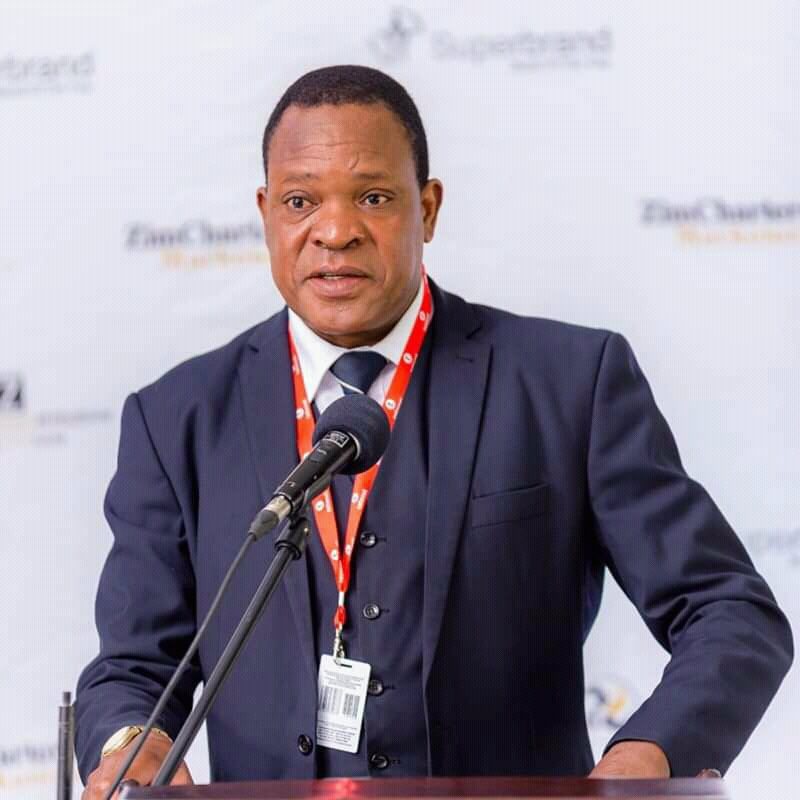
Finance and Economic Development Minister Professor Mthuli Ncube, who was part of the delegation attending the discussion organised by the Washington-based think-tank Cato Institute, said it was encouraging that some traditional detractors were now coming to terms with the reality that the sanctions were hurting ordinary Zimbabweans.
During the debate some panellists, some of them known for criticising Zimbabwe, challenged the United States and members of the international community such as the European Union, that continue to extended sanctions on Zimbabwe to remove them immediately.
Zimbabwe has been calling for the removal of the two-decades-old illegal embargo, in particular the Zimbabwe Economic and Recovery Act of 2001 (ZIDERA), which was recently extended by US President Donald Trump.
Panellist and RTHK Washington correspondent Mr Barry Wood was among the key people who slammed the sanctions on the back of the on the ground evidence he acquired when he recently visited Zimbabwe.
“Certainly ZIDERA, which is still in the books and has been extended by President Trump — do they hurt the poor more than the ruling elite? There is a strong case that the sanctions do hurt the poor more than they hurt the ruling elite,” said Mr Wood.
“The United States of America, through ZIDERA (Zimbabwe Democracy and Economic Recovery Act), have virtual power on the IMF and the World Bank, therefore no money can go from IMF until arrears are cleared. They cannot do anything until the United States says it’s okay, they have a 17 percent share of the votes in IMF and 85 percent will be necessary to have an IMF financial programme. They do have (a) Staff Monitored Programme,” he said.
The SMP, which is monitored on a quarterly basis, is an IMF programme that aims to implement a coherent set of policies that can facilitate a return to macroeconomic stability. Its successful implementation will assist in building a track record and facilitate Zimbabwe’s re-engagement with the international community.
Mr Wood acknowledged the current administration’s commitment to re-engagement as well as improving the business environment, which have also presented a strong case for lifting of the sanctions.
UK-based think tank, Fitch Solutions, has also opined that pledged reforms under the new Government had the potential to improve the business environment and growth prospects, but only in the longer term, “since measures will take some time to implement”
Professor Steve Hanke of Johns Hopkins University, a long-time critic of Zimbabwe, submitted that the sanctions have achieved nothing besides making Zimbabweans suffer more.
“Sanctions should be dropped immediately. Sanctions don’t work,” argued Prof Hanke, adding that “the history of economic and financial sanctions is one failure after another, the production of all kinds of negative, unintended consequences”.
He advised the US government and the international community to adopt a different strategy that excludes sanctions.
“So step one, unilaterally the US and the international community, to the extent the international communities involved should drop sanctions, and encourage, of course, the adoption of the ‘Singapore Strategy’ and stop talking about foreign aid. Foreign aid is not going to rescue Zimbabwe,” said Prof Hanke.
Visiting fellow, Prof W. Gyude Moore of the Centre for Global Development, who was also on the panel, reinforced the point that sanctions don’t work.
He said: “Sanctions that target the people of Zimbabwe ordinarily is not going to work and in the long term is not going to help resolve the issues in Zimbabwe.”
Prof Ncube, who was in Washington for the International Monetary Fund/World Bank Annual Spring Meetings, defended Government’s efforts in addressing the issues raised by the panellists. He said contrary to the belief that the world was still closed to Zimbabwe, things were changing, especially with the International Monetary Fund.
Zimbabwe has been unable to secure lines of credit from many financial institutions, due to unpaid debt, amounting to close to US$10 billion.
Prof Ncube said his meetings with IMF and World Bank officials were encouraging and they are appreciating the country’s commitment to the Economic Reform Agenda.
“We reached an agreement on the Staff Monitoring Programme with the IMF, which will help us on the roadmap towards arrears clearance. We need the debt to be cleared so that we can access credit loans for our private sector. Really, we are looking for private sector support,” Prof Ncube told the meeting.
He said the Government had shown regard for property rights through its recent decision to compensate white farmers and US$17 million was set aside for that purpose.
“If you look at the issue of compensation, that’s a recognition of property rights. We are going to do that in line with the Constitution and there’s a commitment from the Government and from the President (Mnangagwa) as well,” said Prof Ncube.
He said the Government is also staying true to its mantra that it’s open for business, and has established the Zimbabwe Investment Development Agency (ZITA) to vet and process investor applications quickly.
Government has revised its controversial indigenisation law, which restricted foreigners from owning more than 50 percent of a company.
“The indigenisation rule has been largely waived except for the diamond sector so far, and eventually you can be sure that everything will be allowed in terms of foreign investors owning 100 percent of companies,” said Prof Ncube.


 Online Reporter