

 admin
admin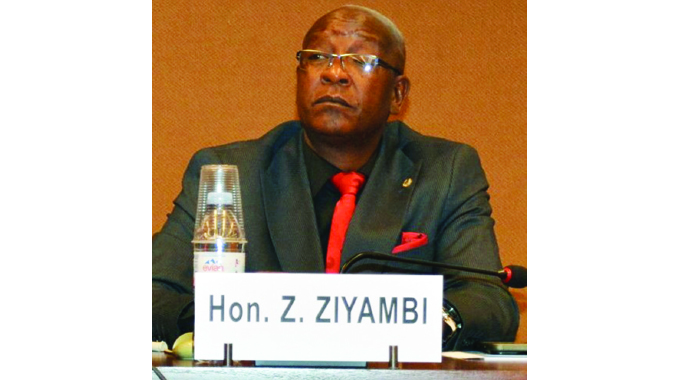
Debra Matabvu in GENEVA, Switzerland
illegal sanctions imposed on Zimbabwe by the US are not ‘”targeted” or isolated to specific individuals, but affect ordinary people, Justice, Legal and Parliamentary Affairs Minister Ziyambi Ziyambi, has said.
Minister Ziyambi told the International Conference on Sanctions, Business and Human Rights here yesterday that the narrative peddled by the US that the sanctions on Zimbabwe were “targeted” was misleading and untruthful.
The conference is being hosted by the UN Special Rapporteur on the negative impact of unilateral coercive measures on the enjoyment of human rights, Professor Alena Douhan, with support from the Group of Friends of the Charter of the United Nations.
The US imposed sanctions on Zimbabwe through the Zimbabwe Democracy and Economic Recovery Act (ZDERA), which was enacted by the US Congress in 2001 and signed into law by then-President George W Bush.
The US has used the law to promote financial restrictions on Zimbabwe as a country resulting in foreign investment and economic growth being stifled and impacting the provision of essential services to citizens.
In his presentation, Minister Ziyambi said evidence collected by the country and Prof Douhan indicated that sanctions had affected ordinary people and businesses in Zimbabwe.
“We call for the immediate removal of these illegal sanctions. We reject the claims that sanctions are targeted on a few individuals,” Minister Ziyambi said.
“This narrative by the sanctioning states is grossly misleading and hypocritical, especially in light of well-documented evidence of the devastating impact of unilateral coercive measures on the innocent populations that the sanctions are purportedly designed to protect.”
“Zimbabwe calls upon the international community to recognise that sanctions are an affront to our sovereignty and our people’s right to self-determination.
“We urge all nations to adhere to international law and to the purposes and principles enshrined in the UN Charter. We seek not charity, but fairness. Not favouritism, but justice.”
“The International Conference on Sanctions, Business and Human Rights provides a global forum to discuss the impact of unilateral coercive measures on the human rights of those not intended to be targeted. While the sanctions are often labelled as ‘targeted’, their effects have rippled through Zimbabwe’s financial sector and impacted everyday transactions, such as purchasing essential goods and medicines.”
He said every transaction from Zimbabwe is scrutinised, because the country is under financial sanctions, resulting in shortages and suffering of the general population, not just the intended targets.
“Funds are periodically intercepted, money transfer companies become victims of long and tedious investigations on specific transactions. Furthermore, the imposition of secondary sanctions, civil and criminal penalties for alleged circumventing or assisting in the circumvention of primary sanctions regimes has resulted in de-risking and over-compliance by individuals,” Minister Ziyambi said.
“Over-compliance has compelled the Government, business, humanitarian organisations and individuals to explore alternative ways to procure critical goods and services, leading to high costs of goods and services.
“In addition to the impact on the financial services sector, the sanctions brought a myriad of challenges on all other sectors of the Zimbabwean economy. In the agricultural sector, failure to access lines of credit and attract investment seriously impeded development, rehabilitation and modernisation of equipment and machinery, leading to a reduction in productivity.
“The market access for agricultural products, sugar, beef and cotton, among other products, was also negatively affected as the country lost its niche in the lucrative markets.”
In her opening remarks at the plenary session, Prof Douhan, the conference’s keynote speaker, said it was worrying that sanctioning countries attempt to justify the imposition of the embargoes and refute the coercive measures’ negative impact on the ordinary people.
“We observe the attempts to introduce the rebuttable presumptions of the wrongfulness of behaviour of those affected by unilateral sanctions,” she said.
“The many countries imposing sanctions deny the devastating humanitarian impact of unilateral sanctions as a means of reinforcement and over-compliance and humanitarian exceptions which indeed exist on paper are fully ineffective and inefficient taking into account the humanitarian impact of other types of unilateral sanctions means of the enforcement of over-compliance,” she said.
The conference is being attended by over 400 participants from countries such as Venezuela, Cuba, China, Eritrea, Belarus, Vietnam, Ethiopia, Egypt, Uganda and South Africa.
A study commissioned by the Ministry of Foreign Affairs and International Trade estimates that the country could have lost US$42 billion in revenue over the past 20 years due to sanctions.



 Bongani Ndlovu
 Online Reporter