Online Reporter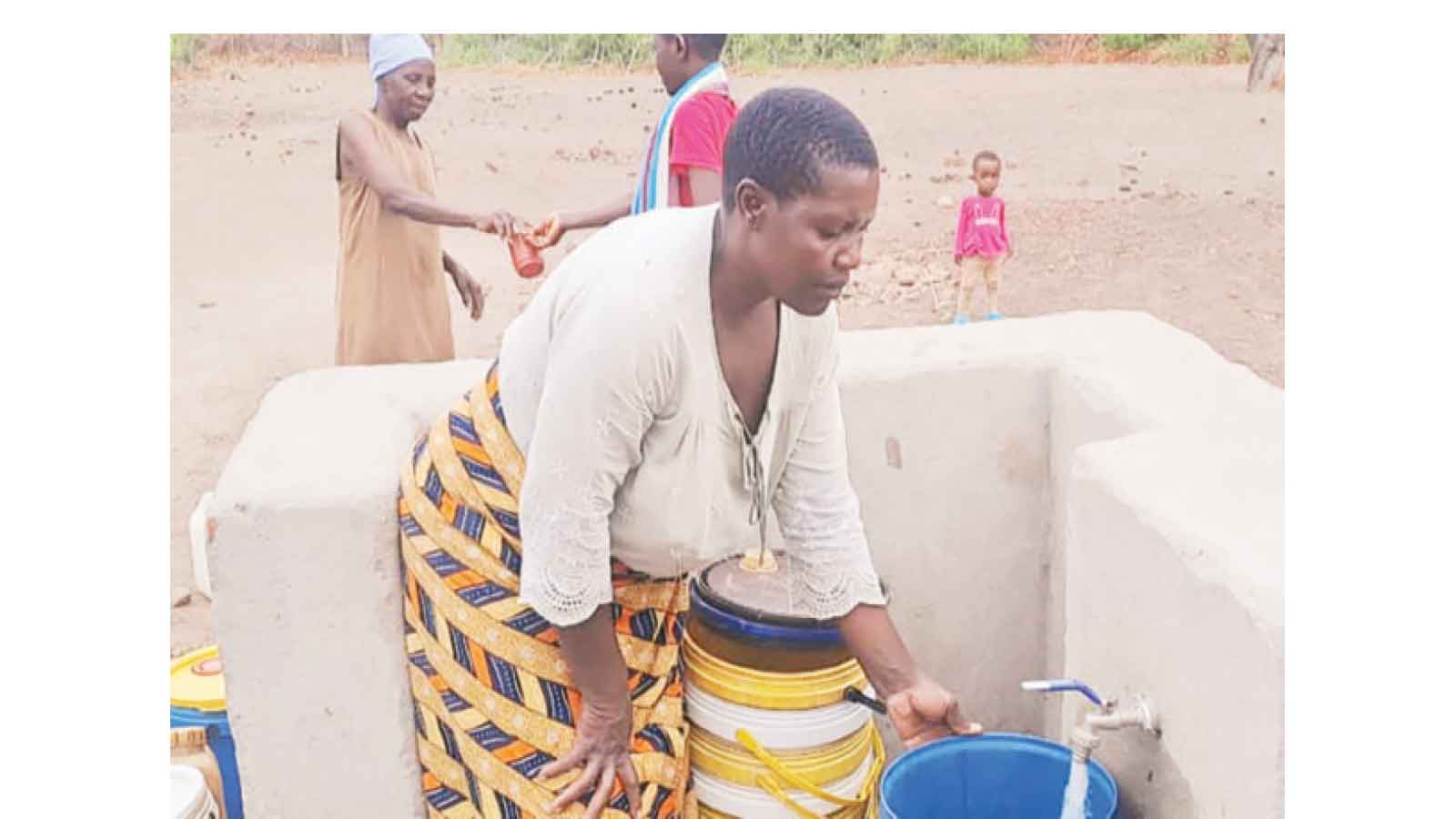
Fungai Lupande
Mashonaland Central Bureau
Sometimes, the solutions to long-standing challenges are found in the most familiar places.
For years, families in Ward 3 survived on a shallow well dug in the sand along the Mukumbura River.
The well, was several kilometres away and a long walk that women often made at night, risking assault and attacks by wild animals.
The community shared the same water source with their donkeys, cattle and goats.
Yet, despite the hardship, this single well never ran dry.
Today, that same sand well has been transformed into a lifeline delivering clean, safe water to villagers’ doorsteps.
In June this year, Welthungerhilfe (WHH) rehabilitated the 8, 9-metre-deep sand abstraction well, converting it into a high-yield water source producing between 7 000 and 8 000 litres per hour.
Working with engineers from Pfura Rural District Council, WHH designed a piped water scheme now supplying 1 300 households, a dip tank and 500 pupils at Gomo Primary School.
The secret lies beneath the surface, sand rivers.
Although the riverbed looks dry on the outside, water flows underneath, naturally filtered through the sand.
The Ministry of Health and Child Care recommended an inline chlorinator to further improve water quality.
With reliable water at last, the community cleared one hectare for a village business unit (VBU) and planted maize, okra and vegetables.
Plans are underway to establish a fish pond.
The transformation is especially significant in this valley, where borehole drilling has long failed due to saline underground water.
Crops irrigated with salty water wilted and several drilling attempts over the years proved fruitless.
WHH field manager Mr Tamuka Besterai said understanding the geology was key.
“At about 40 metres below the surface, the water is salty. Above that, the yield improves to about 0.28 litres per second ,but not enough to sustain a community,” he said.
“The community pointed us to the well dug in 1993, which has never run dry. Their indigenous knowledge guided our intervention. Without it, everything you see today might not have happened.”
Kapeza village head Mr Shacky Kapeza said the Chisodza piped water scheme has helped stop riverbank cultivation, which was contributing to soil erosion.
“We are conserving our land now. The VBU garden is thriving, and we are planning a fish pond,” he said.
About 55 members from six villages are participating in the VBU.
Ward 3 Councillor Quite Guti said the piped water scheme has restored dignity and safety.
“For decades, we drank water from the same well with our livestock. Women faced sexual abuse on night trips to the river. The alternative water source across the Mozambique border was risky, with landmines along the way.”
Gomo Primary School head, Mr Farai Muzondo, said the scheme has transformed daily operations.
“Pupils used to bring five litres of water to share among teachers. This caused misunderstandings, especially during the feeding programme, which consumed most of the water,” he said.
“Teachers would leave as soon as their probation ended. This year, I haven’t received a single transfer letter.”
As the afternoon sun softened around 3pm, the once-padlocked water point in Chisodza village became a hive of activity.
Women arrived with buckets, chatting as they queued.
The water point opens from 2pm to 5pm daily.
Mrs Magret Marokuwa, busy filling her containers, said the water has opened new opportunities.
“Now we can attend to household chores, gardening and managing income-generating projects,” she said.
Another villager, Mrs Tarisai Chirozva, expressed gratitude to WHH, RIDA and the Baur Foundation.
“We now drink safe water. Dysentery is no longer troubling our children. We can finally do gardens before, the distance to fetch water was too much, and violence at the river was common.”
From dryness to abundance, Ward 3’s sand well is now a symbol of resilience and proof that development is strongest when communities and their knowledge are at the centre.