Online Reporter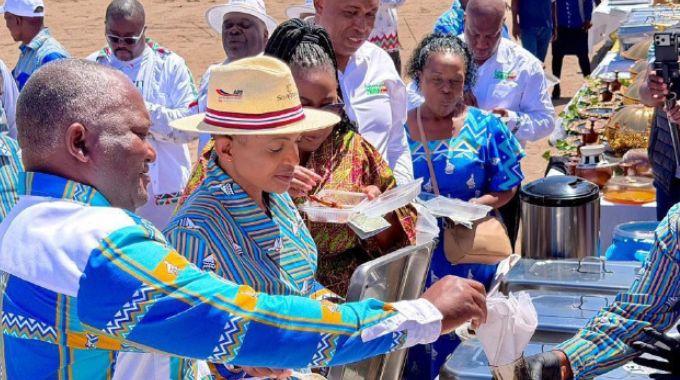
Nqobile Bhebhe in Masvingo
MASVINGO pulled off a major feat by successfully hosting the 19th edition of the Sanganai/Hlanganani/Dzimbahwe World Tourism Expo, transforming the ancient city into a vibrant celebration of tourism, food, culture and business while showcasing the growing economic opportunities being created across the sector.
From bustling exhibition stands and packed business engagements to cultural performances, sports activities and the popular Gastronomy Hub, Sanganai 2026 demonstrated how tourism can bring together communities, entrepreneurs, investors, students and technology to drive economic activity.
The event also provided a platform for Masvingo to showcase its rich heritage, wildlife, culinary traditions and investment potential, while local businesses benefited from the influx of visitors, international buyers, exhibitors and delegates.
One of the biggest attractions was the Gastronomy Hub, where more than 25 stall holders drawn from tertiary institutions, religious organisations, hotels and other enterprises served a wide variety of dishes.
Tourism and Hospitality Industry Minister Barbara Rwodzi described the hub as a major success, crediting Tourism Patron and First Lady Dr Auxillia Mnangagwa for starting the gastronomy initiative in 2019.
“We see a big improvement from the gastronomy that was showcased during Sanganai/Hlanganani in Mutare, and the one that is showcased here.
“Our people are improving in terms of quality, and also in terms of experience,” she said.
“Just to have this exposure of serving big numbers of people when there’s a mass event like this and this is a program that we thank Her Excellency Dr Auxillia Mnangagwa that she started in 2019.
“We never thought it would grow this big and we never really thought it would have an economic impact on the people of Zimbabwe.”
The economic impact was visible at the hub, with traders reporting brisk business as visitors sampled local dishes and discovered new products.
“We came here expecting to showcase our food, but the response has been much bigger than we anticipated. We have been busy throughout the day and the sales have been very encouraging,” one trader, Ms Monica Makoni said.
Mr Gilbert Musakwa said, “We have had customers from outside Masvingo and international visitors coming to our stand. We are making sales, but we are also creating relationships that could bring us business after Sanganai.”
A third trader Ms Nyasha Muguti said the event had demonstrated the potential of food tourism to create livelihoods.
“Food brings people together, and we have seen that here. The crowds have been very good, and we have been selling throughout the day. This gives small businesses an opportunity to grow,” the trader said.
“We have been very busy. At times we have struggled to keep up with demand, which is a good problem to have. Sanganai has shown us that there is a market for local food when it is properly packaged and presented,” the trader said.
Minister Rwodzi said gastronomy tourism was creating opportunities across a much wider value chain, from producers of seeds and meat to restaurants, hotels, airlines and recreational parks.
“And now we are actually using her idea to bring ordinary people into the alignment of Vision 2030, so that they will also be part of the upper middle income society in our country,” she said.
She said Zimbabwe’s indigenous food products could also become a major tourism attraction.
“People should be very proud of what they grow and what they are God-given. As you saw, masawu now turned into ice cream, nunguru turned into cakes, so forth and so on,” she said.
“So every time we travel and when we go to any travel shows, we travel with our own food. We travel to showcase that this is what you get in Zimbabwe.”
But as the sector grows, Government is increasingly looking to technology to ensure tourism growth is properly measured and translated into better investment decisions.
Information, Communication Technology, Postal and Courier Services Minister Tatenda Mavetera said artificial intelligence should be incorporated into Zimbabwe’s tourism statistics system to enable authorities and businesses to make faster, evidence-based decisions.
Speaking at the Sanganai/Hlanganani Scholastic Tourism Conference, she said AI could transform tourism data from delayed statistical reports into a real-time planning tool capable of predicting visitor trends and identifying emerging markets.
“Tourism does not sit outside government’s digital agenda, it sits inside it,” Mavetera said.
She said Zimbabwe’s growing digital infrastructure provided a foundation for tourism to embrace advanced technologies, citing internet penetration of 85.5 percent, mobile penetration of 104.4 percent, more than 70 000 kilometres of fibre backbone and 252 5G base stations.
Minister Mavetera said AI could help capture tourism activity that is traditionally difficult to measure, including informal activity, through tools such as predictive analytics, computer vision and natural language processing.
“AI changes the timeline from data that describes what happened, to data that anticipates what happens next,” she said.
The National Artificial Intelligence Strategy 2026–2030 already identifies tourism as one of the sectors where AI can be applied through AI visitor guides, demand forecasting and smart destination management.
Minister Mavetera called on the Ministry of Tourism and Hospitality Industry and the Zimbabwe
Tourism Authority to appoint AI focal points and begin pilot projects, including AI-assisted visitor forecasting and modernisation of the Tourism Satellite Account.
The digital push dovetails with calls by Higher and Tertiary Education, Innovation, Science and
Technology Development Minister Dr Frederick Shava for universities to use research and innovation to strengthen tourism.
Speaking at the scholastic conference, Shava said higher education institutions should move beyond traditional academic programmes and develop practical technologies and tourism products capable of generating economic value.
He said the convergence of education, technology and tourism could produce a new generation of tourism professionals equipped with digital, entrepreneurial and innovation skills.
The message reinforced the broader transformation visible at Sanganai that tourism is no longer simply about destinations and accommodation, but increasingly encompasses food, technology, skills, innovation, investment and local enterprise.
As Masvingo bids farewell to Sanganai 2026, the expo leaves behind more than memories of colourful performances, food and exhibitions.
It has demonstrated how tourism can bring business to local communities, promote Zimbabwean cuisine and culture, connect education with industry and harness technology to build a smarter, more competitive tourism economy.
For Masvingo, Sanganai was not simply an expo.
It was a celebration of Zimbabwe’s tourism potential and a showcase of how communities, entrepreneurs, educators and Government can collectively turn that potential into economic opportunity.