Chronicle Editor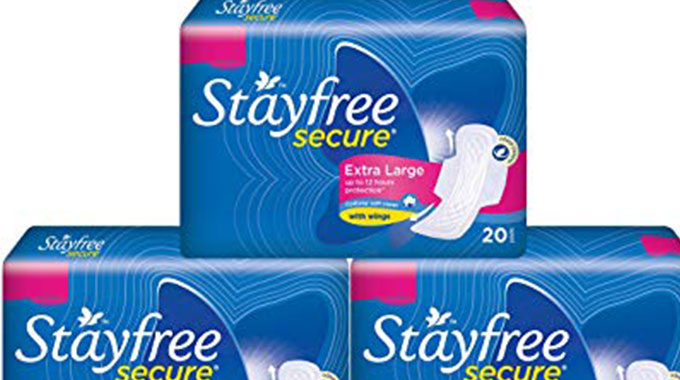
Andile Tshuma
Access to sanitary wear has become a nightmare for many rural school girls in the country.
Not only thinking about having enough water to stay clean and fresh and dealing with menstrual cramps, girls now worry about what materials will substitute sanitary pads, which are almost not even in the picture.
The price of sanitary wear in the country has gone beyond the reach of many and a number of women and adolescent girls have resorted to unorthodox ways of managing their periods.
The closure of schools due to the Covid-19 pandemic has worsened the plight of rural school girls as it has affected the distribution of sanitary wear for girls in rural areas.
Government has a programme for the distribution of free sanitary wear for learners at their schools, but this has been affected by the
lockdown which has necessitated closure of schools.
This comes at a time when reports have shown that a staggering 72% of girls in rural areas do not use commercial sanitary wear. However, they resort to unhygienic means. At the same time, 62% of girls miss school every month while menstruating.
Minister of Justice, Legal and Parliamentary Affairs, Ziyambi Ziyambi while responding to questions during the Question and Answer session, on Wednesday, standing in for the Minister of Primary and Secondary Education Cain Mathema said the Covid-19 lockdown and school closures made it difficult for the ministry to reach out to school girls and distribute pads.
The minister was responding to MP Tatenda Mavetera who had asked whether the Government had put any policies in place to ensure that girls access sanitary wear during periods when schools are closed.
Suggestions had come in to the effect that the ministry follows up girls at home during the lockdowns and distribute pads.
However, the minister said such would be difficult to implement effectively.
“Madam Speaker, the proposal is very difficult to implement. When learners are at home, you do not know where to follow them. The programme was targeted for the period when schools are open that then they are able to access sanitary wear,” said Minister Ziyambi.
Some parliamentarians emphasised that the Ministry of Finance and Economic Development should be consistent in disbursing sanitary wear funds.
Most of the common sanitary pads brands in the country are imported and the closure of borders has resulted in the soaring of prices in the country.
Low priced sanitary pads are scarce and most shops have stocked expensive brands, which cost about $300 for a pack of 10, way beyond the reach of many women.
Many women can no longer afford to buy pads and have resorted to using random pieces of cloth or sewing cloth sanitary napkins for themselves and adolescent girls.
Other young girls, especially in rural areas, have turned to unhygienic alternatives such as newspapers, rags, leaves, tissue paper and cow dung, among others because they cannot afford sanitary pads or tampons.
Many young girls and women develop rashes, infections and sometimes life-long reproductive health issues because they are forced to improvise and cannot afford sanitary products.
Sexual reproductive health rights activists say the high cost of sanitary wear is infringing on women’s sexual reproductive health rights.
On average, a woman has her period running from three to seven days and the average woman menstruates from age 13 until age 51. That means the average woman endures 456 periods over 38 years.
Over 800 million women and girls menstruate every day, yet across the globe they face barriers to properly managing their periods.
The social stigmas and taboos surrounding menstruation often prevent women and girls from attending work and school.
There are multiple health risks associated with the use of unhygienic products during menstruation.
Poor management of menstrual hygiene can lead to increased susceptibility to infections, bad odour of menstrual blood due to infrequent change of cloth, a painful period and discomfort.
Women’s monthly periods are costing them so much more than the pain of menstrual cramps. The stigma that comes with the topic plus the ever-rising cost of sanitary wear are putting a strain on women.
It is not just the girls and women who benefit from having proper menstrual hygiene, the broader society and national economies can profit from better menstruation management. Therefore women’s sexual and reproductive health is not just a woman’s issue but is an issue of concern to society.
Period poverty is undoubtedly a serious issue for girls and women on low incomes and the use of unhygienic material in place of sanitary pads by the girl child is therefore a cause for concern.
The high cost of sanitary wear is infringing on women’s sexual reproductive health rights.
Women and girls have the right to identify their own health needs, to access appropriate health technologies, and to effectively manage their health conditions including seeking health services and professional help when necessary.
This right is denied when the appropriate menstrual hygiene products are not provided.
A girl who is absent from school due to menstruation for four days every month loses at least 40 learning days, the equivalent of six weeks of learning, per year. It’s like not going to school for half a school term. Equity in education can therefore not be achieved under such a scenario.
All efforts must be made to ensure that sanitary wear reaches our girls, because access to sanitary wear is part of access to reproductive health services and they have rights to manage their period with dignity. -@andile_tshuma


 Online Reporter