admin
admin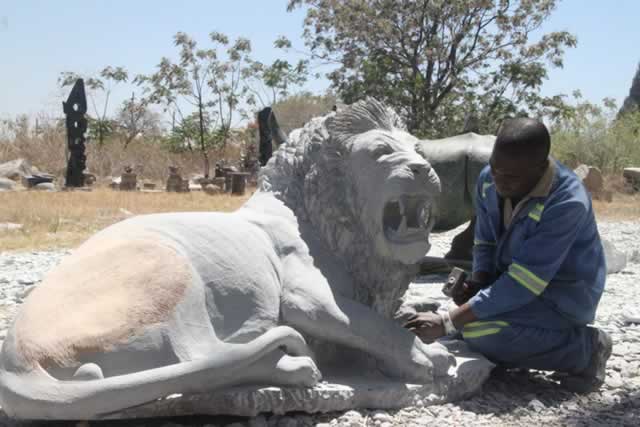
Resource centres help artists in a big way, these centre become research centres for artists, improve on the work produced by artists and also they are learning centres for new trends
Tawanda Marwizi Arts Correspondent
Sculpture is one local art form that has serious international following and stone-carvers mainly depend on foreigners because of lack of appreciation on the local scene.
However, despite targeting the international market, most sculptors have limited access to the Internet, which is essential in connecting them to their potential buyers.
The sculptors spend most of their time at secluded art villages and centres where they carve and display their pieces in anticipation of visitors.
While other artistes have flexible genres that allow them to move from one place to another, sculptors spend most of their time at their galleries and some of them work in areas that are far from urban establishments. They depend on owners of the centres or established artists at the villages that have access to information technology to act as point persons for communication with the international community.
For instance, Chitungwiza Arts Centre, which hosted a successful international exhibition recently, has more than 200 artists, but there is only one computer at the centre and very few sculptors own phones that have internet access.
Sculptors at Tengenenge, Chapungu, Hatfield Gallery and many small art places dotted in rural areas, especially Guruve, Mvurwi and Chiweshe, are in the same scenario. So, despite targeting the international market, the sculptors are divorced from their potential buyers and they have to wait for exhibitions and rare visits by tourists.
In this era where most businesses depend on information technology, it would be advantageous for sculptors to regularly communicate with their potential buyers.
Although big names like Dominic Benhura, Tapfuma Gutsa, Bryn Mteki and Chikonzero Chazunguza have an advantage of international exposure that has taught them to beneficially use information technology, most sculptors’ tools of trade remain the hammer and the chisel.
They sweat daily, hammering the stones and coming out with beautiful pieces yet they hardly communicate with the people that buy their pieces.
Sculpture needs hard work. Sculptors put extra effort to create pieces that express their feelings and beliefs. Stone work is one form of art that educates and reflects on societal beliefs and practices that mainly catch the attention of art lovers and critics.
But the art gets little appreciation back home despite having household names that bagged a number of awards beyond borders.
With talented names in the genre like Rufaro Murenza, Angasi Malola, Tracey Chatsama and David Ngwerume among others, a lot is expected in terms of marketing both locally and internationally.
Local art followers mainly go for music and film and there is need to educate them about the beauty of sculpture.
Normally, the works should market themselves as they speak volumes of what the sculptors have in mind.
Exhibitions that are open to the community have been useful as they have managed to bring sculpture to the ordinary people.
Several sculptures believe they can do better in marketing if they have access to internet. The experienced players in the industry say the establishment of resource centres at the sites where sculptors work would go a long way in facilitating the link between the artists and their markets.
Some sculpture centres have websites, but these do not fully market individual sculptors since the sites would compress the works of hundreds of artists.
Individual websites and links should work better for the artists.
Those who spoke to The Herald Review said resource centres will be useful in creating several platforms of marketing their products locally and internationally.
Taurai Tigere, who is chairman of Chitungwiza Arts Centre, believes access to social media would enhance how the sculptors liaise with the market. He believes having resource centres would be a way to go as the artists will get knowledge of topical issues that they can address through their pieces in addition to promoting networks with clients.
“Facilities such as resource centres are very useful to the sculptors as they would give them enough time to interact with the market. We don’t have resources yet to have such facilities, but they are useful to our artists,” he said.
Besides giving the sculptors a platform to market their products the resource centres would give them room to have a perfect record keeping system.
“It is not only for the artists, but for historical evidence. A resource centre gives perfect record keeping,” he said.
So far artists are relying on centres such as Harare City Library, a resource centre that is at Culture Fund of Zimbabwe Trust and private Internet cafes.
Though the Culture Fund of Zimbabwe has managed to donate some computers to different arts institutions, they are not sufficient for the large numbers of sculptors and many centres. Some use their mobile phones, but the system has not been able to fully enhance international marketing.
The poor marketing channels have made the situation worse for the sculptors that have already been hit by decline in tourism.
Consequently, their pieces go for months or even years standing in the galleries because buyers have not seen them.
Benhura’s success stories cannot be distanced from his capability to cope with current information trends. He believes that resource centres are useful as they give artists access to current issues that are useful in their work.
“Usually buyers look at the piece and its significance to their lives or current events. Resource centres are then useful for artists as they have access to the Internet. You can communicate with other sculptors across the continent and buyers from different parts of the country,” said Benhura.
Sculptor Tendai Chareka made headlines with his “Cecil the Lion” piece that attracted several people’s attention.
He said a resource centre would benefit them as they give them room to improve on the quality of their work and to come up with themes that can lure both international and local buyers.
“As artists we need to have themes that lure clients. We don’t just carve stones for the sake of entertainment. We can get better offerings depending on the quality of the work. Resource centres to us are useful as we can get exposure to the current trends,” said Chareka.
He said he received a number of calls from different parts of the world after The Herald published an article on his piece.
“Recently, I had a piece on Cecil the famous lion that was killed at Hwange National Park.
“People got to know of it through an article in The Herald and I got a number of calls from different people including local companies,” he said.
For him that was an indication of how resource centres could be useful to them as artists. The sculptor has on several occasions worked on pieces that suit current situations. He believes resource centres are important for all artists as it gives them a clear picture of what is happening in the world.
“We work on these pieces to please our market and obviously people like current affairs,” he said.
Well travelled curator and National Art Gallery of Zimbabwe deputy director Raphael Chikukwa said such centres were useful as they improve the quality of works that are produced from the country.
“Resource centres help artists in a big way, these centre become research centres for artists, improve on the work produced by artists and also they are learning centres for new trends,” said Chikukwa.
Culture Fund of Zimbabwe director Farai Mupfunya said they have been working to have several arts institutions equipped through their grants. He said they had given grants to buy computers for the institutions around the country.
“Through the grants we have been supporting institutions like Nyanga Craft Centre, Mzilikazi Craft Centre, Bulawayo City Library and Harare City Library among others. They have since purchased computers for their resource centres,” he said.
Mupfunya, however, admitted that they had limited resources resulting in them giving grants that did not go far.
“Of course, we are not giving them enough money to have some of the equipment in abundance because of our limited resources, but we have managed to give them something that could assist to certain levels,” he said.
Marketing manager from a reputable organisation based in Harare Kumbirai Chamunorwa said social media is key in marketing products.
He said they were high chances that sculptors would get local recognition if they extensively use social media platforms.
“Social media is very instrumental these days and we have seen several companies using Facebook, Twitter and Instagram among others in marketing their brands. This also works for the sculptors and chances are that they get local recognition,” he said.
Information technology expert Kudakwashe Munozogara said through modern technology information dissemination is faster.
“This is a modern world where technology is taking over. They need to use it so that their art works are known,” he said.



 Online Reporter