admin
adminlanguage and culture alive. Anyone who defines himself as an Afrikaner and identifies with Afrikaner ethnicity is welcome in Orania. In 2004, Orania introduced its own currency, the ora. Some 70 businesses are located in Orania.
In December 1990, about 40 Afrikaner families, headed by Carel Boshoff, the son-in-law of former South African prime minister Hendrik Verwoerd, bought the dilapidated town, which was a construction camp of builders of the Vanderkloof Dam on Gariep River, for around US$200 000.
This was a few months after the repeal of apartheid laws and the release of Nelson Mandela from prison. The town was bought from the Department of Water Affairs, which built the town for the workers building a canal network utilising the water in the Orange River, when the project was completed.
According to its founders, the purpose of Orania is to create a town where the preservation of Afrikanerdom’s cultural heritage is strictly observed and Afrikaner selfwerksaamheid (“self-reliance”) is an actual practice, not just an idea. All jobs, from management to manual labour, are filled by Afrikaners only; non-Afrikaner workers are not permitted.
“We do not want to be governed by people who are not Afrikaners”, said Potgieter, the previous chairman. “Our culture is being oppressed and our children are being brainwashed to speak English”.
The idea of a strictly Afrikaner settlement in modern South Africa is not new. In the 1980s, a group of right-wing Afrikaners, led by HF Verwoerd’s son, formed a group called the Oranjewerkers. They also planned a community based on “Afrikaner self-determination”, and attempted to create a neo “boerstaat” (“farmer state,” a reference to an idiomatic term for an Afrikaner-only state) in the remote Eastern Transvaal (now Mpumalanga) community of Morgenzon.
Its failure was possibly due to the fact that South Africa had an Afrikaner government at the time and so few perceived any benefit from this community.
In November 2005, around 60 Cape Coloured families lodged a land claim with the government, for around 483 hectares of land within the town. These families claimed to have lived in the town from 1965, when it was first constructed, up until 1991, when it was sold by the government.
The claimants hold that they were forced to leave in 1991, when the town was converted into Orania and that this constitutes a forced removal in terms of race. The community of Orania opposed the claim. The land claim was settled in December 2006 when the South African government agreed to pay the claimants R2,9 million in compensation.
As of 2010, Orania is home to an unknown number of inhabitants, with around 10 000 registered supporters (2010). Orania has three residential areas Kleingeluk (“little luck”), Grootdorp (“big town”) and Orania Wes (“Orania West”). In Orania people from all levels of society perform their own manual labour.
Since purchasing the 430ha town, the community has added 7 000ha of agricultural land to the town. 70 businesses are located in Orania. Orania’s tourism industry is showing rapid development with the completion of a luxury river spa and boutique hotel complex in 2009. Orania Toere (Orania Tours), Orania’s first registered tour operator, was also launched in 2009.
In 2010 thirteen (13) independent hospitality businesses operated in Orania. These include a caravan park, self-catering flats, rooms, hotel and guest-houses.
In 2005, after complaints by citizens, the Independent Communications Authority of South Africa shut down Orania’s unlicensed Radio Club 100 radio station, on grounds of its alleged racism.
The station’s equipment was seized. No criminal charges were laid against the operators of the radio station, who claim that the radio station broadcast harmless news about birthdays and social events.
Management of the radio station claimed that they repeatedly applied for a radio licence in order to be a community broadcaster like other radio stations in the country. After being granted a licence toward the end of 2007 Orania radio re-started broadcasting on 13 April, 2008 on 95.5 MHz.
In January 2010, Afrikaans daily newspaper Beeld published an article by Frans de Klerk, chief executive of Orania, in which he sets out what he views as the successes of Orania. De Klerk also distanced the town from racist organisations using Orania to further their own causes.
These Orania like tendencies have no place in Zimbabwe, for so long Save Valley has been a closed area to Black Zimbabweans through the arrogance of some among the 21 farmers notably the operators of Chishakwe.
In any case, the model that has been adopted is one of co-existence, the farmers are being asked to stay and work together with the new black farmers, chete chete but ivo ndivana musema vanhu, havadi kuona munhu mutema!


Online Reporter
- Herald
- July 31, 2026
- 24 views
Norton Town Council renews integrity pledges
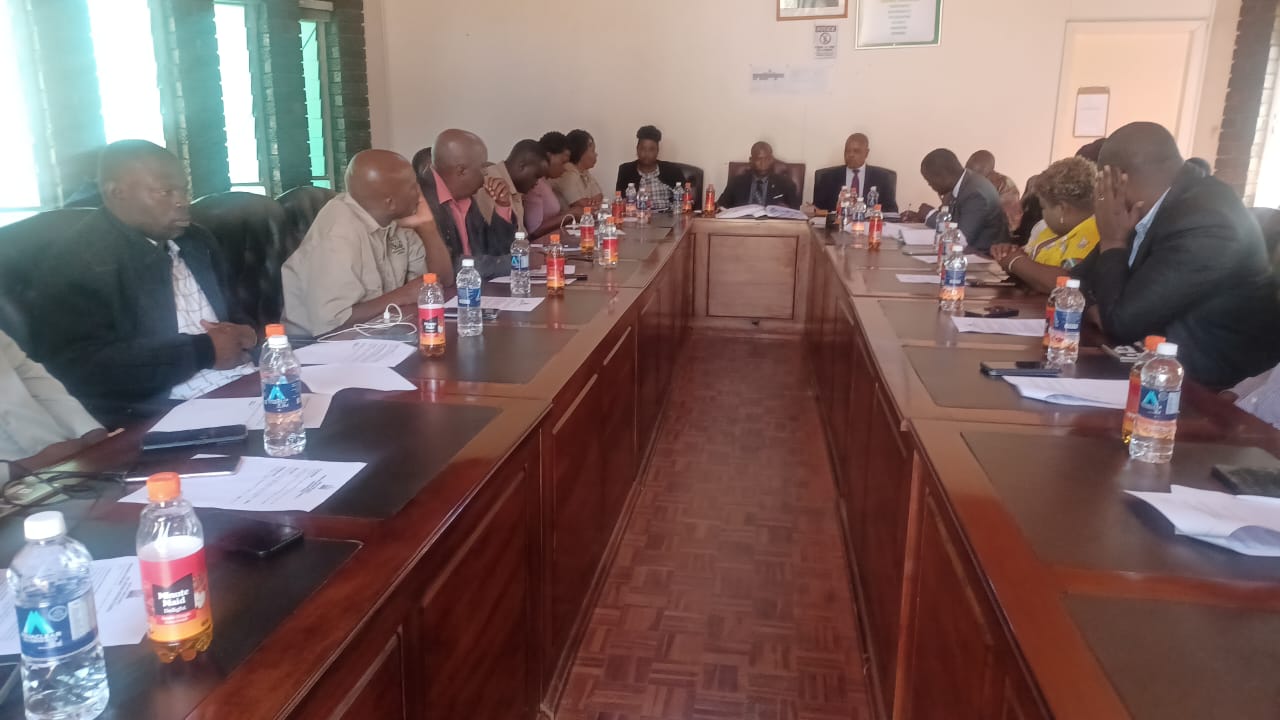
Diana Nherera Norton Town Council councillors and management on Thursday renewed their integrity pledges as part of the local authority’s commitment to promoting ethical conduct and combating corruption. Speaking…