admin
admin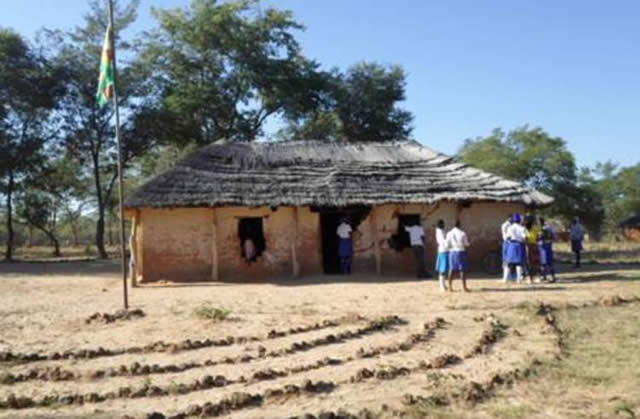
Emmanuel Ndlovu
AS global leaders are meeting in New York for the 70th session of the United Nations General Assembly to tackle development and other issues, villagers of remote Singeni village in Nkayi District, Matabeleland North, have quietly been changing the face of their community. Beginning today, countries will adopt a set of global goals to end poverty, protect the planet and ensure prosperity for all as part of a new Sustainable Development Goals agenda which replaces the Millennium Development Goals.
Goal number four of the SDGs’ 17 goals seeks, among other targets, to ensure inclusive and equitable quality education and promote life-long learning opportunities for all by 2030. Singeni villagers have adopted a “do-it-yourself” attitude in developing their area unlike most rural communities who depend more on non-governmental orgnisations for developmental aid.
They pooled resources together to kick-start the construction of a classroom block and blair toilets as part of upgrading their local secondary school, Singeni Secondary School, a pole and dagga dilapidated structure. It has an enrolment of about 150 pupils. The dagga block has two classrooms — more like two huts and a couple of huts for the teachers that are liberally abusing the term, “teachers’ cottage”.
Singeni Secondary School, which is situated in Ward 25, has always been in a sorry state ever since it was established in 2010. Pupils were, until recently, using the bush system as the school had no toilets, a development which caused Nkayi Rural District Council to contemplate closing the school.
The School Development Committee (SDC) chairperson, Bishop Ndlukula, said villagers decided to raise money for the construction of blair toilets first so as to counter plans by the local authority to close the school.
More than 100 villagers had to contribute a gallon of maize each which they used to brew beer for sale. They also provided labour for the moulding of bricks and ferrying of river sand and gravel. “From the gallons of maize contributed by people, we managed to get three bags which were used to brew beer for resale to local villagers.
“The money raised was channelled towards the construction of toilets because they were an urgent matter. “Some villagers volunteered to work for free at the school, moulding bricks while others were collecting gravel and sand. It was basically a hive of activity at the school because parents decided to stand up for the education of their children,” said Ndlukula.
Teachers did not trust the dilapidated classroom huts and always viewed them as a danger to pupils’ lives. They preferred conducting lessons under trees than inside the pole and dagga structures. The situation would become worse during the rainy season because the grass-thatched roof leaked.
“The learning environment of more than 150 pupils has not been conducive at all. As if this was not enough, the school also lacked proper toilets. Due to this state, last year the council resolved to shut it down but villagers blocked the move.
“Some parents from our village shunned the school as they preferred sending their children to distant secondary schools such as Zwelabo and Magazi where pupils have to walk a distance of more than 25km,” said Ndlukula.
Most pupils from this remote area were caught between a rock and a hard place. The idea of facing the harsh conditions offered by Singeni Secondary School and walking long distances to better schools was equally unappealing to them. Ndlukula said many children were demotivated from attending school, resulting in an increase in the number of school dropouts. This drove the community to start working on upgrading the local secondary school.
However, the dawn of a new era began in June last year when villagers volunteered to raise money towards their school’s development. By the end of last year, the villagers had managed to construct 12 blair toilets, two cottages for teachers and a classroom block. However, the classroom block is still to be roofed owing to limited funds.
Marko Ncube, the village head, applauded the unity of purpose exhibited by members of the community in working towards improving their school.
“As villagers we are very proud of the development we initiated at the school. We hope to continue showing the same spirit of oneness while working for the betterment of our community.
“At first we thought the whole idea of constructing classroom blocks was going to be impossible for us because we didn’t have enough money and the capacity to do so. However, the pain of seeing our school shut down gave us the impetus to work together in channelling our resources towards saving our school,” said Ncube.
The zeal shown by villagers towards improving Singeni Secondary School also impressed the school authorities, Nkayi RDC. An official at the council said the new look school has brought about a positive change in attitude towards study among pupils. “If you see the vibe in them when they’re working (at school) you’ll be surprised. What impressed us most is that some parents even volunteered to work for free for the improvement of the school. They probably realised that no one would come from heaven or wherever to do it for them.
“This is their own work and they should be proud of themselves. Pupils are proud of their parents for their tremendous work,” said a council official who could not be named for protocol reasons. The positive change in attitude among pupils and youths in Singeni can also be attributed to the activities of Youth Network for Alternative Development (Youth-NAD), a community-based organisation which is said to have been conducting capacity building training aimed at fostering a solution-focused mindset.
“Youth-NAD training cultivated something in them, something that no one can take away. “The organisation urged villagers to unite and use their own available resources to foster the development they want in the community,” said the council official.
A retired local government expert, Peter Mhlanga, said the work of the Singeni villagers should be applauded. He said generally, development is viewed as a process of first empowering people to improve their living conditions, health, literacy and change of attitudes. “In the Zimbabwean context this entails improving the health system by ensuring that these institutions are accessible and their services affordable to every citizen. It also includes inter alia infrastructural development such as the construction of proper road networks and schools.
“However, in most African communities this transformation has been marred by controversy because of the tendency of linking development to donor funding and external influence. This has reduced communities to mere recipients of funds from non-governmental organisations for the development of their localities. It also causes communities especially those in remote areas to develop a dependency syndrome,” he said.
Some communities are always in a waiting mode waiting for the government or charity organisations to funnel out money so they could start initiating development programmes in their areas. However, this tendency has stalled progress in some communities as villagers become shortsighted and fail to realise their own individual capabilities and potential to improve themselves using the limited resources available.
Emmanuel Ndlovu is a freelance journalist based in Bulawayo and can be contacted on [email protected]


 derick.khumalo