Chronicle Editor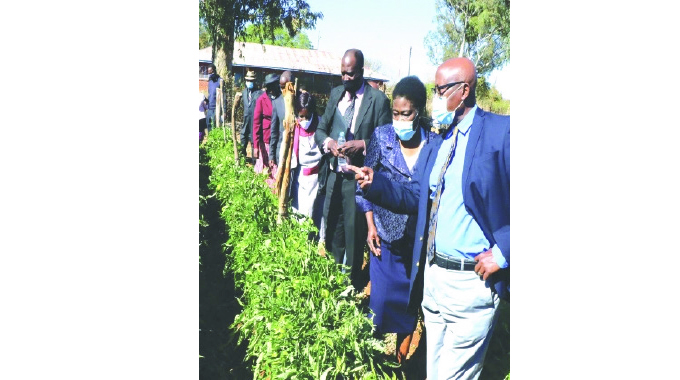
Tedious Ncube
One of the main responsibilities of the Ministry of Primary and Secondary Education, is to provide an education system that adequately meets Zimbabwe’s evolving development aspirations. In essence, this loosely calls for greater focus in the teaching and learning of science, technology, engineering and mathematics, including . . . entrepreneurship (which is the engine for Vision 2030). Hon Cain Mathema believes that, for us to achieve this dream, we need to lead a new era of mutual responsibility, one where we all come together for the sake of our children’s success.
He believes that ensuring Zimbabwe’s competitive edge in the 21st century and beyond, starts with investing in our workforce by providing every Zimbabwean the opportunity to get a world class education from cradle through to adulthood. This article will analyse the potential benefits of the move by the government of Zimbabwe through the Ministry of Primary and Secondary Education, to allow schools to venture into commercial activities. Greater focus will be placed on how this move will improve the quality of Zimbabwe’s education through exposing learners to life-long practical lessons. The article will also look at how this move in and of itself radicalises the school as an institution working towards the attainment of vision 2030.
In the recent past, the world over has witnessed an increase in the demand for entrepreneurs. Despite this increase in the demand for entrepreneurs, very little has been done to train and nurture entrepreneurs. In the case of Zimbabwe, students normally get the opportunity to learn entrepreneurship at tertiary education level. Very often, those students that do not make it to tertiary education, are never taught entrepreneurship. In light of this policy blind spot, the move by the ministry of primary and secondary education will allow every Zimbabwean to get a fair chance to learn entrepreneurship.
By way of clarification I should state that education is the driving force behind every country’s economy, directly or indirectly. Entrepreneurship aids learners from all socioeconomic backgrounds to think outside the box and nurture unconventional talents and skills. It creates opportunities, ensures social justice, instils confidence and stimulates the economy. Entrepreneurship education is a lifelong learning process, starting as early as elementary school and progressing through all levels of education. Therefore, introducing learners to entrepreneurship develops their initiative and helps them to be more creative and self-confident in whatever they undertake and to act in a socially responsible way.
In a world where sustainable development is the buzz word, it is also important to look at how this move by Government will strengthen the capacity of schools to deliver good quality education. Very often, schools have argued that they are underfunded to deliver good quality education.
This underfunding has generally reduced the strength of the school institution to meaningfully contribute in both student development and the economy in general. What many have not realised is that the real problem affecting schools is not how government allocates funds to schools, however it’s the general model of how education is financed in Zimbabwe. In line with Vision 2030 which sets that development should start at grassroots level, the ministry of primary and secondary education is proposing a model that will imply a bottom up financial model for schools as opposed to the top-down approach.
In this model schools are allowed to venture into commercial projects, schools will be able to mobilise resources for their needs and most importantly will have sustainable income streams that bring in money with or without a problem.
Without a doubt, this will cause schools to consolidate their capacity to foster sustainable development. In fact, schools will actually consolidate capacity to address their own challenges and challenges affecting their communities. In the view of many, this may also count as a move in the right direction towards the provision of free education especially if schools create different revenue streams apart from tuition and levies. According to the Minister of Primary and Secondary Education Hon. Cain Mathema, “the cost of education at a school successfully undertaking commercial activities should reduce significantly”.
We know that in this global economy, countries that out-educate us today will out compete us tomorrow. Whether they are conservative or liberal, black or white, every economist agrees that in this digital age, a highly educated and “skilled” workforce will be critical not only to individual opportunity but to the overall success of our economy as well. These forces and the needs of the future economy, demand that the education sector focuses on improving the quality and relevance of education and better fostering of skills.
Moreover, as technology continues to change, on-the-job training to update and adapt skills and life-long learning will become increasingly important. The move by the ministry of primary and secondary education to allow schools to venture into commercial projects will therefore, improve the quality and standard of education in Zimbabwe. This move will also expose learners to practical entrepreneurship education. Schools will also generate enough capacity to address their own challenges and challenges facing communities around them. Surely with such an arrangement one can only be confident that Vision 2030 is a reality that will be achieved.
Tedious Teddy Ncube is a political scientist and public policy analyst


 Online Reporter