admin
admin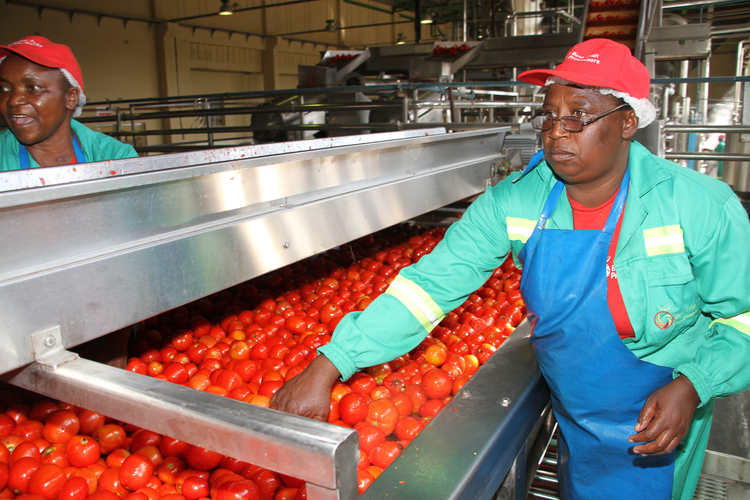
Business Reporter
BEITBRIDGE Juicing Private Limited (BBJ), a subsidiary of Schweppes Holdings Africa Limited, has injected US$3 million to revive the Norton-based fruit processing plant that it jointly owns with the Agricultural and Rural Development Authority.
BBJ holds 70 percent and is the managing partner in the joint venture, Best Fruit Processors Private Limited, while Arda controls the remainder.
The fruit processing plant was closed in 2009 and reopened late last year.
With annual production capacity of 30 000 tonnes of raw fruit, the plant can process purees and pastes that are septically packaged.
Best Fruit Processors general manager Mr Smart Zongololo said, “Production capacity is 10 tonnes raw fruit per hour.
“We started the processing machines on December 31, 2015 with a commissioning production run for mango and guavas into purees and have started receiving tomatoes, which we are processing into tomato paste.
“Raw fruits that have gone into the plant this year to date amount to 100 tonnes mango, 257 tonnes guava and 30 tonnes tomatoes.”
The company has so far procured fruit worth US$300 000.
The target procurement spend on feedstock from farmers for 2016 is approximately US$2 million and likely to increase to US$5 million in 2017.
Best Fruit Processors’ key focus is to fulfill domestic demand for tomato paste and fruit purees whilst also supplying export markets.
The company targets to export 70 percent of its products and reserve 30 percent for the local market.
The BFP product portfolio is focused on tomato paste, which is expected to contribute about 50 percent of the total volume produced.
Currently, most tomato paste used by domestic and regional manufacturers is imported from China.
Further to creating a sustainable export market for processed fruit, Best Fruit Processors will simultaneously create additional economic value through the creation of about 100 jobs from direct employment and 3 000 indirect jobs as famers will be signed up for the out-grower programme.
The fruit processing business model is heavily reliant on the farming community’s ability to invest in the production of relevant fruit for processing at a reasonable price and at the right quality.
This is the reason why public-private partnerships are a key feature of the joint venture’s business model.
Best Fruits marketing and public affairs director Mr Unaiswi Nyikadzino explained: “A sustainable inclusive business model incorporating communal famers into our value chains is a key pillar of success for our fruit processing division and therefore a lot of our effort as a group is focused on creating a solid platform for investment in that area as we provide a ready market for fruit that meets our criteria for processing.”
Since January 2016, the company has collected fruit from more than 700 farmers in Mhondoro-Ngezi, Murombedzi, Honde Valley, Hwedza, Lower Gweru, Chigondora, Macheke, Mamina, Goromonzi, Selous and Domboshawa.
The business model for contract-growing for fruit is based on a healthy mix of community irrigation schemes, small-holders and a few commercial farmers.



 Online Reporter