Online Reporter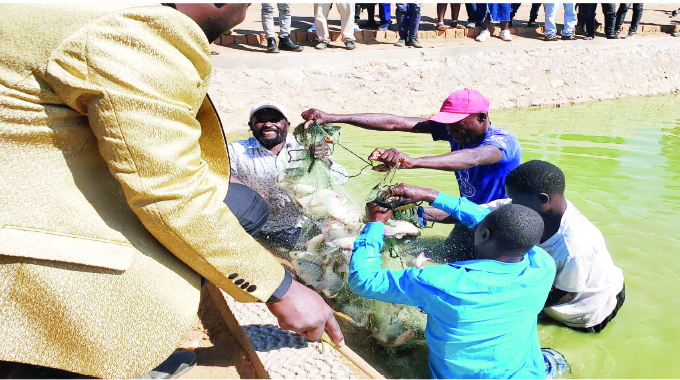
Theseus Shambare, Features Writer
IT is just after nine o’clock in the morning in Shinga, Chimukoko and the surrounding villages of Mudzi and Mutoko, but the sun burns with a ferocity more fitting for mid-afternoon.
This is winter in Zimbabwe, yet the heat is relentless.
The air is dry and suffocating.
Cattle, which should be grazing freely, now crowd under thorny acacia shrubs, their ribs protruding through sun-scorched hides as they seek shelter from the merciless rays.
Dust curls into the sky as barefoot children trek kilometres to fetch water from dams that have receded into cracked hollows.
The rivers have long vanished.
The fields — once green with maize or wheat — lie barren and brittle.
The ground has given up.
Death does not come suddenly here; it creeps slowly with each failed rainy season, each vanished stream, and each wilted seedling.
Climate change is not a future threat.
It is the lived reality.
Yet amid this slow-motion crisis, something remarkable is happening.
Villagers, long used to hardship, are no longer merely enduring.
They are adapting.
They are innovating.
And they are beginning to thrive.
Deputy Minister of Lands, Agriculture, Fisheries, Water and Rural Development Davis Marapira, during a recent visit to Mudzi, described a new vision for Zimbabwe’s dry regions.
“The drier areas of Zimbabwe have their own unique advantages,” he said.
“They can harness underground water for year-round production. The heat units here are also ideal for fish farming.”
That vision is embodied by people like John and Martha Kapfunde.
After retiring from city life more than two decades ago, the couple returned to their rural home in Ward 4 of Mudzi and began turning it into a modern agro-industrial complex.
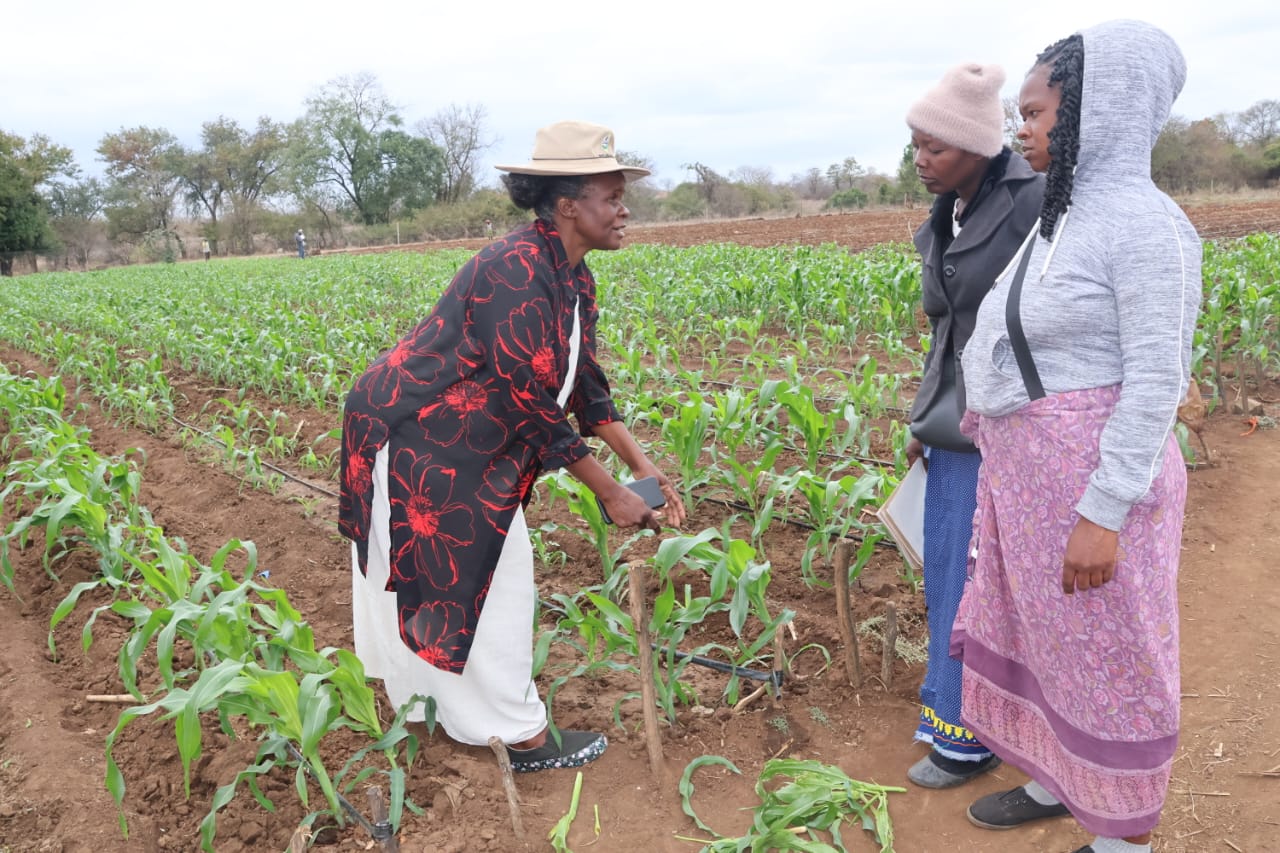
With inputs received through the Presidential Inputs Scheme, they started producing drought-resistant traditional grains like millet and sorghum.
These hardy crops feed the family, generate income, and are sold to the Grain Marketing Board (GMB) and to private buyers, including traders from neighbouring Mozambique.
“This area is known for drought, but traditional grains are resilient,” said Mr Kapfunde.
“We treat farming as a business, not just a survival strategy.”
Their success has allowed them to invest in two grinding mills, a solar power system and a 10-cubic-metre biogas digester that provides clean cooking energy.
“We save money and I don’t have to scrub soot off my pots anymore,” said Mrs Kapfunde.
“The residue from the digester is perfect fertiliser — it’s weed-free and good for the soil.”
Their transformation has inspired others.
In Chimukoko and Shinga, water shortages once forced villagers to depend on unreliable streams and distant dams.
Tired of waiting for outside help, more than 40 families came together to form the Pathfinders Club, a local co-operative.
Using profits from the sale of small grains, the club raised funds to drill solar-powered boreholes.
These now supply clean water to each household, irrigating vegetable gardens and sustaining livestock.
With time, they expanded to include poultry projects, fruit orchards and aquaculture.
Every initiative is powered by renewable energy — solar panels, biogas systems and low-emission practices.
“We realised no foreigner was coming to save us,” said Ms Martha Chimutsiga, the club’s treasurer.
“So, we decided to save ourselves.”
One of the most transformative initiatives has been fish farming.
Under the Presidential Community Fisheries Scheme, farmers like the Kapfundes and Mr Innocent Kazanhi received free fingerlings and technical support to establish fish ponds.
In a region known for heat and dryness, tilapia — fast-growing and high in protein — proved a perfect fit.
The ponds, filled with borehole water and maintained using solar pumps, soon began to yield economic benefits.
“The fish ponds are a game-changer,” said Mr Kazanhi.
“We used to struggle. Now I earn over US$2 000 a month from fish sales, while spending just US$500 on feed.”
On a single recent harvest day, the community collected over 2 000 kilogrammes of tilapia — evidence of how climate-smart agriculture can work even in Zimbabwe’s toughest regions.
“The infrastructure you see here — solar power, fish ponds, orchards — this is the future of Zimbabwe’s rural economy,” said Deputy Minister Marapira.
“This is climate resilience in action.”
The achievements in Mudzi and Mutoko have drawn the attention of the regional community.
Delegates from the Southern African Development Community (SADC) and the African Development Bank (AfDB) visited recently as part of the Profishblue programme, a US$10,1 million initiative to support aquaculture and regional food security across seven African countries.
“We aim to empower communities and build intra-regional trade while promoting climate adaptation and eco-tourism,” said Dr Alexander Kefi, the programme’s manager.
Following the visit, local farmers received a three-tonne refrigerated truck.
A modern cold room and an ice-making machine are being installed, allowing the Pathfinders Club to store and transport their fish in line with international food safety standards. These upgrades will unlock access to larger markets and reduce post-harvest losses — key steps toward a sustainable rural economy.
But this transformation is not only economic. It is also deeply environmental.
The Kapfundes maintain a homestead seedbank to preserve drought-resistant indigenous seed varieties, contributing to the conservation of biodiversity.
They participate in seed exchange fairs supported by the SADC Plant Genetic Resource Centre in Zambia.
Their use of organic fertilisers, solar energy, and biogas systems has dramatically reduced their carbon footprint.
These efforts align with the Malabo Declaration, Agenda 2063, and the United Nations Sustainable Development Goals, especially those targeting zero hunger, clean energy, climate action and sustainable land use.
They serve as a living blueprint for Zimbabwe’s own Vision 2030.
Perhaps the most telling indicator of progress is the return of the youth.
In the past, young people saw the city as their only hope. Now, they’re choosing to stay.
“I used to dream of going to Harare,” said Tawanda Mupasiri (22).
“But I earn more here from farming than I would in the city. And I am building something I can pass on.”
Mudzi and Mutoko — once symbols of drought and despair — are fast becoming models of climate-smart, self-sustaining development.
With the right investment, strong policy and community-driven vision, these districts have shown that resilience is not abstract — it is built with hands in the soil, sunlight on the back and hope grounded in collective action.
As Deputy Minister Marapira put it: “Resilience is not built in boardrooms. It is dug from dry earth, nurtured with vision and sustained through unity.”
In the face of worsening climate shocks, these communities have not only adapted.
They have reimagined their future —and made it green.