Online Reporter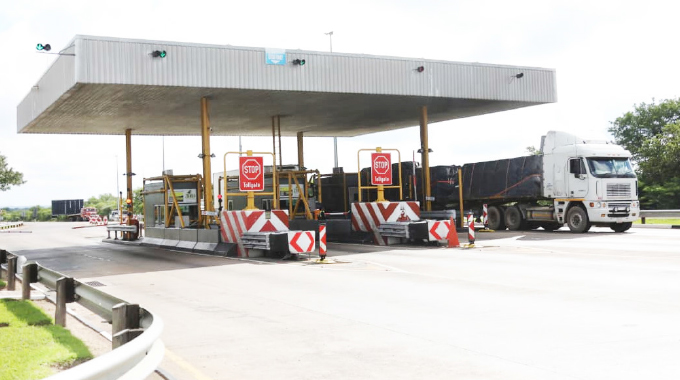
Rutendo Nyeve in Ntabazinduna
THE Government has successfully rolled out a nationwide electronic tolling (E-Tag) system that is increasingly being embraced by individual travellers and corporates as the country modernises its road network and eases the burden on the motoring public.
The transformative initiative is converting traditional toll gates into seamless, digital toll plazas, marking a significant leap towards a cashless and congestion-free travel experience on major highways.
It is implemented through the Zimbabwe National Road Administration (Zinara), in partnership with technology firm, Instatoll with the full-scale operation, which commenced three months ago following a six-month pilot.

This milestone was showcased to the media during a tour of the Ntabazinduna Toll Plaza along the Bulawayo-Harare Highway on Thursday.
The Ntabazinduna Toll Plaza was commissioned in 2013 and is the pioneer site for the e-tolling pilot, serving as a live demonstration of the system’s efficiency.
Official reports already indicate substantial and growing uptake of the technology, with distribution and logistics companies registering their fleets in significant numbers, leading the shift towards digital payments. The initiative is one of the key success stories under the Second Republic led by President Mnangagwa whose broader infrastructure modernisation agenda continues to turn the page.
During the tour, the Permanent Secretary for the Ministry of Transport and Infrastructural Development, Engineer Joy Makumbe, spoke on the vision behind the technological shift.

“It’s in our custom to follow up on our contractors’ work to address any challenges on the ground because we make our roads to world-class standards, we are also moving from toll gates to toll plazas,” she said.
“When I talk about top level, we don’t want to see you going there with hard cash. So when you travel, you know when your car reaches the plaza, the boom gate just opens.
“There won’t be any build-up of cars. We will be rolling these E-Tags out on all the roads that we are constructing.”
Eng Makumbe reaffirmed the Government’s commitment to eliminating the delays traditionally associated with cash transactions, which often lead to long queues, especially during peak travel periods and holiday seasons.
Detailing the rollout, Instatoll’s country operations manager, Mr George Mupfuka, revealed the scale of the operation.
“We operate nine toll gates. We are now operating a total of about 58 lanes. We have just added the E-Tag lanes to the 40 lanes that we had in the past,” he said.

Mr Mapfuka highlighted Ntabazinduna’s history, noting that its daily traffic had grown from 2 500 vehicles at inception to approximately 25 000 per day by 2015 after all gates were opened.
“The Ntabazinduna toll gate was the pioneer. We do have challenges here and there, but we have now put in a solution of e-tolling. This is a seamless solution,” he explained.
Mr Mupfuka said this will curb complexities of the existing multi-currency payment environment including USD, ZWG cash, and point-of-sale (POS) systems, which are often hampered by network glitches.
“At a toll gate, if you just have a glitch of a minute, the queue becomes lengthy. But with this new solution, someone is prepaid. They have a tag that’s put on their windscreen, which is RFID.
“Once they just get close to the boom, the boom opens. This helps in connecting the job efficiently.”
Addressing public perception and future innovations, Zinara board chairman, Dr George Manyaya, was keen to dispel myths about exclusivity and outline next steps.
“This lane is not for Government officials, as people think. Even you can actually access this lane, it’s for everyone. We have opened this e-tagging for everyone,” he said.
Dr Manyaya also announced an upcoming digital payment integration.
“We are in the process of widening these lanes now. As we go, I think you noticed that we had a tender for an e-wallet; we are introducing it as another e-wallet linked to the SIM card, where you can transact in that wallet,” he said. “You can pay your licensing, you can also pay by having funds deducted when you pass the toll gates. This is part of the innovation that we are doing.”
On the critical metric of public adoption, the Dr Manyaya shared encouraging data.
“The uptake now has increased. Remember initially, there was a notion that it was for Parliamentarians, but it was Parliamentarians who had engaged to do the pilot.
“Now we have got companies, especially those in distribution, those big companies they actually have registered,” he said.
“We have got private citizens that have registered. The uptake now is about 30 000 cars. We hope that you in the media will help educate and make the residents aware so that by next year we will actually get to almost everyone.”
The successful implementation of the E-Tag system represents a major milestone in Zimbabwe’s transport sector digitalisation.
By reducing transit times, minimising cash handling and providing a platform for future digital services like the planned e-wallet, the system is set not only to offer improved efficiency for daily commuters and commercial operators but also a more robust and transparent revenue collection framework for national road maintenance and development.