admin
admin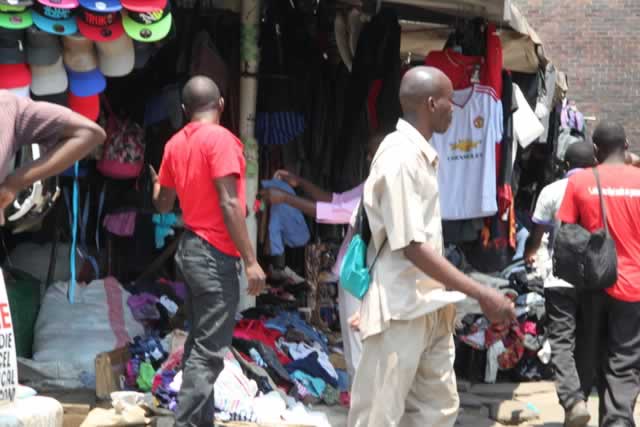
Talent Chimutambgi and Abigail Mawonde
Second-hand clothes, popularly known as “mabhero”, continue to find their way into the market despite Government announcing a ban effective September 1 this year.
The Herald Review visited the city centre markets like Charge Office, Copacabana and Market Square where vendors are openly engaged in the sale of the banned goods. Areas surrounding Mbare Musika have been turned into a giant open air second-hand clothes flea market.
In July this year, Finance and Economic Development Minister Patrick Chinamasa announced the ban on the importation of second-hand clothes while presenting a Mid-Term Fiscal Policy review statement.
“I move to remove second-hand clothing and shoes from the open general import licence and any future importation of second-hand clothing and shoes will be liable to forfeiture and seizure,” Minister Chinamasa said while announcing the ban.
After facing resistance from some members of Parliament who said the ban was insensitive and would negatively impact on struggling entrepreneurs and those affected by the three months’ notice terminations, Minister Chinamasa told the National Assembly that Government would not budge on its position.
Minister Chinamasa said apart from the negative impact of second-hand imports of shoes and clothes on industrial recovery, these products posed a health hazard as they were not subjected to fumigation.
He said despite the customs duty rates of $5 per kg on clothing and 40 percent plus $1 per pair of shoes to reduce competition for local industry, the products had continued to flood the market
Zimbabwe’s textile and leather industry has since dollarisation been under siege from the influx of imports, especially finished second-clothes, shoes and leather products that forced some of them to close down.
No communication, traders stay put
However, those trading in second- hand clothes say they have continued with the sale of the banned wares as they have received no official communication about it beyond the papers.
“The City of Harare authorities took their money as usual for September and October and did not tell us to stop selling second-hand clothing. No one has been here to tell us that they have been banned,” said a trader at Mupedzanhamo who declined to be named.
The same statement came from other flea markets like Avondale and the Harare Central Police Station (generally identified as Charge Office).
They also say that they have no alternative sources of income.
“Life has become tough such that if you do not run around like this, you will die of hunger. We know the Government banned the importation of second-hand clothes but there are no jobs where we could go and work ad earn a living.
“I am glad that at least I am not stealing from someone’s pocket,” said another trader at Charge Office market.
Another trader at the Flea Market close to Cameron Street/Speke Avenue Bus Terminus (popularly known as Copa Cabana) said: “We know importation of second-hand clothes was banned but we have no choice because if we do not do that our families will die of hunger”.
Smuggling intensifies
A few vendors interviewed said they are still getting their bales of second hand clothing through the normal channels and declare them openly at borders. But none of them were prepared to show The Herald Review paperwork to substantiate their claims.
The majority of the traders said the bales of second-hand clothing are now coming in exclusively through smuggling.
“We are still bringing in the bales of clothes by means of smuggling as we can no longer pass through the border posts with them like before,” said a trader who only identified herself as Stella.
She narrated how they purchase their wares in Mozambique and then hand over the clothes to dealers, popularly known as Malaicha, who bring them via Marymount in Mutare.
She said the transporters usually smuggle the wares during the night and in a way this had also helped them evade paying duty which now makes them realise a larger profit than before.
“Once they are in the country, transportation to Harare will not be a problem. We repack the clothes into nice travelling bags so that they appear like our own since there will be numerous road blocks along the highway.
The trader said that for now Government should only enforce the ban on importation of used underwear put in place by former minister Tendai Biti.
“These endanger people’s health, especially ladies’ panties. But other types of clothes should be allowed so as to enable us to earn a living while at the same time availing affordable clothes to the people of Zimbabwe.
Buyers’ paradise
Most traders interviewed by The Herald Review said that business is slow and they are being forced to sell their clothes at reduced prices.
“There is not much business my friend. Everyday you need money to pay for the table, buy food, transport and all other costs,” said Mark Mukwa at Harare Central Police Station flea market.
“You are lucky if you can gross $50 in a day. Considering that there was a time when it was normal to gross $350 in less than a day, that tells you the situation. People just do not buy as much. Maybe it is because there are too many flea markets these days. Even with the ban on the illegal vendors there are just too many flea markets,” said Eunice Muusha at Mupedzanhamo.
Muusha said she started off by working for a second-hand clothes trader about 10 years ago before she branched out on her own.
“This business has kept my family for many years as I am a single mother. But at this rate I do not know how long I can continue. The only person benefiting is the client because at the end of the day you just sell the clothes at whatever you can get. You cannot be asking for five dollars for a pair of skinnies (jeans) when the next person with equally good wears is shouting out that theirs only cost a dollar,” said Muusha.
She says she does not have an alternative source of income lined up as yet but is considering options in the food retail sector.
“People always need to eat,” she concludes.
Is anyone acting to effect the ban?
A source at the City of Harare said that they have received no directive to remove second hand clothing retailers from their markets:
“Once the Government tells us to bar them from our flea markets they will be gone. But for now, we cannot just act on information that we read in the paper.”
Police Spokesperson Senior Assistant Commissioner Charity Charamba said arrests of smugglers by the police are happening. She however could not explain why the police run Harare Central Police Station still allows vendors of second hand clothes to operate from its premises.
“Of course police is arresting smugglers here and there but you need to confirm from Zimbabwe Revenue Authority for clear information,’’ said Snr Asst Commissioner Charamba.
Efforts to get comment from Zimra on how these bales of second hand garments are still found in the country after the ban were in vain as calls were not answered. By the time of going to print there was still no acknowledgement of an email sent a few days before.
Industry under siege
Zimbabwe’s textile and leather industry has been struggling for many years with blame being placed the influx of cheap imports, especially finished second-clothes, shoes and leather products that forced some of them to close down.
The used products are still sold everywhere including in front of formal retail shops, which negatively impacted on established businesses that pay rentals and taxes to the Government.
Minister Chinamasa said it would be hypocritical for him to say that he wanted to protect local industries, and yet still allowed the importation of second-hand clothes.
“We do not want to go that route and we need to protect our people from diseases, adding that clothing manufacturers should ensure clothes were affordable.”
He said the textile industry in South Africa had collapsed because of the sale of second-hand clothing, adding he would not allow Zimbabwean companies to follow suit.
Analyst says the increase in the importation of second-hand clothes has had far-reaching negative consequences on the economy. Reduced sales have forced clothing factories, wholesalers and retailers to close down with more people losing their jobs as a result and reduced tax revenue for the government.
Spinning industries are affected; cotton farmers have not been spared the trouble as they incurred serious losses due to the drastic fall in cotton producer prices from US1.25 cents in 2011 to US0.30 cents per kilogram in 2015
The second hand clothes are smuggled into the country through the country’s borders with Tanzania, Mozambique and South Africa.
Small local producers cry for enforcement
It appears that the question of allowing the most disadvantaged people to earn a living is a double edged sword as small scale entrepreneurs in the clothing and footwear would like to see the ban on second hand.
“We are providing employment. I have five people that I employ here. This town is full of tailors. Go into most of these buildings and you will find tailors like me. But these flea markets really make business difficult,” said a tailor at Polack House who specialises in menswear who identified himself as Musoni.
And the gender equation balances on both sides as well. Women are also affected on both sides of the divide as traders in second hand clothing and tailors.
Omega Mupandenyama who makes women’s and children’s wear at Robinson House said importation of second hand clothes has negatively impacted on her business as targeted customers tend to shun buying locally produced goods in favour of these second hand foreign garments. She applauded the Ministers directive adding that will promote the local production of goods.
“Business has become difficult as second hand clothes are still flooded the market. Customers shun our products in favour of second hand clothes even though we try to sell them at reasonable prices. We were happy after the Finance Minister announced the ban on the importation of second hand clothes but our surprise we are still seeing them being sold.
“We urge the government to enforce the ban,” said Mupandenyama.
She said she competes favourably with established big brand clothing retailers as she can match them on style and beat them on pricing.



 Online Reporter