

 Chronicle Editor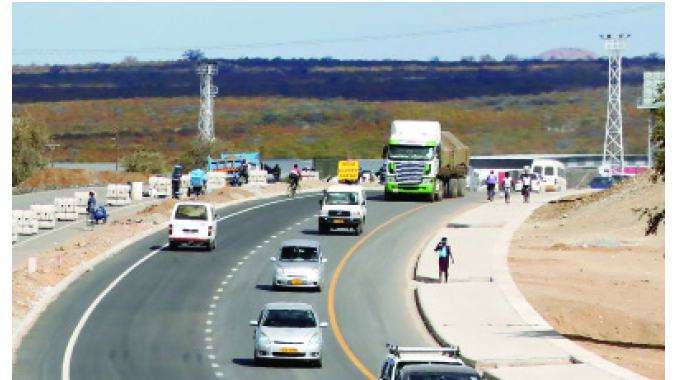
Nqobile Tshili, Chronicle Reporter
DESPITE the crippling illegal sanctions imposed on Zimbabwe by the United States, the UK and their allies, the Second Republic has continued to fund multiple transformative infrastructural development projects in the country.
The imposition of the punitive measures was a direct response to the historical black-empowering land reform programme which marked the nation’s pursuit of total independence and self-determination.
Zimbabweans have also been commended for applying their skills in the development of the country.
Speaking during the recent Africa Green Revolution Forum presidential summit panel discussion in Kigali, Rwanda, President Mnangagwa said Zimbabwe’s economy has shown remarkable resilience to the effects of 22 years of Western sanctions through the adoption of robust home-grown strategies.
The Government has financed the rehabilitation of Beitbridge-Harare highway, Lake Gwayi-Shangani, countrywide rehabilitation of roads under the Emergency Road Rehabilitation Project 2 (ERRP2).
The Second Republic is also financing the construction of roads, clinics and classroom blocks through the devolution funds.
The Government is also paying school fees for vulnerable families through the Basic Education Assistance Module (BEAM) which is targeting to pay school fees for 1,5 million learners this year.
In the agriculture sector, Government is constructing several high-impact dams with Lake Gwayi-Shangani, mooted over a century ago, being the flagship project.
Other dams being constructed are Ziminya in Matabeleland North, Tuli-Manyange in Matabeleland South. Upon completion, the dams will transform local communities into greenbelts to guarantee food security.
Every year, the Government provides inputs to communal farmers under the Presidential Inputs Scheme with nearly 3 million farmers targeted for the 2021/22 summer cropping season under Intwasa/Pfumvudza scheme.
Through Government’s financing, Zimbabwe has established a university in every province.
The Second Republic is on course in terms of spreading higher and tertiary education to the peripheries of the country and technical colleges are being constructed in formerly marginalised areas such as Binga.
Higher and Tertiary Education, Innovation, Science and Technology Development Minister Professor Amon Murwira said the State financing of Government projects is in line with President Mnangagwa’s philosophy that Nyika inovakwa nevene vayo/Ilizwe lakhiwa ngabaninilo
He said Government is also applying heritage-based education by using local resources to develop the country.
“In the Second Republic Zimbabwe has learnt to take ownership of its programmes. Take for instance, the construction of universities innovation hubs and so forth. We have used our own technical people at universities as well as apprentices in the industrial training and trade testing department to construct our universities,” he said.
Prof Murwira said the higher and tertiary education sector has been able to respond to national problems with universities establishing factories.
He said universities were able to produce sanitisers in response to Covid-19 thereby reducing the import bill. Prof Murwira said one of Zimbabwe’s biggest assets is its human capital which has been able to apply skills for transformative development.
He said Government has been able to cut costs through contracting local companies.
“Take an example of the Beitbridge-Chirundu Road and see how self-belief and leadership of His Excellency, the President Dr E D Mnangagwa came to the fore. He just said we will construct these roads on our own,” said Prof Murwira.
“When we were quoted by a certain foreign company, they had quoted something like US$2 billion, but we were able to construct this road with less than US$1 billion. So, this country has learnt to believe it itself.” The minister said despite illegal sanctions, Zimbabwe has rediscovered itself in terms of self-sustenance.
Prof Murwira said there has been a mindset change on how Zimbabwe responds to national challenges.
“We had a complete change of development philosophy and the implementation model of innovation, industrialisation, teaching research and community services that is espoused in Heritage Based Education 5.0,” he said.
“You will see what we have been able to do with wheat in agriculture production. You might have seen that all universities are having agro-innovation and industrial parks. We are looking for things that matter in this country.”
Prof Murwira said Zimbabwe is proving to the world that it is the master of its destiny.
“We have said we will work with all those friendly countries that are willing to work with us. In fact, that is why His Excellency said we are a friend to all and an enemy to none. These are the philosophies that have made a difference in terms of the direction that this country is going,” he said.
Bulawayo Provincial Affairs and Devolution Permanent Secretary Mr Paul Nyoni said Government should be commended for stepping in and ensuring that the development trajectory is maintained even in the face of adversity.
“Government had to step in where it would ordinarily access lines of credit from international financial institutions to make sure that lives are improved. We have the Beitbridge-Chirundu Road, ERRP 2, Lake Gwayi-Shangani, Covid-19 response and a lot of other projects that Government is self-funding,” he said.

“If lines of credit were available, it would be great, but they are not there and the Government cannot stop.” He said at community level Government is financing the drilling of boreholes in all 35 000 villages in the country.
Mr Nyoni urged citizens to complement Government efforts by investing in the country.
He said there are citizens based in the diaspora who are contributing to the country’s economic growth in line with Vision 2030.
A development practitioner, Mr Anglistone Sibanda, said sanctions have failed to trigger the illegal regime change that those who imposed them sought.
Since the imposition of the Western embargo in 2001, the sanctions-imposing nations expected an implosion of the Zimbabwean economy.
There is no doubt that the sanctions have dismally failed to accomplish the intended mission of bringing the economy to a screeching halt.
“Although sanctions have become a perennial problem that affects Zimbabweans from all walks of life, the revolt against the Government, which is the primary objective of the sanctions-imposing nations, has failed to see the light of the day,” said Mr Sibanda.
He said the financing of development projects is a confirmation that Government has outpaced its detractors and continues to change citizens’ lives.
“Government has continued to look for alternatives through innovative and creative ways with the little that we have. We are also having investment coming from our friendly countries like China,” said Mr Sibanda.
He said it is high time that sanctions are removed and the West embraces the Government’s re-engagement drive.
In December 2001, the United States Congress passed the Zimbabwe Democracy and Economic Recovery Act (Zidera). The law makes it impossible for the US government to approve new financial aid to Zimbabwe from international financial institutions.
In 2002, the EU followed suit, imposing sanctions that included the suspension of development assistance, an arms embargo, visa bans, and asset freezes for several high-ranking officials.
Government says the sanctions cost the country over US$42 billion in potential revenue between 2001 and 2019, owing to a significant reduction in external budgetary support. – @nqotshili..


 Blessing Chizhande
 Online Reporter