Online Reporter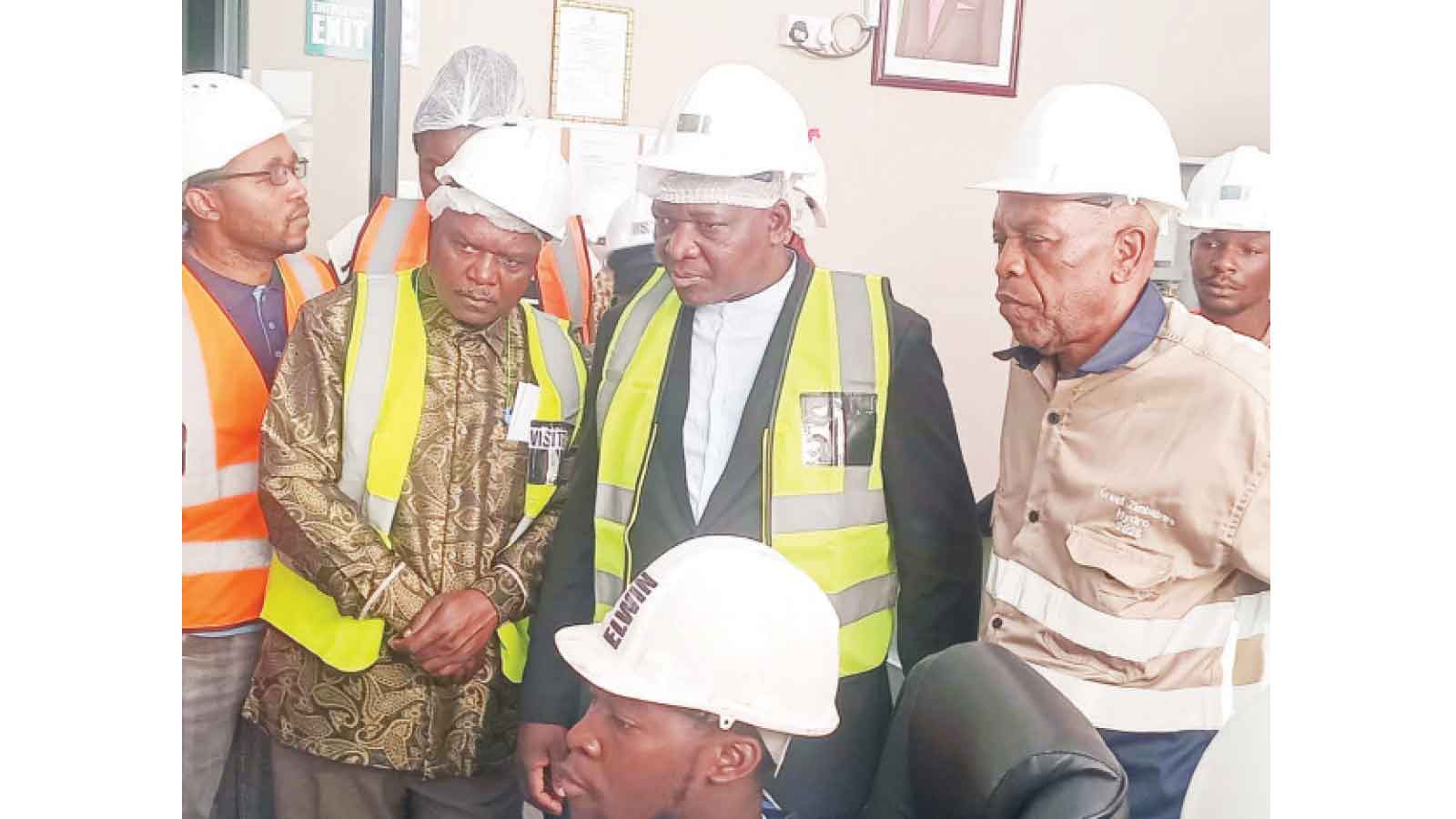
George Maponga-Masvingo Bureau
THE Second Republic should be commended for successfully pivoting Zimbabwe towards becoming an upper middle-income society by 2030, as evidenced by the growing number of game-changing projects driving socio-economic transformation across the country, Information, Publicity and Broadcasting Services Minister Dr Zhemu Soda has said.
He said the Government remains committed to implementing transformative projects that will continue to grow the country’s gross domestic product (GDP) and firmly position Zimbabwe as an upper-middle-income society in line with President Mnangagwa’s Vision 2030.
Minister Soda made the remarks during a tour of flagship development projects in Masvingo Province, which is targeting an US$8 billion economy by 2030. Among the projects visited was Bikita Minerals Sinomine, where a US$60 million investment has enabled the completion of a hybrid processing plant producing spodumene concentrate (lithium concentrate), cesium concentrate and petalite concentrate.
The plant was built in response to President Mnangagwa’s call for beneficiation and value addition.
It is expected to produce 60 000 tonnes of spodumene concentrate and 5 000 tonnes of cesium annually.
Cesium production has already become a game-changer for Bikita Minerals and the national economy due to the mineral’s high value on the global market.
Minister Soda also toured the Great Zimbabwe Hydro Power Company’s US$14,6 million 5MW hydro-power plant at Lake Mutirikwi, where he was taken through the power generation process and how electricity is fed into the national grid.
Great Zimbabwe Hydro Power Company project coordinator Mr Herbert Chipfumbu explained the history of the project and said its successful implementation had enhanced prospects for additional hydro-power developments downstream of Lake Mutirikwi.
There is potential for the construction of three more hydro-power plants downstream of the dam with a combined capacity of 15MW.
If realised, total generation capacity would increase to 20MW, further strengthening Masvingo’s position as a renewable energy hub.
Minister Soda also toured the new visitors’ centre at Great Zimbabwe Monument, which was constructed at a cost of 4 million Euros and is expected to enhance the visitor experience at the World Heritage Site.
National Museums and Monuments of Zimbabwe Masvingo regional director Mr Lovemore Mandima said completion of the facility would help grow the tourism sector and increase its contribution to the provincial economy.
Minister Soda later visited the trumpet interchange under construction near Masvingo Polytechnic along the Harare-Masvingo-Beitbridge Highway.
The project is expected to improve traffic flow and facilitate the movement of goods and people along the key transport corridor.
The interchange is scheduled for completion by the end of the year and is being constructed alongside the new Chimusana Bridge, which will divert heavy traffic away from Masvingo’s central business district.
Together with the recently opened Chevron Bridge, the projects are expected to improve traffic movement and enhance trade along the North-South Corridor.
Commending the Second Republic for implementing transformative projects aligned with the National Development Strategy 2 (NDS2), Minister Soda said the developments were making a direct contribution to the attainment of Vision 2030.
“We have had an appreciation today (yesterday) of what Masvingo has in terms of contribution to the country’s gross domestic product (GDP) and realisation of Vision 2030 and we are very happy with developments that we have seen today because these projects have a direct impact on the vision of making Zimbabwe an upper middle-income society,” said Minister Soda.
“We first visited Bikita Minerals where we were first taken through the progress that is taking place there especially focusing on beneficiation of minerals, quite a number of minerals that are co-existing at Bikita Minerals; that is spodumene, petalite and cesium and apparently our visit there today (yesterday) was focusing on the plant, which was constructed to extract cesium, which is one of the most valuable minerals that we have.
“According to my judgment it will be second to gold in terms of value and they (Bikita Minerals) indicated that it is a simultaneous process in terms of extraction. The first stage will be extracting spodumene, then extract cesium.”
Masvingo Province has significant potential to contribute to national economic growth, particularly through value addition in the mining sector, added the Minister.
“Even the province’s target to grow into an US$8 billion economy by the year 2030 is very much possible because of the ongoing value addition projects in sectors such as mining,” he said.
Minister Soda said it was encouraging that the Second Republic had created an enabling environment for investment in hydro-power generation at Lake Mutirikwi, where the dam had existed for more than 40 years without such development.
He said the possibility of establishing three additional hydro-power stations downstream of the existing plant would further boost renewable energy generation and support national development.
Minister Soda also welcomed the construction of the new visitors’ centre at Great Zimbabwe Monument, saying it would enrich the experience of tourists visiting one of the country’s most celebrated heritage sites.
He was accompanied on the tour by Permanent Secretary for Information, Publicity and Broadcasting Services, Mr Nick Mangwana, Permanent Secretary for Masvingo Provincial Affairs and Devolution Dr Addmore Pazvakavambwa, and Director of Media Services in the Ministry of Information, Publicity and Broadcasting Services Mr George Chisoko.