Online Reporter
Africa Moyo, Deputy National Editor
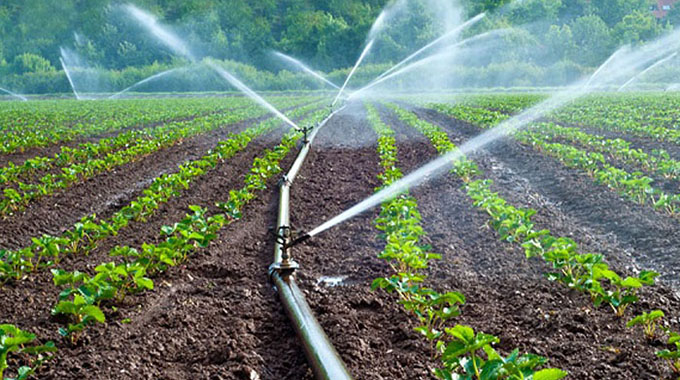
VICE-PRESIDENT Kembo Mohadi has said the Second Republic is working towards moving agricultural practices from traditional rain-fed methods to a more reliable irrigation-based system by 2030 to increase food security which is under threat due to climate change.
In an interview at his offices yesterday, he said the Government has a deliberate social development thrust aimed at ensuring that everyone, especially the vulnerable, have access to resources, mainly food, health and education.
The Government’s vision is rooted in the understanding that climate change has rendered rain-fed agriculture increasingly unpredictable, with farmers now facing the devastating impacts of erratic weather patterns, including prolonged droughts and severe flooding, which threaten crop yields and food availability.
With forecasts indicating a continuing trend of climate variability, the need for a robust irrigation infrastructure has never been more urgent.
VP Mohadi said when the Second Republic got into power late 2017, they found out that for a country to develop meaningfully, there was a need to access “the furthest areas that are not easily reached”.
“We then decided to embark on road rehabilitation, and the flagship one, being one of the longest, is the Beitbridge-Masvingo-Harare then to Chirundu,” he said.
“The first leg was Beitbridge to Harare and we have done a tremendous job there, and we are just about to complete that 70km section and I think we may be in a position to open it to traffic at the end of this year, if not the first quarter of next year.”
VP Mohadi said the next thing that the Government did was ensuring that people are fed.
“This was premised on the fact that times are changing, and climate change is upon us. So, for our people to have livelihoods, or to be self-sufficient, we had to get them in a situation whereby, whether it rains or not, they must be able to harvest, they must be able to feed themselves, they must be able to be self-sufficient, and we did so by building a lot of water bodies,” he said.
To kickstart this transformation, the Government has committed to investing in the construction of water bodies, across the nation.
Some of the key projects include the Muchekeranwa, Marovanyati and Chivhu dams, with the signature project being Lake Gwayi-Shangani.
These reservoirs will not only supply water for irrigation, but also serve as vital sources for domestic use and livestock farming.
Said VP Mohadi: “It is our view as Government that in the near future, or maybe by 2030, we will be largely dependent on irrigation agriculture.
“We want to move away from rain-fed agriculture, which is very unpredictable because of the climate change.
“I am told this year the forecast is that we are going to have La Nina, which is associated with more rains and at times flash floods,” he said.
When dams are in place, the country can then harvest the water in times of plenty and use it in times of shortages.
The Ministry of Lands, Agriculture, Water, Fisheries and Rural Development has said agriculture will play a key role in the attainment of Vision 2030 of an empowered upper-middle-income society hence there was need to enhance resilience building to mitigate and adapt to climate variability and shocks.
The strategy entails ensuring 100 percent adoption of the sustainable intensive conservation agriculture model in the small-holder sector by 2028, and achieve 100 percent agro-ecological tailoring by 2026 while irrigation will be widened.
Lake Gwayi-Shangani is crucial for both irrigation and revival of industries in Bulawayo, added VP Mohadi.
“Lake Gwayi-Shangani was first mooted in the year 2012 and no other Government from 1912 until 2018 decided to tackle it because they thought it was very difficult to do so, or they were not confident enough that they could do it.
“But when we took over in 2018, we decided to say, no, let’s take it by the horns. The main reason was still the people; the people in Bulawayo did not have water,” he said.
With Matabeleland North being a dry region, cropping in the province was difficult and along the 252km pipeline from Gwayi to Bulawayo, there will be points where people can get water and irrigate crops and engage in aquaculture.
In Bulawayo, it will be used by industries and residents while at the lake and nearby areas, tourism activities may sprout, leading to job creation for locals, said VP Mohadi.
Treasury is realising about US$5 million every month for Lake Gwayi-Shangani to ensure its speedy completion.

VP Mohadi added that Government will continue to look at the peoples’ social needs and positively respond to their needs.
“We need to be able to reach the people we need to give all other services they want. For instance, electricity and water (hence) we have been sinking boreholes and also rural electrification targeting clinics and schools,” he said.
VP Mohadi said once people have services such as clinics, schools, roads, airports, dams and others, they are able to work for themselves and easily move their farm produce to local and international markets.