Sundaymail Editor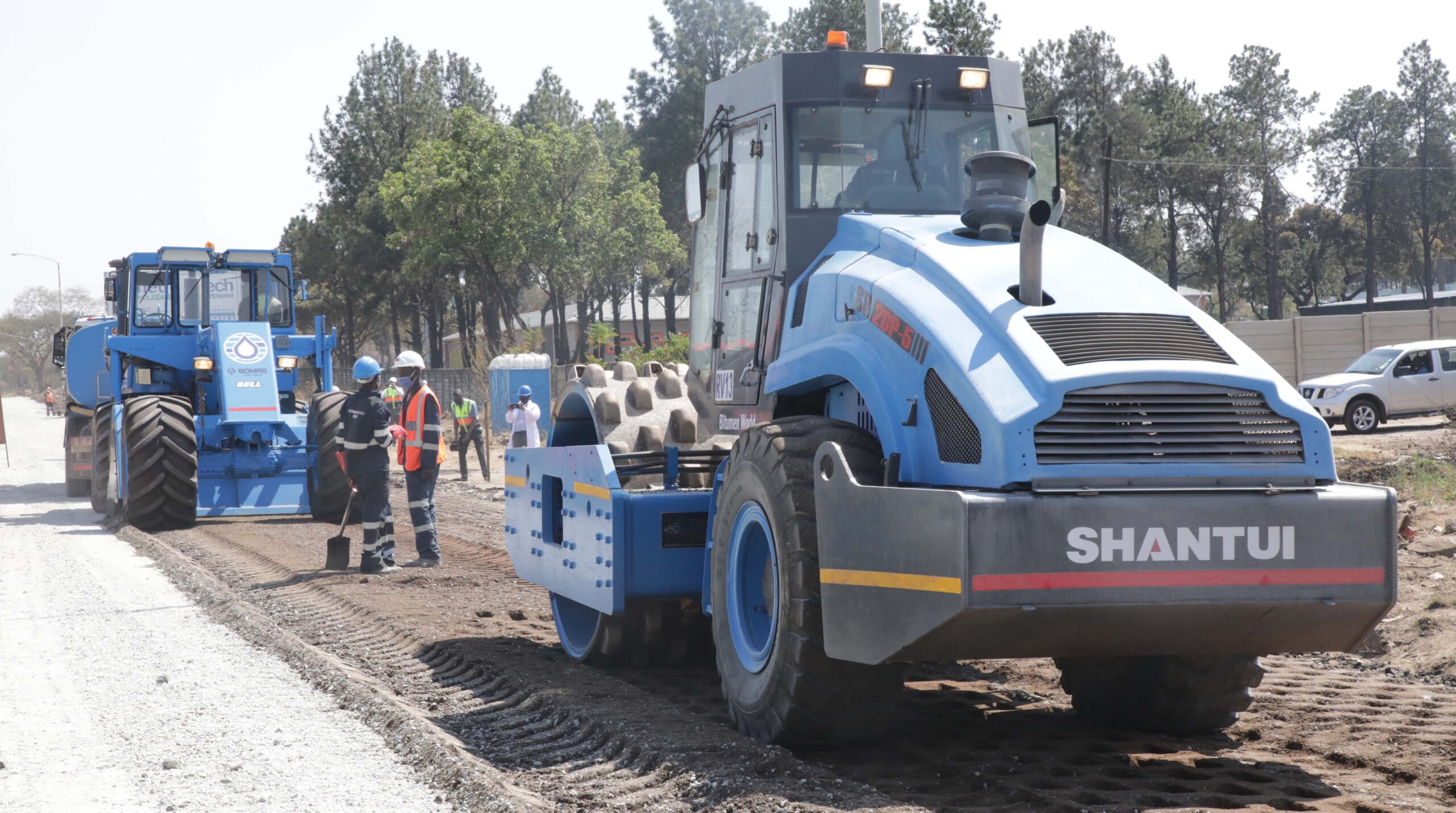
Victoria Ruzvidzo
“There have been decades and decades of neglect of urban roads so much that dance-driving while avoiding potholes was now a necessary skill. But to finally see Seke Road’s reconstruction happening in my lifetime is something to applaud the Government for.”
These words were spoken by a Chitungwiza resident Mr Lloyd Mashayamombe as quoted by our sister paper The Herald on Wednesday when work on the road began.
He could not hide his joy.
His words are loaded. It has been a struggle to navigate the road and many others in this country. Previous promises of repair have not been fulfilled to the extent that many had resigned to a possibility of this happening long after they are gone.
Who would blame him for feeling that way given the state of the infrastructure and inattention previously?
Infrastructure is a critical element in driving economic growth.
Transport infrastructure facilitates the movement of goods and aids in the provision of services. It oils an economy, without which economic activities stutter and stumble.
Roads, rail and air are critical constituent elements of transport infrastructure which underpin productive activity. Investors, both local and foreign, analyse this infrastructure in their consideration of where to invest.
Therefore, Government’s prioritisation and implementation of road rehabilitation is a move in the right direction. With production and productivity in ascendancy, such developments accelerate our growth and feed into our developmental aspirations.
There have been legitimate accusations of grave implementation deficits by Government but the current efforts point to a Government working in earnest to not only keep promises made, but genuinely committed to our economic progression.
Infrastructure is a key consideration among foreign investors. It is easy to see why business cannot move (pun intended!) if there is no means!
Some areas had become inaccessible, precluding production. Even for ordinary citizens, driving on our roads had become a nightmare whilst inflicting massive damage to vehicles suspension system, leading to increased maintenance costs.
Thus the headway being made has brought relief to the generality of the population too. What is also noteworthy is the efficacy of the implementation matrix adopted by the Government.
Regular reviews, specific time lines, reporting structures and accountability anchor strategic implementation. Progress is being made at great speed.
The Second Republic is making dreams come true. Over the past few months roads in Harare and other parts of the country have received a facelift under the Emergency Road Rehabilitation Programme.
In the meantime work is ongoing on major highways such as the Harare-Beitbridge road with at least 200km of it already reconstructed. Late last year we witnessed the commissioning of the Chirundu road that had become a nightmare. The road links Zimbabwe and its northern neighbour Zambia.
All these initiatives reflect a major infrastructure repair or reconstruction wave that the Government has embarked on in its efforts to spur socio-economic growth. Under NDS the Government intends to increase the number of kilometres of road network in good condition from 14 702km to 24 500km by 2025.
Furthermore, NDS1 notes that a good railway network is key to the growth of domestic, regional, and international trade through connecting all major economic centres. It provides transport services for bulk raw materials, finished goods, and passengers. In addition, a good railway network also eases the burden on the road networks while reducing the costs of transportation of goods and services.
The country’s railway network is indeed of strategic importance through its interconnectedness with other national networks along the North–South corridor.
“However, the network has experienced a number of challenges associated with aging track infrastructure, including insufficient ballast, rail wear, lack of spare parts, deteriorating earthworks, and obsolete rail signalling and communications equipment,” says NDS1.
Efforts are being made towards ensuring that freight cargo moved grows to 6.7 million tonnes per annum by 2025 from 2.6 million tonnes per annum in 2020. All this will have a phenomenal impact on socio-economic development.
Efforts also being made in terms of air transport. Efforts are being made towards infrastructure upgrade with such projects as the Robert Gabriel Mugabe expansion now in full swing.
More still needs to be done to accommodate the anticipated increase in passenger and freight volumes.
Zimbabwe is also working on clearing its arrears with IATA so that it can be re-admitted into strategic alliances to boost tourism. WE have seen a huge interest from airlines, some of whom have resumed flights into this country. We need to make the most of this.
“The quality of infrastructure in an economy is a measure of the quality of life of the citizens in a country. Further, the amount of a nation’s infrastructure has an important bearing on sustainable long-term economic growth,” reads a preamble on infrastructure development in the NDS1 document. Couldn’t agree more.
It further notes that very little has been invested in the rehabilitation or maintenance of infrastructure over the past 20 years or so due to economic constraints.
That Zimbabwe was ranked 127 out of 138 countries in the Infrastructure Index under the 2017-2018 World Economic Forum Global Competitiveness Report is untenable. We should begin to see an improvement going forward.
As Governments moves forward on this path, it is critical to identify what had cause infrastructure decay of such magnitude so that this can be averted. A stitch in time saves nine.
It was identified that the decline in the infrastructure was a result of such factors as
Inadequate public expenditure for routine and periodic maintenance.
Lack of an integrated approach in infrastructure investment planning compounded by substantial — Loss of skills
Lack of progress in building institutional capacities for management and regulation of the basic services
Low investment in infrastructure by both public and private sectors
Inadequate funding for capital and operating expenditure.
Low levels of support from Development Partners due to arrears.
Capacity constraints in managing the whole project cycle including weak implementation capacity
Unviable utility charges which make it difficult for institutions to re-invest in infrastructure
Weak monitoring and evaluation mechanisms.
These factors, individually or collectively, had put Zimbabwean infrastructure in bad shape, adversely impacting productive sectors of the economy and the populace at large.
But Government is resolute in its endeavour to transform the situation.
“During the NDS1 period, efficient infrastructure delivery will be key in the realisation of national priorities and overall socio-economic development. This will involve restoration of basic infrastructure services such as roads and expansion in critical areas mainly targeting key sectors of energy, transport, water and sanitation, Information and Communication Technology and Housing. The targeted infrastructure sector outcomes in the Strategy will be underpinned by clearly defined and realistic sector strategies and interventions, including performance indicators geared towards ensuring restoration of basic infrastructure services that contribute meaningfully to economic growth and development.”
In his midterm budget statement Finance Minister Professor Mthuli Ncube alerted the nation to the fact that so far at least $10,7 billion had been spent on roads alone.
In fact of the $76 billion 2021 budget for infrastructure, $21 billion had been invested as of June 30 on projects that include housing, water and sanitation, education, irrigation health and Information and Communication Technology.
These projects have already begun to impact the economy in a big way.
Research has shown that “Lack of adequate infrastructure not only holds lack economic development, it also causes additional costs in terms of time, effort and money of the people for accessing essential social services such as healthcare and education. Emphasising the importance of adequate infrastructure, authors of Economic Survey of India for the Year 2013 -14 quite rightly write, “Rural economic growth in recent years has put enormous pressure on existing infrastructure particularly on transport, energy and communication.
Unless it is significantly improved infrastructure will continue to be a bottleneck for growth and obstacle to poverty reduction”. In other words, it is the challenge to ensure strong, sustainable and balanced development through integration of the economy with environmentally sustainable development of infrastructure,” reads a research paper on the role of infrastructure in economies.
The economicdiscussion.net asserts that important national goals also depend on sound infrastructure, adding that the economy needs reliable infrastructure to connect supply chains and efficiently move goods and services across borders.
Infrastructure connects households across metropolitan areas to higher quality opportunities for employment, healthcare and education. Clean energy and public transit can reduce greenhouse gases. This same economic logic applies to broadband networks, water systems and energy production and distribution, it says.
The onus is on all stakeholders to ensure that the infrastructure being put in place is not vandalised so that the country’s systems can work efficiently.
In God I Trust!
Twitter handle: @VictoriaRuzvid2; Email: [email protected]; [email protected]; WhatsApp number: 0772 129 972



 Online Reporter