

 Online Reporter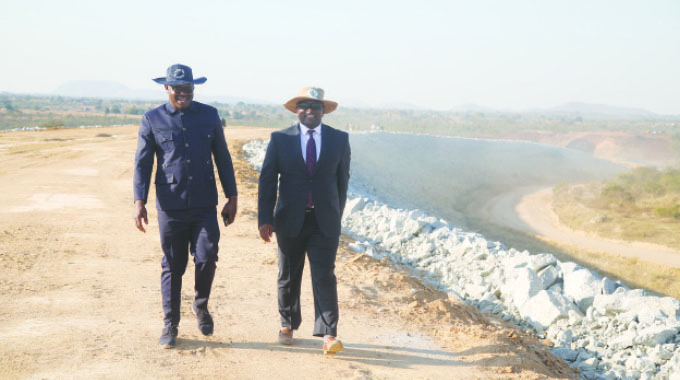
Rumbidzayi Zinyuke-Senior Reporter
FOUR transformative projects being implemented under the Second Republic are set to change the lives of Zimbabweans by delivering modern healthcare, hope for youths battling drug and substance abuse, safer roads and clean drinking water, all of which are key steps towards achieving Vision 2030.
The projects include the refurbishment of Parirenyatwa Group of Hospitals, the Angel of Hope Drug Rehabilitation Centre, Trabablas Interchange and construction of Kunzvi Dam.
They were showcased as examples of how infrastructure and social programmes were working to build an upper middle-income economy.
Yesterday, a high-level ministerial delegation led by Information, Publicity and Broadcasting Services Minister Dr Jenfan Muswere, who was accompanied by Health and Child Care Minister Dr Douglas Mombeshora and Public Works and Local Government Minister Daniel Garwe, toured the facilities together with journalists to assess progress and highlight their significance to the achievement of national development goals.
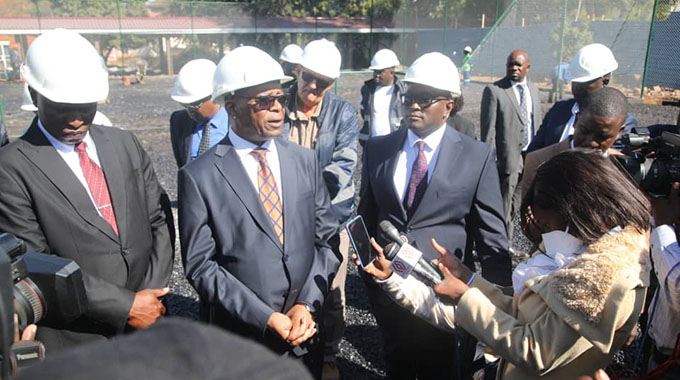
Yesterday, a high-level ministerial delegation led by Information, Publicity and Broadcasting Services Minister Dr Jenfan Muswere, who was accompanied by Health and Child Care Minister Dr Douglas Mombeshora and Public Works and Local Government Minister Daniel Garwe, toured the facilities together with journalists to assess progress and highlight their significance to the achievement of national development goals.
“These initiatives are about transforming lives. From world-class hospitals to rehabilitation for our youth, safer transport and clean water, this is Vision 2030 in action,” said Dr Muswere.
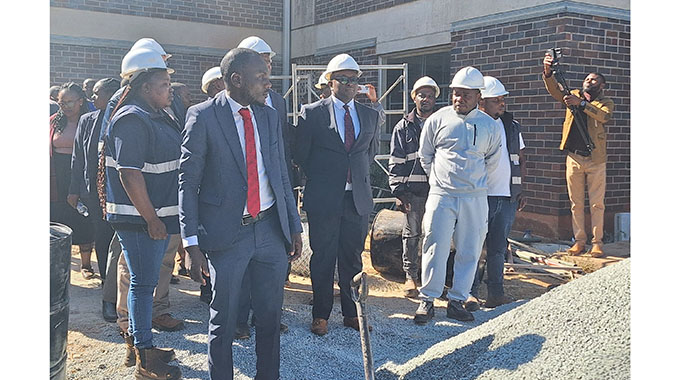
At Parirenyatwa Group of Hospitals, major upgrades are underway at the Mbuya Nehanda Maternity Hospital, the nurses’ training school and accommodation, along with an overhaul of water and sewer systems and recreational facilities.
Minister Garwe said the developments will elevate the hospital to global standards.
“Government is on a programme to refurbish all our health facilities throughout the country. We were directed to start with Parirenyatwa Hospital, which has three programmes that are running concurrently,” he said.
“The training centre will be ready by September 1 and the nurses’ accommodation refurbishment will be ready by the end of October. The Mbuya Nehanda Maternity Hospital will be ready by the end of the year.
“So, basically, this first phase of the refurbishment of Parirenyatwa Group of Hospitals will be done by December 2025. We are happy with the progress and the quality of work that we are witnessing. It’s speaking to the future; it’s speaking to vision 2030 and the aspirations of that vision that we must have facilities of global standards.”
Dr Muswere said the project dovetails with Vision 2030 of an empowered upper-middle-income society, by providing world-class infrastructure that supports economic growth.
On his part, Minister Mombeshora said the ongoing refurbishment of Parirenyatwa Group of Hospitals would significantly improve training conditions for nurses and help Zimbabwe move closer to its target of doubling the health workforce by 2030.
He said the upgrades would create a cleaner and safer environment for students, tutors and nurses, while also allowing the training school to double its intake once renovations are complete.
“This development boosts morale among our trainees and staff, and it is an important step towards meeting our goal of increasing the number of health professionals in the country,” he said.
Minister Mombeshora also described the Angel of Hope Foundation drug rehabilitation centre as a model for Zimbabwe’s multi-sectoral drug and substance abuse plan (2024–2030).
“This is a good example of partnerships we are encouraging across the country, and I urge every province and district to replicate it,” he said.
The Angel of Hope Drug Rehabilitation Centre in Mbare, established by First Lady Dr Auxillia Mnangagwa, is providing free medical care, counselling, education and structured physical activities for up to 200 patients.
Presently, about 90 people are already receiving support, with over 600 on the waiting list.
Centre administrator Mr Charles Nyamukubva said the programme was designed to break the cycle of addiction and support reintegration into society.
“This programme was opened on July 12 with the intention of rehabilitating drug users. All along, Angel of Hope has been doing some awareness campaigns so in addition to these, Angel of Hope decided that it’s now time to rehabilitate those who are already using (drugs).
“The programme is designed to run for a month and after that, you are assessed to see if you are able to then reintegrate into society. In this case, our current participants will be going for vocational training and Youth Service as they will be moving out from this place so that they are kept occupied,” he said.
The Trabablas Interchange, which was commissioned by President Mnangagwa recently, is easing traffic congestion, improving road safety and facilitating trade along one of Zimbabwe’s busiest transit corridors.
Dr Muswere said the project dovetails with Vision 2030 of an empowered upper-middle-income society, by providing world-class infrastructure that supports economic growth.
The ministers also visited Kunzvi Dam in Mashonaland East Province.
The dam, located on Nyagui River at the border of Murehwa and Goromonzi districts, is among key projects targeted for completion this year.
Dr Muswere said Kunzvi Dam is now 62 percent complete and would guarantee clean water for Harare, Ruwa and northern suburbs, while driving irrigation, industrialisation, aquaculture and tourism.
“The current priority in terms of resource mobilisation is to ensure that this dam is completed before the end of December 2025.
“This dam will create a lot of jobs as part of the water is mainly for domestic and industrial purposes thereby contributing towards the industrialisation of Harare and ensuring that the residents of Harare have clean, accessible water supplies,” he said.
Dr Muswere said the four projects demonstrated how social and economic infrastructure could work hand in hand to improve lives and accelerate national development.



