Online Reporter
Innocent Mujeri
IN recent days, President Mnangagwa has delivered a firm and unequivocal warning to Zimbabwe’s security services: drug and substance abuse will not be tolerated within the ranks of our disciplined forces.
This is not a mere reminder but a decisive call to action, rooted in the fundamental need to safeguard the integrity, professionalism, and credibility of the nation’s uniformed personnel.
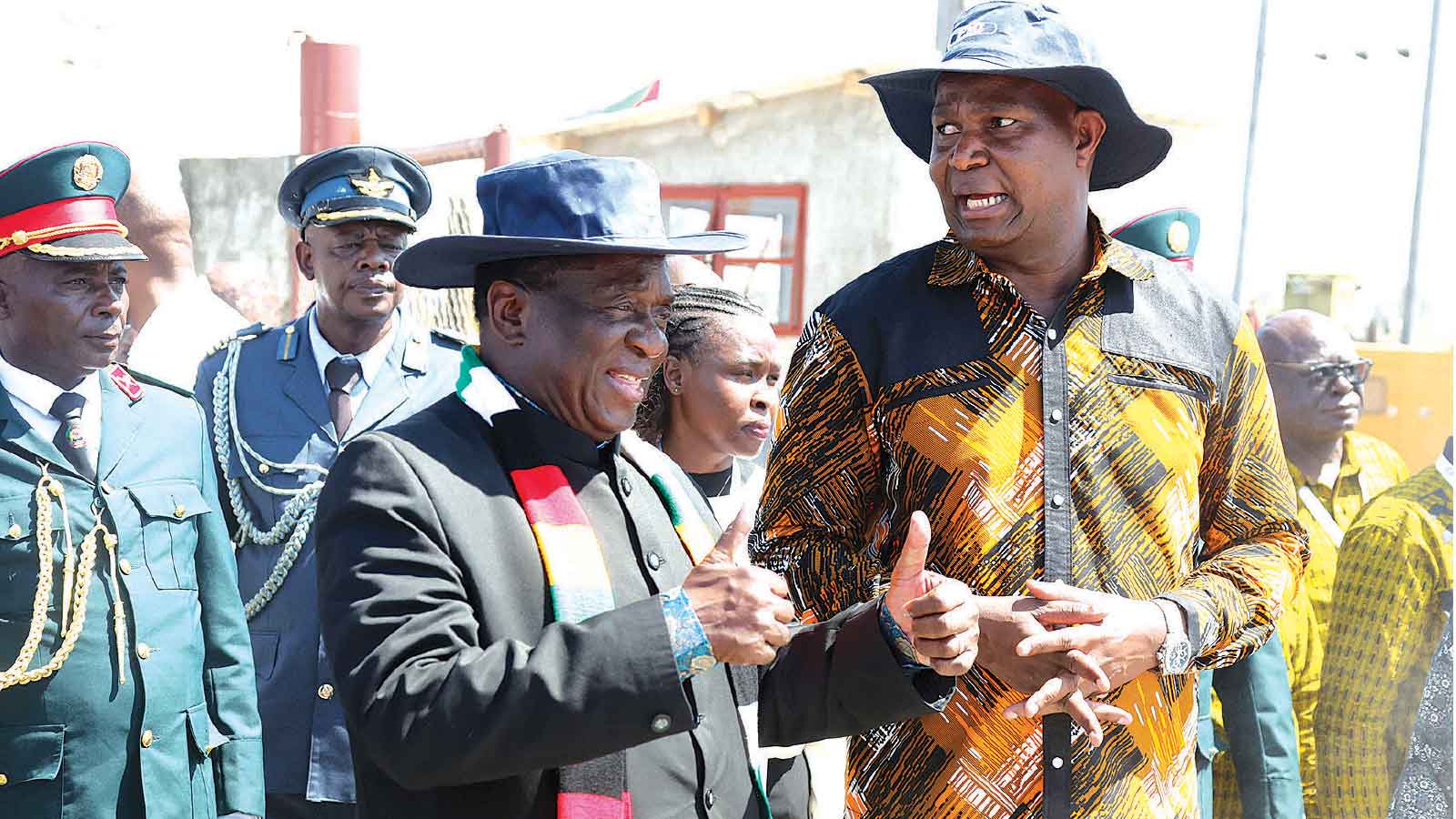
Speaking at the joint Zimbabwe Prisons and Correctional Service (ZPCS) pass-out parade for courses 156 and 157 at Ntabazinduna Training Depot in Matabeleland North Province, the President’s message was clear: officers entrusted with upholding law, order, and national security must remain vigilant, sober, and exemplary at all times.
The implications of this warning are profound and deserve careful reflection. Security personnel — whether in the Zimbabwe Republic Police (ZRP), Zimbabwe National Army (ZNA), ZPCS, Air Force of Zimbabwe (AFZ), or other uniformed services — occupy a unique and crucial position in society.
They are not merely civil servants; they are the guardians of public safety, the defenders of law and order, and the embodiment of the state’s authority.
When those charged with these responsibilities indulge in drug or substance abuse, the consequences extend far beyond personal harm.
A single officer under the influence risks making reckless decisions, endangering citizens and colleagues alike. Beyond the immediate dangers, habitual substance abuse erodes the strict codes of conduct that underpin discipline in the security sector.
Alertness, strength, resilience, and sound judgment — qualities indispensable to the profession — are compromised when officers fail to maintain sobriety.
The stakes are higher than individual careers; the very trust of the citizenry is at risk. Zimbabweans must have confidence in those sworn to protect them. A force perceived as morally or professionally compromised loses its legitimacy and moral authority.
When officers engage in substance abuse, corruption, indiscipline, and operational failures often follow. Communities can no longer rely on law enforcement for protection, and national security becomes increasingly fragile.
In this context, President Mnangagwa’s message is not merely about personal behaviour but about the preservation of public trust and societal stability.
Furthermore, the security sector has a broader role to play in shaping national culture and values. In a country where youth unemployment, social pressures, and exposure to drugs pose serious challenges, disciplined officers serve as role models. The behaviour of those in uniform sends a powerful message to young Zimbabweans about responsibility, commitment, and integrity.
Officers must understand that leadership begins with personal accountability. By maintaining sobriety and adhering to professional standards, they demonstrate to the next generation that discipline is not optional; it is a prerequisite for both service and citizenship.
It is also crucial to recognise the patriotic dimension of this directive. The security services are the backbone of national peace and stability. Their operational effectiveness directly affects the well-being of the entire country.
Indiscipline, particularly in the form of drug or substance abuse, weakens this backbone, leaving gaps in national security and public order. Every officer who succumbs to drugs or alcohol at work diminishes the capacity of the force to respond to crises, maintain law and order, and safeguard citizens.
In this sense, remaining clean and focused is not merely a personal choice; it is a duty to the nation, a matter of patriotic obligation.
The President’s call is also timely in light of contemporary challenges facing Zimbabwe. The nation continues to navigate economic pressures, social unrest, and regional security concerns. In such a context, the professionalism of the security sector cannot be compromised. It must remain a pillar of stability amid uncertainty. Any lapse, whether through negligence, indiscipline, or substance abuse, risks destabilising not only the security services themselves but the broader society they are sworn to protect. The message is unequivocal: there can be no tolerance for behaviour that undermines the credibility and effectiveness of Zimbabwe’s disciplined forces.
Practical steps to implement this vision are equally important. Security institutions must reinforce rigorous monitoring, regular testing, and continuous education on the dangers of drugs and substance abuse. Leadership within the ranks must set the tone, demonstrating by example that ethical conduct and sobriety are non-negotiable. Training and mentoring programmes should emphasise the professional, social, and personal costs of substance abuse, ensuring that every officer comprehends the full spectrum of consequences. By fostering a culture of accountability and personal responsibility, the security sector can rebuild and maintain the high standards required for effective service.
Moreover, the focus on personal responsibility must be complemented by institutional support. Officers facing challenges with substance abuse should have access to rehabilitation programmes and counselling services. A comprehensive approach balances enforcement and support, recognising that the ultimate goal is not punishment but the creation of a disciplined, resilient, and morally upright force.
Ultimately, the directive from President Mnangagwa should resonate with all Zimbabweans, not only those in uniform. The broader lesson is that personal behaviour, integrity, and commitment to duty are central to the health of any institution, public or private. Just as citizens expect accountability and professionalism from their leaders and service providers, they must demand the same from those who are entrusted with their safety. The security sector must embody these values, demonstrating through its conduct that Zimbabwe’s peace and stability are safeguarded by disciplined, responsible, and sober officers.
In conclusion, the call to desist from drug and substance abuse within Zimbabwe’s security services is a call to protect the nation itself. Officers must choose the path that strengthens their institutions, safeguards communities, and honours the values upon which the country is built. Discipline, sobriety, and moral integrity are not optional — they are the foundation upon which national security rests.
As President Mnangagwa emphasised, this is a patriotic duty. Every member of the ZPCS, ZRP, ZNA, AFZ, and other uniformed services must lead by example, demonstrating that the security sector can be a beacon of professionalism, a model for the youth, and a guardian of Zimbabwe’s honour and stability.