

 admin
admin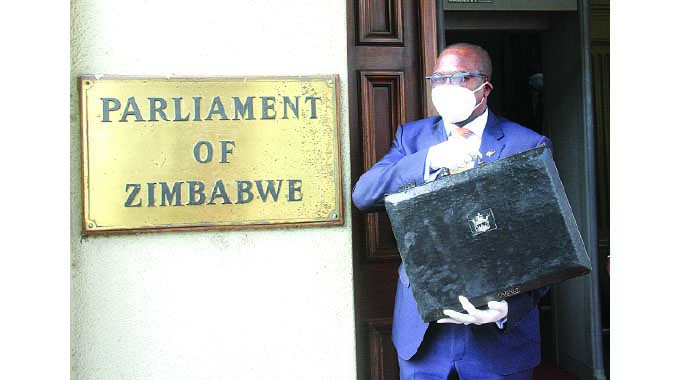
Farirai Machivenyika Senior Reporter
Senate yesterday passed the 2022 National Budget presented by Finance and Economic Development Minister Professor Mthuli Ncube last month and the two Acts of Parliament that activate the budget spending and tax collection.
Prof Ncube presented a $927 billion budget that was welcomed as people-centred by ordinary Zimbabweans.
The Budget comprises of the Finance Bill, which deals with taxation changes and other revenue mattes, and the Appropriation Bill, which gives permission to the Government to spend as detailed.
The Finance Bill seeks to amend the Finance Act, the Income Tax Act, the Value Added Tax Act, the Capital Gains Act, the Customs and Excise Act and the Revenue Authority Act.
The Finance Bill gives effect to the fiscal measures mentioned by Prof Ncube in the National Budget statement delivered and make certain modifications to improve revenue collection and administration.
The Appropriation Bill provides for the money allocated to all ministries and Government departments.
Both Bills were passed by the Senate without amendments.
Some of the tax measures proposed by the minister and contained in the Bill include the adjustment of the tax free threshold from $10 000 to $ 25 000 and also adjust the tax bands to end at $500 000 above which a marginal tax rate of 40 percent effective January 2022.
The Bill also provides for the adjustment of the local currency tax-free bonus threshold from $25 000 to $100 000 and the foreign currency tax-free bonus threshold from US$320 to US$700, with effect from November 1, 2021.
Of the $927 billion the Government expects to mobilise $858 760 712 000 through the Consolidated Revenue Fund, where the taxes are banked, while the balance would be raised through Treasury Bills and Bonds.
Following the passage of the budget in the Senate it will now be transmitted to the President for his assent since the House of Assembly has already given its approval.


 Online Reporter