Kudzanai Sharara in Cape Town, South Africa
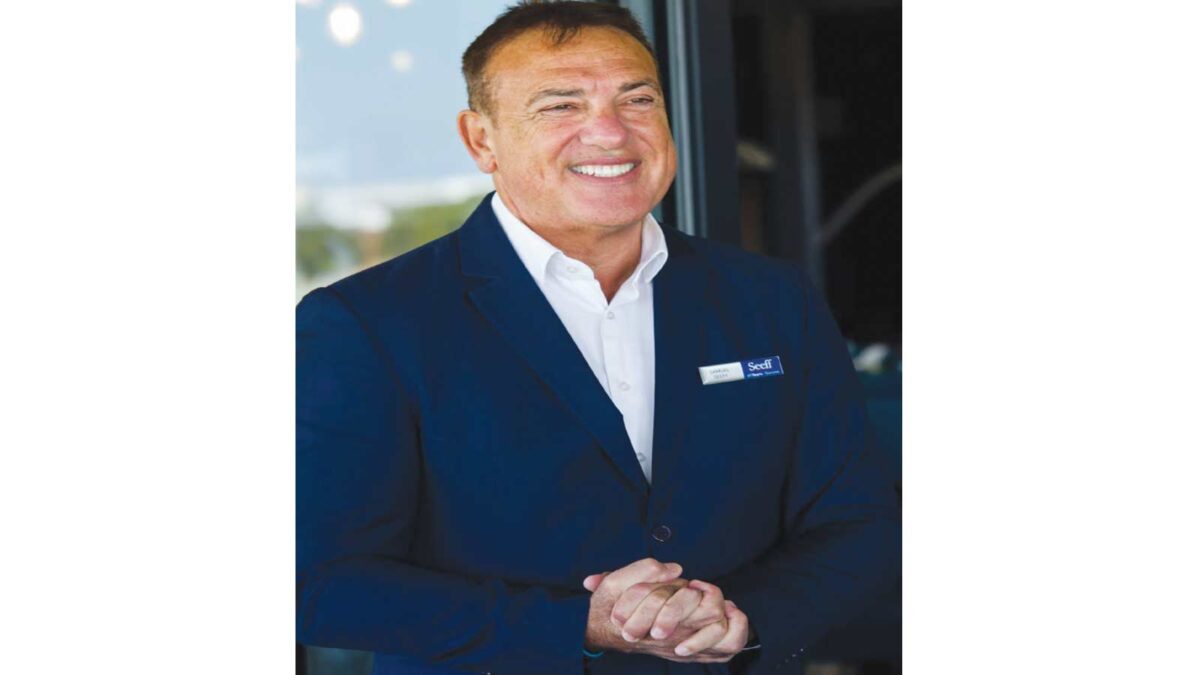
Seeff Properties (SA) chairperson and owner Mr Samuel Seeff has warned that sentimental attachment to property assets is one of the surest ways to destroy generational wealth.
He urged investors to adopt an active, unsentimental approach to building sustainable portfolios.
Speaking last week at the CEO Africa Annual Roundtable in Cape Town on the topic “Investing with Purpose: Building a Sustainable Investment Portfolio”, Mr Seeff said real estate builds generational wealth only when investors commit to active value creation, timely positioning and ongoing management — not “set-and-forget” ownership.
“Loyalty to location is financial suicide in real estate,” Mr Seeff told delegates, in one of the most pointed remarks of his address.
The warning captured the central argument of his presentation: that property is not a passive asset and that investors who fail to reassess their holdings against shifting demand will see value erode.
Mr Seeff set out three core realities that govern real estate outcomes. The first is early positioning — identifying structural shifts in demand before they become obvious to the broader market.
He cited the rise of e-commerce, which drove demand for logistics hubs and the growth of artificial intelligence which is now driving demand for data centres.
The second reality, he said, is luck and timing.
Identical strategies can succeed or fail depending on when capital is deployed, and negative timing can destroy value regardless of the quality of the asset or the skill of the investor, he said.
The third is what he described as the tangible anchor of property: its physical utility and its natural hedge against inflation.
Long-term tenancies, he noted, produce annuity income that stabilises portfolios through cycles.
Mr Seeff outlined what he called the generational wealth cycle, a four-stage progression that explains why many family fortunes do not survive.
The first generation — the builder — acquires land and assets, carries debt and works long hours. The second generation — the consolidator — pays down debt, professionalises operations and builds the brand.
The third — the beneficiary — enjoys cash flows from largely debt-free assets.
The fourth — the destroyer — loses the wealth through entitlement and poor stewardship.
To illustrate the contrast between founder effort and inherited consumption, Mr Seeff relayed an anecdote involving the Tokara Wine & Olive Farm owned by Gerrit Thomas Ferreira.
“No matter what it costs you to have this glass of wine, just understand it costs me more,” he quoted Mr Ferreira as saying.
The most striking case study in his presentation was the Carlton Centre in Johannesburg.
Built in the 1970s and 1980s at a cost of R88 million — equivalent to approximately R1,5 billion today — it was once a flagship asset. By the 1990s it had lost value and was sold for R33 million. Transnet, which later took ownership, is now asking R900 million for it.
Mr Seeff used the Carlton Centre to illustrate his warning about location loyalty.
Nodes decline, demand shifts and assets that were once premier can become liabilities. Investors who hold on for emotional reasons rather than market reasons, he said, risk financial ruin.
He also stressed the role of infrastructure in determining property values.
Major airports drive appreciation in surrounding areas, he noted, citing Dubai’s Al Maktoum airport, which is expected to handle approximately 20 million passengers a month.
He pointed to King Shaka International Airport in KwaZulu-Natal, South Africa, which shifted economic activity northwards and left assets near the old airport exposed to value loss.
His infrastructure checklist for investors includes highways, connectivity and basic services such as electricity, water and sewage. Without reliable infrastructure, he said, investment viability collapses.
Mr Seeff identified five macro factors that investors must monitor continuously — policy and taxation, banking and finance, execution and liquidity.
On policy, he noted that unfavourable tax changes drive capital flight, citing the United Kingdom as an example where investors have moved capital to Dubai, Cyprus and Mauritius.
On finance, he said the availability of credit shapes demand and the ability to monetise land.
On execution, he highlighted the importance of legal and title professionalism, estate agents and property managers in determining risk and performance.
On liquidity, he urged investors to evaluate resale options, including private sales, real estate investment trusts and alternative ownership structures.
He used an analogy of a Swiss watch to describe the interdependence of these factors. Many moving parts must function together, he said, and failure in one cog affects the entire asset.
Turning to where investors should be deploying capital now, Mr Seeff identified industrial and logistics property as the current top performer, advising investors to follow infrastructure growth and avoid obsolete nodes.
Data centres, he said, offer long-term structural demand, noting that South Africa has approximately 80 megawatts of live capacity.
Purpose-built student accommodation, he said, faces severe undersupply, with maintenance and access-control technology enabling occupancy rates above 90 percent.
In the office sector, A-grade, energy-efficient buildings are showing selective demand while B and C-grade stock remains at risk following the global financial crisis and the Covid-19 pandemic.
Hospitality and tourism present significant opportunities, with a pipeline of 9 000 new rooms in Nigeria alone.
Branded offerings and marketing, he said, are critical to success. In residential, he singled out Cape Town as the best current market in South Africa, with growth of approximately 12 to 14 percent per annum.
Regionally, Mr Seeff pointed to the Namibia corridor at Swakopmund, where new mines are lifting local demand, and to the South Africa–DRC trade route, where growing trade is creating corridor opportunities.
In Tanzania, Zanzibar and Mozambique, he sees rising hospitality potential and advised positioning for holiday-market growth.
He closed with a set of principles: investors must be actively involved, discard sentimentality, stay ahead of macro shifts, and reinvest aggressively to compound growth through disciplined value-add work.
Mr Seeff was speaking at the CEO Africa Annual Roundtable, which ran from October 6 to 10, under the theme “The Future of Africa: Innovate, Trade and Grow”.