admin
admin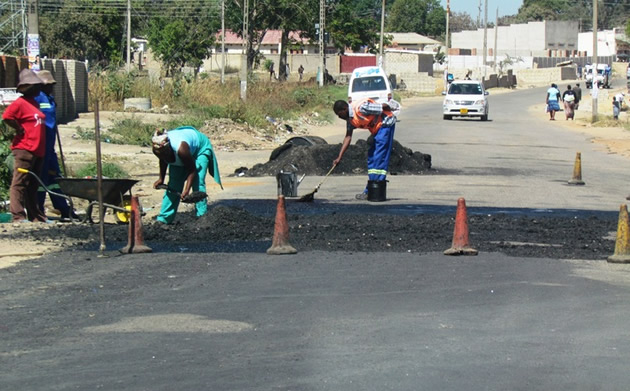
Lovemore Meya Herald Correspondent
Chitungwiza residents have applauded the town’s municipal authorities for improving water supply and service delivery after council reduced its wage bill, channelling the money towards services delivery.
The municipal was commended for making strides in refuse collection, road maintenance and repairing of malfunctioning tower lights.
“We are very grateful to our council for making positive strides in improving service delivery. The water supply has improved from a day to three days per week and refuse is being collected every week, while tower lights are getting repaired,” said Mr Bothwell Matsika of Zengeza 1.
Mrs Mary Mutondo of Seke Unit G said, “There has been a great improvement in water supply. We get it throughout the week if there is electricity. Refuse collection is also excellent, though we are appealing to council workers to adjust their time from 4am to around 7am,” she said.
The dormitory town had become infamous for its erratic water supplies. Some areas were lucky to get supplies for a few hours twice a week.
Long queues at boreholes or buying of water from pushcart vendors at one dollar for a 100 litres had become standard survival tactics. There were reports in the media of residents using plastic bags as toilets before dumping the faecal matter onto any nearby unoccupied ground thus creating potential health time bombs all over the town.
Chitungwiza Town Clerk, Mr George Makunde said the positive changes are a result of 50 percent monthly labour cost savings.
“This was made possible by our decreased wage bill from $1,4 million to $700 000 after we cut our staff and we managed to hold a grip to satisfy the requirements of our workers,” he said.
Last year it was revealed through media reports that most local authorities were compromising service standards while grossly overpaying senior staff.
The first 2016 budget proposed by the City of Harare was rejected by the responsible authority for failing to reflect the required pro-resident spending ratio in which employee remuneration must not take up more than 30 percent of the total expenses.
Mr Makunde said the Chitungwiza town administration is deliberately working to implement policies that reflect dedication towards delivery of services which should be the core business of any municipal authority.
“We have agreed every week to set aside $11 000 towards service delivery issues that need to be implemented by our engineer. On a monthly basis, we need $43 000 for refuse collection, pothole patching and repairing refuse trucks.
“We targeted the removal of heaped refuse and kick-started issuing rolling trash bins to our workers, dividing them into different roads for sweeping. The refuse trucks follow the routes and collect the garbage,” said Mr Makunde.
Chitungwiza’s roads remain an area of concern. Most are in a terrible state and with the rains almost here many residents would like the council to improve the situation.
“We have seen a bit of repairs here and there but it is not enough to make a difference. Almost every road is full of potholes. And in some areas the roads have not yet been even tarred. We want the municipality to fix them before the rains come because our small cars suffer a lot of damage,” said Mr Moffat Nkiwane of Manyame Park.
Mr Makunde said the municipality has done the best it can with the grants from Zimbabwe National Roads Authority (ZINARA).
“We have received $90 000 from ZINARA as per first quarter and another $90 000 came our way and we did not want to do the re-patching, but wait for their approval if we can use the money for refilling.
“It gives us a longer life span if we refill. So far we have worked on busy roads like Hombarume Road going to St Mary’s and Tilco Road stretching from Chikwana shopping centre towards the industrial area,” he said.
He said, council deployed its workforce to clear drainage system as we are approaching the rainy season.
In addition, council is working on repairing malfunctioning tower lights. The exercise, which is almost complete, is expected to cost $48 000 which has been set aside.
Mr Makunde said a very good amount which should make a difference in improving service delivery is being channelled to labour litigations and other legal challenges dating back to 1996.
Former deputy Chamber Secretary for council Mr Amos Matanhire also took his former employee to court claiming $36 000 in damages for alleged abuse of a vehicle awarded to him by the Labour Court.
Harare City Council in January last year took Chitungwiza Municipality to the High Court claiming outstanding water bills amounting to $6,4 million for the treated water supplied to the satellite town up to March 23 2011.
Music producer Dr Clarence (real name Clarence Patsika) in August 2014 sued Chitungwiza Municipality for $1 500 accusing the local authority of compromising his creative acumen through stress which developed from incompetence on the part of municipal workers. In his founding affidavit filed at the Chitungwiza Civil Court (case number 642 /14), Dr Clarence alleged that he was harassed by some municipality employees when he went to pay his outstanding dues.
Mr Makunde said he was gratified that while there is still a lot of room for improvement, at least the residents are appreciative of the discernible differences since a new service culture has been introduced.
Mr Makunde said those same residents also need to play their part for the success of the turnaround programme through paying their bills. He said the current rates of payment are too low.



 Online Reporter