Africa Newsroom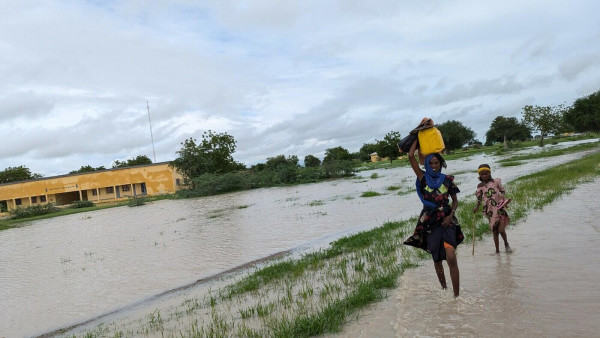
Recent floods in northeast Nigeria have displaced at least 50,000 people from their homes since the weekend. Across the Sahel and Lake Chad region, heavy floods have exacerbated existing humanitarian crises in countries such as Cameroon, Mali, and Niger. The Norwegian Refugee Council (NRC) is urgently calling for increased international support to provide relief to the most vulnerable.
“The situation in the Sahel and Lake Chad region is increasingly dire, as the compounding effects of conflict, displacement, and climate change take a severe toll on vulnerable populations,” said Hassane Hamadou, NRC’s Central and West Africa regional director. “Our immediate priority is to ensure affected people across the region receive essential support such as shelter, food, and hygiene supplies. Longer-term solutions including the improvement of existing infrastructures must be coordinated with local governments to build resilience against future disasters.”
In countries such as Cameroon and Niger, communities along the Lake Chad Basin, already facing conflict and displacement due to insecurity, are contending with the added threat of climate-related disasters. Heavy floods are now becoming more and more frequent, with serious humanitarian consequences almost every year. Farmlands across the region, vital for local economies and food security, have been destroyed by floodwaters, threatening livelihoods, and worsening food insecurity. The floods have also compromised access to education as schools have been destroyed, forced to close, or are being used to provide shelter for affected communities.
“We lost the majority of our livelihood in the water, and the speed of the flow didn't allow us to take any significant property with us,” said Modu, a man affected by the floods in Maiduguri, Nigeria. “I’m currently helping other flood victims, especially those who don't have alternative shelter, to move towards a secondary site. We are all currently watching how our houses are being flooded and there is nothing we can do about it.”
In Mali, where the lean season has pushed many communities to the brink of famine, families that rely on subsistence farming and pastoralism for survival have lost everything. Urgent assistance is needed to prevent further deterioration of livelihoods.
Local actors and humanitarian organisations across the region are working around the clock to provide temporary relief despite increasingly stretched resources. Over halfway through the year, the 2024 Humanitarian Response Plan for Sahel was just 25 per cent funded. The international community must ensure increased funding for both emergency response and long-term recovery, including disaster risk reduction and preparedness in all the countries affected by the floods in the region.
“These severe floods are a stark reminder of the Sahel and Lake Chad region’s vulnerability to climate change, which may only worsen in the nearby future. Fragile communities already living in crisis cannot face these challenges alone,” said Hamadou.
Distributed by APO Group on behalf of Norwegian Refugee Council.


 Online Reporter