admin
admin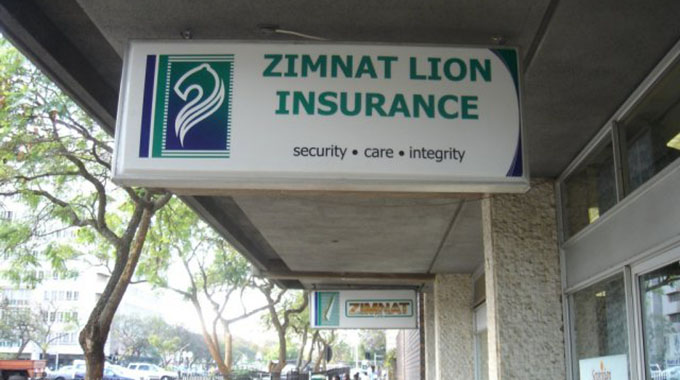
Tawanda Musarurwa Senior Business Reporter
Zimbabwe’s short-term insurers saw a 141 percent jump in total Gross Premium Written (GPW) to $347,31 million for the half year to June 2019, from $144,18 million in the prior comparable period, the latest Insurance and Pensions Commission (IPEC) report shows.
The improved GPW came on the back of improved performances with regards to the engineering, fire and motor insurance classes, which were the largest sources of business.
“These three business classes accounted for a total of 79,39 percent of total GPW during the half-year ended June 30, 2019,” noted IPEC.
Earnings for the sector were also headed northwards, as the sub-sector posted a total profit after tax of $90,05 million for the period under review — a 431,64 percent increase from $16,94 million reported in the comparative period in 2018.
But there was a decline in the underwriting result from $14,81 million for the quarter ended June 30, 2018 to $10,29 million for the period under review.
The short-term insurance industry’s average return on assets (ROA) and return on equity (ROE) was 20,74 percent and 40,52 percent for the period under review.
Total cash and near cash assets in the form of money market and short term prescribed assets increased from $94,77 million as at March 31, 2019 to $146,16 million as at June 30, 2019.
The acid test ratio for individual insurers as at June 30, 2019 ranged from 3,97 percent to 1 517,95 percent.
Cell insurance, Zimnat Lion and Nicoz Diamond remained the market leaders in terms of GPW with a combined market share of 56,29 percent for the period under review. But in terms of Net Premium Written (NPW), the top players were Nicoz Diamond, Old Mutual Insurance and Cell Insurance with a combined NPW market share of 48,03 percent.
However, in terms of total assets, Old Mutual, Nicoz Diamond and Zimnat Lion are the major market leaders with a combined market share of 47,65 percent.
Latest data from the sector regulator also shows that a total of 17 out of 18 insurers reported capital positions which were above $2,5 million as at the end of the first half of this year.
“The reported capital positions were computed without accounting for non-admissible assets as stipulated in Statutory Instrument 95 of 2017. The capital positions reported by short term insurers for the half year ended June 30, 2019,” said IPEC.
With regards to asset quality, short term insurers saw an improvement from $393,95 million reported as at March 31, 2019 to $684,15 million reported as at June 30, 2019.
Premium debtors remained the largest asset class accounting for 25,70 percent of total assets followed by fixed assets that contributed 15,17 percent of the cumulative assets. Investments in prescribed assets increased by 28,23 percent from $22,21 million as at March 31, 2019 to $28,48 million as at June 30, 2019. In the period under review, only 1 out of 18 short term insurers was compliant with the minimum prescribed asset ratio of 10 percent.
In view of the prevailing economy, IPEC has urged players in the industry to be proactive in facing prevailing economic challenges so as to ensure their long-term sustainability.
“The wake of economic adversities, the insurance players are encouraged to ensure that proper risk management architecture is established and continuously reviewed in order to safeguard the policyholder assets,” said IPEC.



 Online Reporter