admin
admin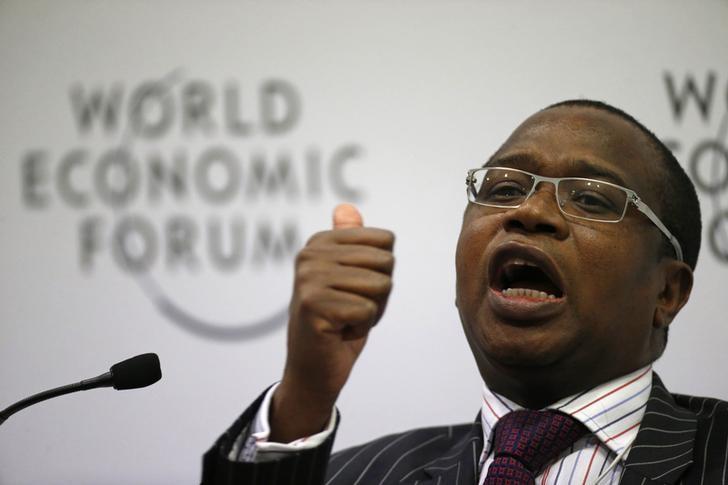
Taking Stock Kudzanai Sharara
Finance and Economic Development Minister Professor Mthuli Ncube must stay on course despite deep sense of economic frustration that is currently prevailing in the country, frustrations that have led to violent protests.
The frustrations and subsequently protests, are fuelled by disappointment that the change in Government and the coming in of technocrats such as Prof Ncube, has failed to quickly deliver the much anticipated economic recovery.
After his appointment, following the 2018 general elections, Prof Ncube sought to quickly reverse the spendthrift fiscal and monetary policies of the previous regime.
He also announced a 2 percent Intermediated Money Transfer Tax among several cuts in Government spending. Such austerity has become increasingly unpopular among the public, majority of whom have not been paying taxes.
Unfortunately, Government has not helped the situation either, its initial communication is somewhat bad and to some extent there has not been consistency on how it plans to solve the country’s challenges.
For example, the austerity should have started from the top so as to get everyone’s confidence and buy in. It should not have started by putting a heavy burden (the 2 percent tax) on the general populace, whose trust is yet to be earned.
The result is that no one would be willing to give Government’s policies a chance despite the Transitional Stabilisations Plan (TSP) being one of the best economic plans to ever come out of this country.
As a country, we always tell ourselves that our economic blue prints are always up there but the short comings are on implementation. But it’s not every day that you get almost all multinational financial institutions giving your plans thumbs up as has been the case with the TSP.
Last week, the African Development Bank said in its African Economic Outlook 2019 report that fiscal policies that Government is implementing are prudent and should see the country report strong economic growth rates for the year 2019 and 2020.
The strategy document was also described by American credit rating agency Moody’s Investors Service as a high-level plan, which includes programme implementation architecture and a relatively detailed set of implementation matrices.
IMF spokesman Gerry Rice, is the latest to express his views with regards the strategies that Zimbabwe has announced in its efforts to solve its economic challenges.
At a Press briefing in Washington last week, Rice said the authorities’ economic policies “were headed in the right direction broadly in terms of addressing the fiscal deficit and monetary policy and so on.”
But for this TSP to work, there must be a buy in from all stakeholders that it will take more than five to 10 years to complete and require sacrifice from the current generation. Such radical economic measures are best done through a social contract, where the give and take concept is adopted. Problems will arise not because people don’t support the policies, but because they don’t understand the processes because very few have experienced leadership transition. Proper communication of policies is key, ambiguous and hardly explained policies risk being interpreted the wrong way resulting in rejection even when they are well-meaning.
Businessman Busisa Moyo always talked about the need for a social contract. He says: “I have been an advocate for the crafting of a social contract to support the TSP from the Ministry of Finance and other economic measures and programmes so that labour, business and Government can hold each other to account and can be easily supported by development partners, SADC, AU and other international finance institutions.
“Civic society will then have a clear platform that inspires confidence that economic recovery and reforms are being worked on and sacrifices being made in good faith will yield the results that the country needs. The process itself needs to be inclusive and reach across the divide so that this platform becomes a driver for economic cohesion and growth for our high priority issues as a country,” said Moyo.
This is something even the IMF has also suggested, with Rice saying: “We encourage all stakeholders to collaborate peacefully in developing and implementing policies that will stabilise the economy and promote sustainable and inclusive growth.”
Failure to get everyone’s buy in will result in crisis of expectations and failure to comprehend the extent of the challenges and what it involves for the challenges to be addressed.
When truth and understanding is absent, it will lead to speculation and wrong interpretation of policies resulting in short term social pressures as we witnessed after the fuel price hikes.
The reforms being implemented by the Government are crucial to the Government’s aims of reining in inflation, shrinking the budget deficit and settling arrears to creditors so that it can resume borrowing again, but if not careful, short-term social pressures will lead authorities into stepping back from some of the core economic policies and delay the whole process.
Short-term pressures must not be allowed to get in the way of doing what is in the best long-term interests of the broader society.
Let it be clear, in 2019 and possibly the next five years’ economic growth might be lackadaisical, and will not solve Zimbabwe’s high unemployment, inequality and poverty problems.



 Online Reporter