admin
admin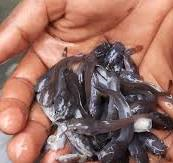
Ashton Mutyavaviri
GOVERNMENT’S push to improve catfish production recently received a major boost after the African Development Bank (AFDB) extended a US$5 738 funding facility through Worldfish project to boost catfish farming.
Fisheries and Aquaculture Resources Department (FARD) director Mr Milton Makumbe said the money would be used to buy material for four beneficiaries who were selected to do breeding programmes during the recent catfish production training held under the Technical Assistance for Agricultural Transformation in Countries in Transition Project (TSF).
“They will be given the material they requested for the same value and not money. For a novel sector to develop, the first key step is to have more players that you can give start-up inputs, which in the case of catfish, will be the first step towards generating in participants. This is where we currently are. We are pushing to disseminate adequate knowledge and establish local markets,” he said.
The four beneficiaries comprise three breeders and one fish feed manufacturer.
“Being fairly uncommon species for consumption in Zimbabwe due to religious aspects, catfish farming is practised by very few farmers.
“However, due to a diverse pool of desirable traits in growth and stress resistance, we have very large catfish that are desirable on the export market. This requires us to find out what we can do to expand to West African and Asian markets for economic growth,” added Mr Makumbe.
He said the country had the capacity to produce approximately 250 000 catfish fingerlings per year, a number that can even surpassed given the knowledge imparted to farmers during training on production techniques. This will be bolstered by their awareness on the advantages of catfish production compared to tilapia.
TSF is an intervention leveraging on the position and platform of the Technologies for African Agricultural Transformation (TAAT).
TAAT is an agribusiness incubation project targeting to improve livelihoods of youths and women by increasing employment opportunities and production of nutritious food.
TAAT will help support capacity development for the private sector and other relevant institutions to catalyse large-scale involvement in agricultural productivity and commodity production created through the deployment of proven technologies.
The project also includes the establishment of Regional Technology Delivery Infrastructure (RTDI), a component that covers two main activities.
The first activity is strengthening innovation platform (lP) networks and stakeholders (such as agricultural extensions) focusing on agribusiness for access to proven agricultural and food production technologies as well as co-operant factors that help ensure productivity increases (in collaboration with Forum for Agricultural Research in Africa).
The other nugget is on building capacity in young agribusiness owners for effective agribusiness operations, that is, mentorship, partnerships/networking and links to finance.
Specific objectives of the project are to organise demonstrations and training workshop for extension staff, fish breeders and farmers on climate resistant catfish seeds and mass production of catfish fingerlings, quality low-cost fish feed and better management practices (BMPs).
The project also strengthens the capacity of aquaculture stakeholders and enterprises to adopt best practices in the production and marketing of fish that meet the required standards of regional economic communities.
It also there to organise training programmes for IP on quality catfish fingerlings production and agribusiness development.



 Online Reporter