Chronicle Editor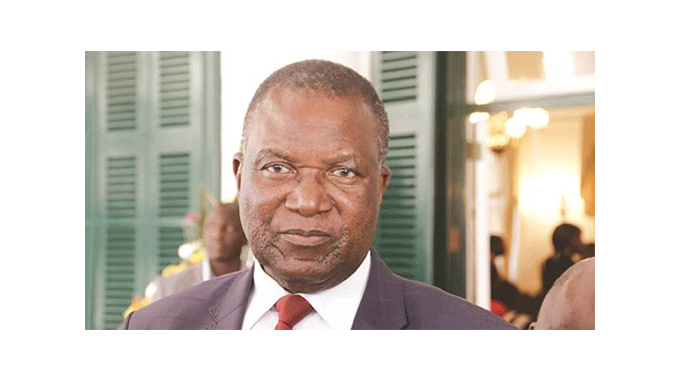
Limukani Ncube, Editor
“THE close relationship between large dams and social development, which encompasses water, food and energy consumption has been revealed in previous studies, and the vital role of large dams in sustaining societies has been recognised.”
Haiyun Shi et al, in their 2019 study, “The role of large dams in promoting economic development under the pressure of population growth”, assert that with population projections indicating continued growth during this century, it is expected that, further economic development of the society, for example Gross Domestic Product (GDP) growth, will be greatly affected by possible challenges such as water, food, and energy shortages in future, especially if proper planning, development, and management strategies are not adopted.
The academics further argue that construction of additional large dams will be considered as one of the best available options to meet future increases in water, food, and energy demands, which are all crucial to sustain economic development.
They also emphasise the vital role of dams in promoting economic growth.
From the beginning of the human history, dams have served to ensure an adequate supply of water by storing water in times of surplus and releasing it in times of scarcity, thus also preventing or mitigating floods and making a significant contribution to the efficient management of finite water resources that are unevenly distributed and subject to large seasonal fluctuations.
In other words, the construction of dams in the concept of water resources management has always been considered as a basic requirement to harmonise the natural hydrological regime with the human needs for water and water-related services.
Purposes to be served by such a project usually include water supply, irrigation, flood control, hydropower generation, navigation, recreation, pollution abatement, industrial use, fish and wildlife conservation and other environmental considerations, salinity and sediment control, and recharge of groundwater.
To meet these purposes, a number of dams are constructed to control and regulate the natural flows. This regulation function is obviously the main reason for creating reservoirs by constructing dams, according to International Energy Symposium (2001).
The government of Zimbabwe is also of the view that the quality of infrastructure in an economy is a measure of the quality of life of the citizens in a country. Further, the amount of a nation’s infrastructure has an important bearing on sustainable long-term economic growth. According to the economic development policy, National Development Strategy 1 document, the past two decades were marred by economic challenges, which led to difficulties in ensuring the continuous rehabilitation and maintenance of infrastructure including expansion of critical areas.
This resulted in Zimbabwe being ranked number 127 out of 138 countries in the Infrastructure Index under the 2017-2018 World Economic Forum Global.
Competitiveness Report
To position the country on the right trajectory, the Second Republic, led by President Mnangagwa sought to invest in dam construction and dam rehabilitation so as to ensure enough water provision to the masses. And as explained by Lands, Agriculture, Fisheries, Water and Rural Resettlement Minister, Dr Anxious Masuka, dams are an enabler to economic prosperity.
After touring the construction site of the Gwayi Shangani Dam, renamed Lake Gwayi Shangani, in Matabeleland North province recently, Minister Masuka said the masterplan of Lake Gwayi Shangani will focus on other economic activities such as tourism, agriculture, value chain, infrastructure development, health and well-being, food and security including a greenbelt along the pipeline to Bulawayo.
He said Government will not just build the dam and then turn its back, like it was the case in the past, but has now introduced a new approach of implementing various projects that feed from the dam in order to accelerate the 2030 Vision to make the country an Upper Middle-Income Economy.
“The dam is now an enabler and we now have this integrated approach in which the President (Mnangagwa) has asked us to track that progress.
The Gwayi-Shangani is no longer a dam, but a lake and this is the third biggest in the country after Tugwi-Mukosi and Lake Mutirikwi and this is something that is exciting. We are also varying the nature of how we do dams because the dam is not the project but a means to an end, it is an enabler and this enables Bulawayo to have water, which is why we are now tendering the Gwayi-Shangani-Bulawayo water pipeline,” he said.
The Minister of State for Presidential Affairs, Monitoring and Implementation of Government programmes, Dr Jorum Gumbo, is also on record as saying dam construction has a positive effect on economic development and changing lives of local people for the better.
“Government is prioritising the completion of water bodies because of their contribution to the overall performance of the economy. In this regard, the 2021 national budget has set aside an estimated $10,7 billion for dam infrastructure,” said Minister Gumbo.
Gwayi-Shangani, which will have a capacity of 650 million cubic metres of water, is set to be finished in December and upon completion, it will enable a green belt along the 245km pipeline for villagers to engage in irrigation and other economic activities. The pipeline will feed Bulawayo with water, thus changing the lives of people in two provinces.
At 90 percent completion to date, the dam located in the Hwange District, about six kilometres downstream of the confluence of the Gwayi and Shangani rivers (a tributary to the Zambezi River), the project is poised to benefit citizens in Bulawayo, Binga and Lupane districts, among others in the proximity of the proposed pipeline. The dam and the pipeline project are the core of the National Matabeleland Zambezi Water Project (NMZWP) proposed in 1912, but remained aground under the settler administration.
The project consists of three phases: Phase One: Gwayi-Shangani Dam, which is close to completion. Phase Two: Gwayi-Shangani Dam to Bulawayo pipeline, which has since commenced. The last phase will be the Shangani Dam to Zambezi River Pipeline.
Other economic benefits will also be realised in Masvingo province from the Tugwi-Mukosi dam which will see 25 000 hectors downstream used to cultivate sugar, cotton and tobacco to create new business opportunities.
Another water project off the ground is the Kunzwi Dam, whose site is 67km from Harare and is expected to ease water issues in the capital. Once completed, it will have a capacity to provide 158,4 million cubic meters of water per day, and also offer irrigation opportunities.
There are a number of other smaller dam projects underway across the country, like the rehabilitation of Gariya dam in Tsholotsho.
The Government says during the NDS1 period, efficient infrastructure delivery will be key in the realisation of national priorities and overall socio-economic development.
This will involve restoration of basic infrastructure services such as roads and expansion in critical areas mainly targeting key sectors of energy, transport, water and sanitation, Information and Communication Technology and Housing. In addition, a number of strategies are being implemented to ensure improved water supply and storage facilities taking cognisance of the climate resilience issues as well as safety and security of water bodies.
The strategies will encompass the development of the National Dam Safety Plan and its implementation, strengthening existing capacities for water resources management and the further development of water resources to cater for existing and future demand as well as reducing hydrological and climatic vulnerability, according to the NDS1 document.
Overall, large dam construction is regarded as an effective way to deal with the economic development problems in the foreseeable future. United Nations Development Programme (UNDP) noted that “the contribution of large-scale infrastructure (for example: large dams) to human development should not be overlooked.”
Therefore, over the coming decades, the need for construction of additional large dams in order to support and sustain economic development is abundantly clear. (Haiyun Shi et al, 2019).



 Online Reporter