happiness Chikwanha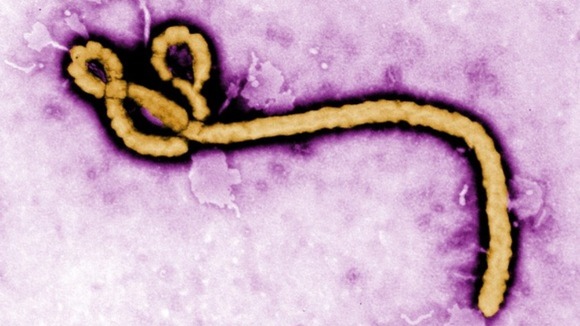
 Ingrid Gercama Features Correspondent —
It was an unusual day in Freetown, a West African city that loves to be loud. For three long minutes yesterday, it was eerily quiet.
At 11 o’clock at the Lumley roundabout, one of the busiest areas in town, taxis were stationary and vendors halted their hustling. Dollar boys stopped shouting their rates and, for once, the stereos blasting Nigerian Afrobeat music were switched off.
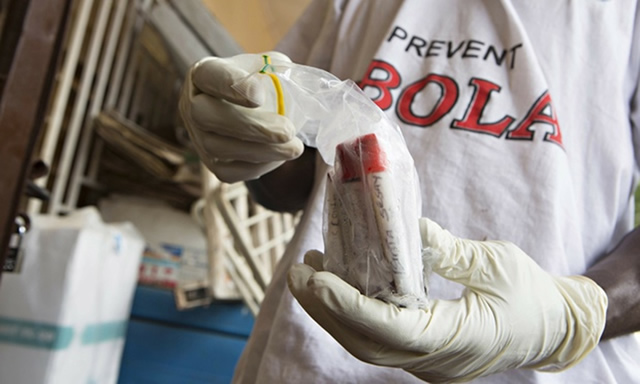
The reason was a commemoration. A year ago, on November 7, Sierra Leone was declared Ebola-free. The virus had killed 3 580 people and terrorised the nation for 18 months. The three-minute silence was organised by the government to remember those who lost their lives.
It had never been done before. Not even to mark the end of the brutal civil war against the hand-chopping RUF rebels that killed some 50 000 people.
But Ebola is different. Despite the relatively small number of deaths, the trauma — the intimate impact of the virus on families — magnified the fear and the wrenching suffering.
Remembering the dead
For Ishmael Jalloh, who works as a driver for the UN Development Programme in Freetown, yesterday was a difficult day. In September 2014, he had received a devastating phone call: “Ishmael, your younger brother – Opoto – is not feeling well.”
One year after the eradication of Ebola in Sierra Leone
Jalloh, who was not able to leave Freetown because of a national lockdown enforced by the government, asked what was wrong. Nobody knew. After three or four days, Opoto died.
“They hid that information from my mother. She kept asking ‘where is my Opoto, you people?’ But by that time he was already dead.”
His mother also fell ill but never spoke to anyone about her sickness.
“After three days she was also gone. Then my uncle Abu fell sick. After a few days, he was gone.”
Next followed his younger sister, several of his friends, and most of the family of his mother. Jalloh lost 18 family members in the early stages of the outbreak.
Alaji Samura, a commercial “Okada” motorbike rider from Bottom Mango Tree in Freetown, lost his wife, children, and sister to the disease. He still misses his wife terribly.
“I don’t feel good, because since I grew up, that one took care of me. We were together since then. When I see the three of them (his surviving children), I really don’t feel good.”
It was with people like Jalloh and Samura in mind that Yvonne Aki-Sawyerr — the head of the President’s Delivery Team for Transition and Recovery — came up with the idea of organising a national ceremony. She felt it was important for the country to grieve in a formal way.
“I was in church when someone was asked to pray about the Ebola outbreak. And this lady began to make reference to the death of her family members,” Aki-Sawyerr recalled.
“She was really emotional about the fact that she had not been able to say goodbye; that they had not been able to remember the death with honour, with dignity.
“It really struck a chord in me. All over the country there are people with the same situation. They have not had closure.”
Organising a commemoration day
When presidential approval was given, Aki-Sawyerr’s team only had a few days to organise a national ceremony. It would be a challenge anywhere – but a much bigger challenge here in Sierra Leone. Newspaper readership is tiny, transport links are poor, and very few people have access to a television, so most information is spread either through local radio or word of mouth.
“Everyone dropped what they were doing to get the word out there,” said Aki-Sawyerr.
Mobile phone companies agreed to send out text messages, radio stations from Freetown to Makeni in the north aired radio jingles and government WhatsApp groups went into overdrive. Last weekend, both imams and pastors talked about the importance of the commemoration with their congregations.
“It is not going to be perfect,” said Aki-Sawyerr, when IRIN spoke with her the night before the ceremony.
“I live under no illusion.”
Moses, a traffic warden stationed at Congo Cross saw little chance of success:
“No way I will be able to stop the taxis if they don’t want to stop.”
But against all expectations, Aki-Sawyerr’s team managed to pull it off. At 11am sharp, in the heart of Freetown and on the main beach road, people stopped whatever they were doing and the city fell silent.
What was achieved?
For Samura, the three-minute silence was a challenge on many levels. He doesn’t like to think about his loss, preferring to focus on the present. “I can’t stop running [my bike] at that time [of the silence],” he said, “it won’t help me.”
“I am an ‘Okada’ driver, and all I make on the streets is going to my children,” he explained.
“I face a lot of constraints . . . Only God helps me.” – IRIN.


 Online Reporter