Patrick Chitumba
Midlands Bureau
DEEP underground, some 30 metres beneath the red soils of Silobela in Kwekwe district, Zimbabwe’s gold boom comes at a human cost.
As artisanal miners blast through gold-bearing rock in search of the precious metal that is driving record export earnings, many are unknowingly inhaling the dust that is slowly destroying their lungs.
Inside the Turtle 72 mine shafts, the air is thick with dust and silence, broken only by the scrape of picks, the muffled boom of dynamite and the persistent coughs of miners.
Tafadzwa Moyo (32) wipes dust from his face with his bare hand.
He wears a torn T-shirt, shorts and worn-out sneakers with his big toe protruding.
He has no mask, no helmet, no gloves and no safety boots.
“We call this ‘working naked’,” he said.
“If you wait for personal protective equipment (PPE), you will never dig. If you don’t dig, your children don’t eat.”
Moyo is one of thousands of artisanal and small-scale miners (ASM), commonly known as ‘makorokoza’, whose labour has become the backbone of Zimbabwe’s gold industry.
Government support for the sector, including measures to capitalise miners and decentralise gold buying centres, has seen small-scale miners consistently outperform established mining companies in gold deliveries to Fidelity Gold Refinery.
In 2025, Zimbabwe’s gold exports reached a historic US$4,61 billion, driven by favourable international prices and increased artisanal mining activity.
The country also achieved a record national gold output of 46,73 tonnes, surpassing its 40-tonne target.
Artisanal and small-scale miners accounted for 34,87 tonnes — approximately 74,5 percent of total production.
But, for miners like Moyo and thousands of others working across the country’s goldfields, the cost of that success is not reflected in export statistics.
It is measured in damaged lungs, chronic illness and lives cut short.
At another dimly lit shaft outside Globe and Phoenix Mine, miners gather briefly during a break.
The air is heavy with dust and sweat.
“I have seen friends die here,” said Blessing Zimuto (25), who has been mining since he was 19. Zimuto said blasting underground was part of their daily routine.
“But with each blast comes silent death written in fine dust, which we breathe because most of us don’t have PPEs. One of my friends just started coughing. First, it was like a cold. Then he could not walk 10 metres without sitting down and now he is dead,” said Zimuto.
That silent killer has a name — silicosis.
The incurable lung disease is caused by prolonged inhalation of crystalline silica dust, which is abundant in gold-bearing rock. Every blast, drill and hammer strike releases microscopic particles that lodge deep inside the lungs.
Over time, the body’s immune system cannot remove them. Scar tissue forms, permanently reducing the lungs’ ability to absorb oxygen. The result is progressive breathlessness, chronic coughing and, in severe cases, respiratory failure.
Devastating consequences
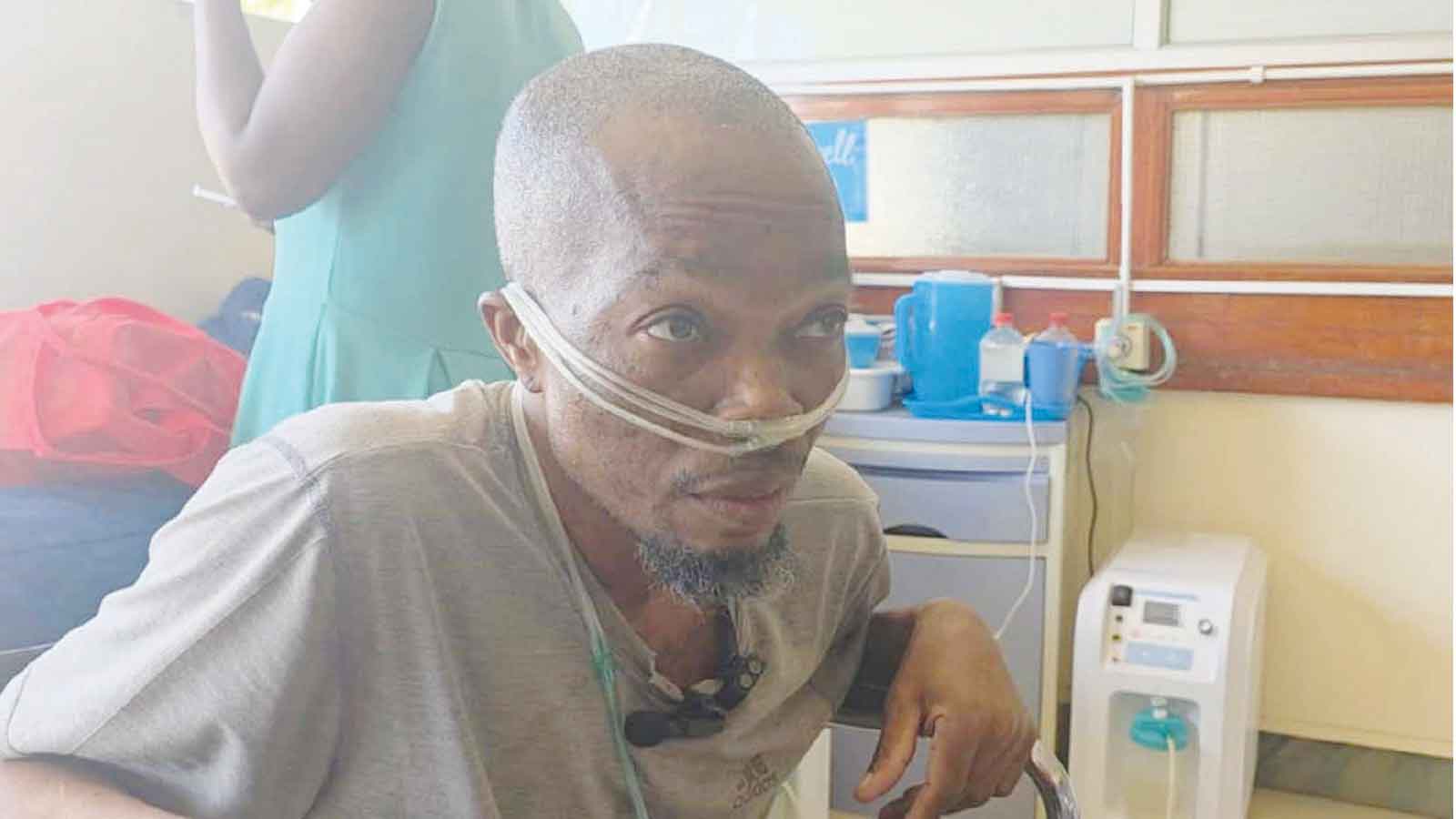
Kwekwe District Hospital is witnessing the devastating consequences.
Medical superintendent Dr Tinashe Gunda said the hospital continues to battle rising cases of the occupational disease.
“Silicosis is a big challenge in Kwekwe. We still have a lot of patients who come with silicosis and we still have challenges managing them,” Dr Gunda said.
“Two weeks ago, we had about two deaths in one week.
““That is the average number of deaths a week. When it gets to a year, they get up to 50 or 60 deaths, which is not good.”
At any given time, between 12 and 15 patients suffering from advanced silicosis are admitted to the hospital.
Since January, the health facility has recorded more than 22 formal silicosis-related admissions.
However, doctors believe the true burden is much higher, with many miners dying at home after mistaking the symptoms for tuberculosis.
Dr Gunda said the disease remains irreversible. “Silicosis is incurable. Once the scarring begins, it cannot be reversed. The disease is deceptive; it has a long latency period. Miners can be exposed for years without symptoms, only to develop severe respiratory failure long after they have left the mines. It also heavily predisposes individuals to tuberculosis and heart failure.”
Because treatment options are limited, he said, prevention remains the only effective response.
“If we start screening and giving education to the mining community, we may be able to reduce the cases that come to the hospital,” he said.
“Halting the dust at the source is the only real cure Kwekwe has. We need regulation.”
Back underground, miners insist they are not seeking charity.
What they want, they say, is recognition, formalisation and safer working conditions.
“We are not criminals. We deliver gold. Every month we take our ore to Fidelity. The country gets forex from our sweat. But when inspectors come, they chase us, confiscate our tools and call us illegal. No one talks about giving us dust masks,” said Zimuto.
Despite becoming Zimbabwe’s largest gold producers, many artisanal miners continue to work in poorly ventilated shafts without dust suppression systems or adequate protective equipment.
Another miner, Chenjerai Hove (35), described the harsh conditions underground.
“We blast rock in a closed hole. The dust is so thick you can’t see your partner two metres away. After a shift, you blow black stuff from your nose. That is our lungs trying to clean themselves.”
Hove pulled a cheap surgical mask from his pocket.
“This is what I use. It stops nothing. Real respirators cost more than we make in a week. If the Government regulated us properly, we could buy proper PPE. We need training, we need to be treated like workers and not thieves,” he said.
Silica is a naturally occurring mineral found in sand, rock and mineral ores.
In mining centres such as Kwekwe, drilling, blasting, crushing and tunnelling generate enormous quantities of fine silica dust.
Once inhaled, the particles become trapped inside the tiny air sacs of the lungs, triggering persistent inflammation and fibrosis.
As the lungs stiffen over time, breathing becomes increasingly difficult.
Formalisation and occupational safety
Dr Gunda said early detection could slow progression of the disease.
Kwekwe District Hospital is, therefore, shifting towards community-based interventions, including routine screening of miners, early detection of lung damage and education on dust suppression techniques.
For miners like Moyo, the irony is painful.
They risk their lives extracting the gold that powers Zimbabwe’s mining industry, only to lose those same lives to the dust beneath their feet.
“We are not asking for too much,” Moyo said as he prepared to descend underground once again.
“Give us registration. Give us safety training. Make PPE affordable. Then tax us. We will pay because we want to live long enough to spend what we dig.”
For now, many continue working in shafts without ventilation, blasting rock without water sprays and breathing air filled with dangerous silica dust.
Dr Gunda’s warning continues to hang over Kwekwe: Without intervention at the source, the hospital will keep admitting men and women in their 30s and 40s who can no longer breathe.
Junior Chamber of Mines Zimbabwe (JCMZ) secretary-general Mr Dosman Mangisi said formalising the artisanal and small-scale mining sector was critical to improving safety while supporting Zimbabwe’s vision of building a billion-dollar mining economy, in line with Vision 2030.
“I believe the Government has started training some artisanal miners on safe ways of mining as well as their safety and protection of the environment. The positive development will result in the decline of injuries or deaths that are rampant in the sector,” he said.
Mining remains one of Zimbabwe’s key economic pillars and is central to the country’s drive towards attaining upper middle-income status by 2030.
Mining experts say the long-term growth of the artisanal and small-scale mining sector will depend on full formalisation, improved occupational safety standards and stronger environmental compliance.
Formalisation would also enable the Government to broaden the tax base while ensuring miners benefit from coordinated technical support, training and financing programmes.
With artisanal miners already accounting for the bulk of Zimbabwe’s gold deliveries, stakeholders believe targeted reforms and innovative financing solutions could unlock even greater production while protecting the health and lives of the men and women whose labour sustains one of the country’s most important industries.